Natural skincare has become an important part of modern beauty routines as more people pay attention to the ingredients in their personal care products. From plant-based oils and botanical extracts to honey and oatmeal, naturally derived ingredients are widely used in cleansers, moisturizers, facial masks, and other skincare formulations.
However, choosing natural skincare products involves more than looking for ingredients with appealing names. Every ingredient has specific characteristics, potential benefits, and limitations. Some help attract moisture, while others provide cleansing or conditioning properties. Their effectiveness also depends on concentration, formulation, product quality, and individual skin type.
Understanding how these ingredients work can help consumers make informed choices and develop skincare routines that are practical, balanced, and suitable for their needs.
1. Why Are Natural Ingredients Popular in Skincare?
Natural ingredients are popular because they offer a variety of cosmetic properties and can be incorporated into different types of personal care products.
Many botanical ingredients contain naturally occurring compounds that make them useful in skincare formulations. Plant oils, for example, contain fatty acids that can help soften the skin, while certain plant extracts are included for their antioxidant properties.
Another reason for their popularity is ingredient familiarity. Consumers may recognize ingredients such as aloe vera, honey, coconut oil, and oatmeal from traditional beauty practices.
However, natural origin does not automatically guarantee safety or effectiveness. Some botanical ingredients can cause irritation or allergic reactions, while others may not be suitable for particular skin concerns.
The most important consideration is whether an ingredient is appropriate for the intended purpose and properly formulated for cosmetic use.
2. Understanding Common Natural Skincare Ingredients
Different natural ingredients serve different purposes in skincare. Knowing their individual characteristics makes it easier to understand what they can realistically contribute to a beauty routine.
Aloe Vera
Aloe vera is widely used in moisturizers, gels, and soothing skincare preparations. Its water-rich composition makes it popular in products designed to provide lightweight hydration.
It is commonly included in formulations intended for skin that feels dry or uncomfortable. However, some people may experience irritation from aloe-based products, particularly if they contain additional fragrances or preservatives.
Oatmeal
Oatmeal, especially colloidal oatmeal, is a familiar ingredient in skincare products designed for dry or sensitive skin.
It contains compounds such as beta-glucans and avenanthramides, which contribute to its cosmetic properties. Colloidal oatmeal is commonly used in moisturizers, bath products, and cleansing preparations.
Nevertheless, product formulation matters. Not every oatmeal-based product will provide the same experience, and individuals with specific allergies should check ingredient information carefully.
Plant-Based Oils
Natural oils such as jojoba, sunflower, and coconut oil are commonly used in moisturizers, body oils, and haircare products.
These ingredients contain different fatty acids and have varying textures and skin-feel characteristics. Some are lightweight, while others create a richer, more occlusive finish.
Choosing the right oil depends on personal preference and skin type. For example, someone who dislikes heavy skincare products may prefer a lighter formulation.
Green Tea Extract
Green tea extract is another botanical ingredient frequently included in cosmetic products. It contains naturally occurring polyphenols, including catechins, that have antioxidant properties.
It is commonly found in facial serums, moisturizers, and other products designed to support everyday skincare routines.
However, the presence of green tea extract alone does not guarantee a particular cosmetic result. Its concentration, stability, and compatibility with other ingredients all influence the finished product.
3. Exploring Manuka Honey in Natural Skincare
Honey has a long history of use in traditional personal care preparations. Its naturally thick consistency and moisture-attracting properties make it an interesting ingredient for cosmetic formulations.
Among different honey varieties, Manuka honey has gained particular attention because of its distinctive composition.
Produced by bees that collect nectar from the Manuka plant, this honey contains naturally occurring compounds, including methylglyoxal (MGO). Its MGO concentration is often used to describe one aspect of its composition.
Why Consider Manuka Honey for Skin?
People interested in honey-based skincare often explore Manuka Honey for Skin because of its unique characteristics and traditional topical applications.
Manuka honey is incorporated into certain facial masks, cleansers, and moisturizing products. Depending on the formulation, it can contribute to hydration-focused skincare and provide a smooth skin feel.
Its naturally occurring MGO is another characteristic that distinguishes it from many other honey varieties. However, a higher MGO rating does not automatically indicate superior cosmetic performance.
It is also important to separate cosmetic applications from medical treatments. Although Manuka honey has been investigated for various properties, ordinary cosmetic products containing it should not be assumed to treat acne, eczema, infections, or other medical conditions.
4. The Limitations of Natural Skincare Ingredients
Although natural ingredients can offer useful cosmetic properties, they are not universally suitable. Understanding their limitations is essential for building a safe and effective skincare routine.
Natural Does Not Always Mean Hypoallergenic
One common misconception is that naturally derived ingredients cannot cause allergic reactions.
In reality, botanical extracts, essential oils, honey, and plant-based substances can trigger irritation or allergies in some individuals.
People with sensitive skin should review ingredient lists carefully and introduce unfamiliar products gradually.
Results Depend on Formulation
An ingredient's effectiveness cannot always be evaluated independently of the finished product.
For example, aloe vera in a properly formulated moisturizer may offer a different experience from a homemade aloe mixture. Similarly, the cosmetic properties of honey depend on its concentration and the other ingredients used in the formulation.
Preservation, stability, pH, and ingredient compatibility also influence product quality.
Natural Ingredients Cannot Replace Every Skincare Essential
A natural face mask or botanical serum cannot replace the basic elements of a balanced skincare routine.
Gentle cleansing, appropriate moisturization, and broad-spectrum sunscreen remain important. Natural ingredients should complement these essentials rather than replace them.
5. How to Choose Quality Natural Skincare Products
Selecting suitable products requires attention to more than packaging or marketing descriptions. Consumers should evaluate ingredients, manufacturing information, and product suitability before making a purchase.
Consider the following factors:
-
Ingredient transparency: Choose products that clearly identify their ingredients and explain their intended cosmetic purpose.
-
Product formulation: Look for formulations designed for your particular skin type and skincare preferences.
-
Manufacturing standards: Consider products from manufacturers that provide appropriate quality and safety information.
-
Packaging: Proper packaging can help protect ingredients from environmental exposure and contamination.
-
Product claims: Be cautious of exaggerated promises involving instant results or guaranteed treatment of skin conditions.
If you are interested in specialty honey varieties, researching retailers before buying manuka honey can help you compare origin information, MGO ratings, processing details, and product descriptions.
For topical skincare, remember that food-grade honey is not automatically a finished cosmetic product. Products specifically formulated for skin application may offer greater consistency in terms of hygiene, stability, and ingredient compatibility.
6. Consider Your Skin Type and Individual Needs
A skincare ingredient that works comfortably for one person may not be suitable for another. Understanding your skin type can help narrow down appropriate products.
Dry Skin
People with dry skin may benefit from formulations containing humectants, emollients, and occlusive ingredients. These components work together to attract moisture, soften the skin, and reduce moisture loss.
Oily Skin
Lightweight moisturizers and non-comedogenic formulations may be preferable for people with oily skin. However, oily skin still requires hydration and appropriate moisturization.
Sensitive Skin
People with sensitive skin should prioritize simple formulations and avoid unnecessary fragrances or ingredients that have previously caused irritation.
Regardless of skin type, perform a patch test before introducing a new product. Discontinue use if redness, itching, swelling, or persistent discomfort develops.
7. Build a Balanced Routine with Realistic Expectations
A successful skincare routine does not need dozens of products or complicated combinations.
Start with a gentle cleanser, a moisturizer suited to your skin type, and broad-spectrum sunscreen during the day. Additional products containing natural ingredients can be introduced according to specific cosmetic preferences.
Avoid adding several unfamiliar ingredients simultaneously. Introducing one product at a time makes it easier to identify potential reactions and understand whether the product suits your routine.
It is also important to maintain realistic expectations. Natural ingredients may contribute to hydration, cleansing, and skin conditioning, but they cannot guarantee flawless skin or eliminate every cosmetic concern.
For persistent skin problems, professional advice from a qualified dermatologist is more appropriate than relying exclusively on natural remedies.
Conclusion
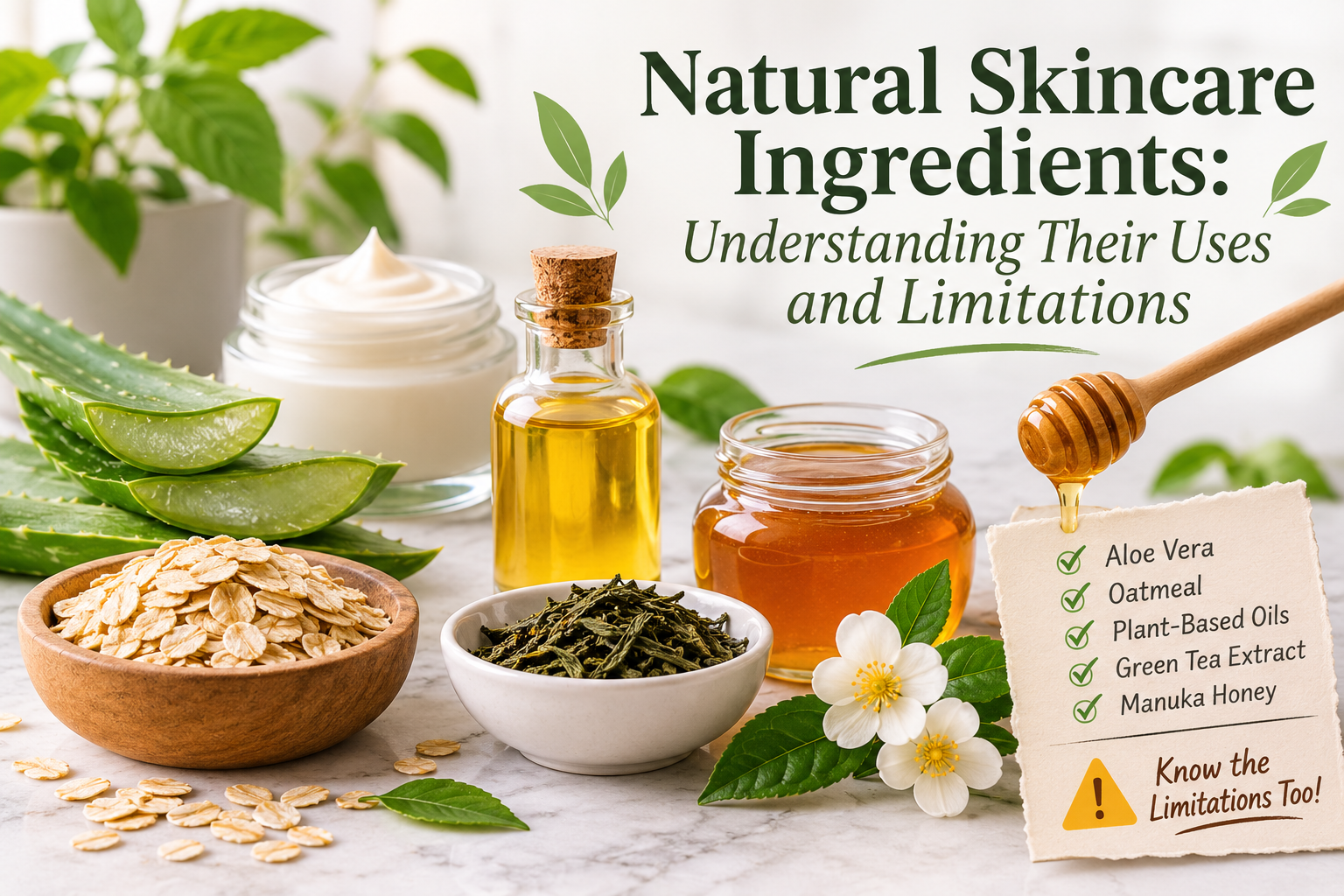
Natural skincare ingredients offer a wide range of possibilities for people interested in thoughtful personal care. From aloe vera and oatmeal to botanical oils, green tea extract, and Manuka honey, each ingredient has distinctive characteristics that can contribute to cosmetic formulations.
However, understanding their limitations is just as important as recognizing their potential uses. Natural origin does not guarantee universal suitability, and the quality of a finished product depends on its formulation, preservation, and manufacturing standards.
By considering individual skin needs, reviewing ingredient information, and choosing products with realistic claims, consumers can develop balanced skincare routines that make sensible use of natural ingredients without expecting unrealistic results.




Share this page with your family and friends.