Along India's southeastern coastline, overlooking the Bay of Bengal, Pondicherry offers a refreshing combination of French colonial architecture, traditional Tamil culture, beautiful beaches and a relaxed coastal lifestyle. Officially known as Puducherry, this charming destination stands apart from many other Indian holiday locations because of its distinctive European influences and strong regional identity.
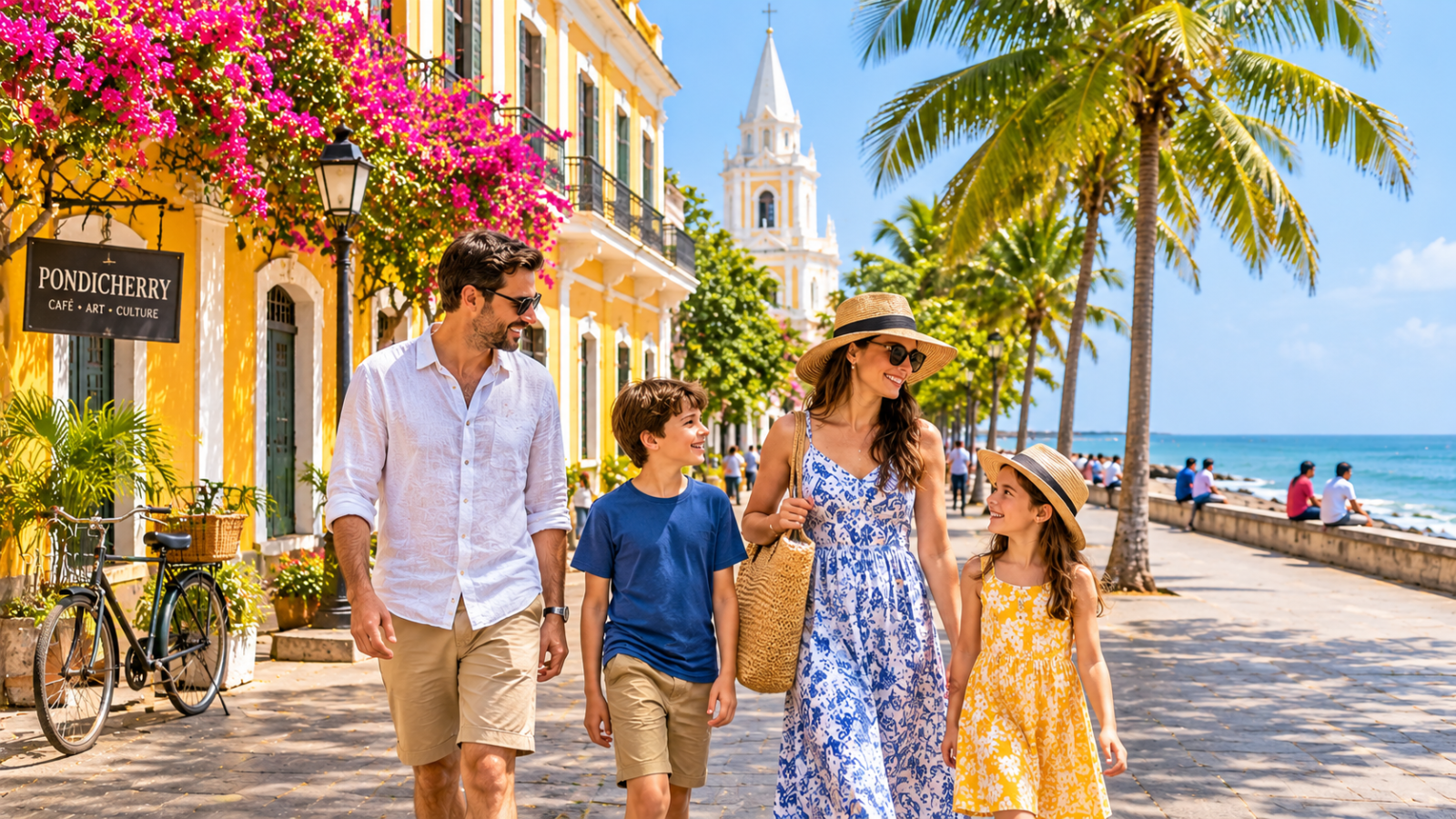
From colourful heritage buildings and tree-lined boulevards to peaceful spiritual centres and beachfront cafes, Pondicherry provides plenty of opportunities for cultural exploration and relaxation. Visitors can spend their mornings walking through historic streets, enjoy traditional South Indian food for lunch and finish the day watching the waves along the Promenade. These diverse experiences also make Pondicherry an appealing destination for family holidays to India, offering a wonderful balance of cultural exploration, coastal relaxation and memorable activities for all ages
For international visitors, particularly those planning their first journey through South India, the town offers an interesting introduction to India's cultural diversity. Its manageable size, heritage attractions, varied dining options and coastal setting also make it an appealing stop for couples, independent travellers and families.
Whether you are considering a short coastal escape or planning an extended South India family holiday, Pondicherry deserves consideration as part of your Indian itinerary.
Where Is Pondicherry Located in India?
Pondicherry is situated on the southeastern coast of India, within the Union Territory of Puducherry. The main town is surrounded by Tamil Nadu and lies beside the Bay of Bengal.
It is approximately 135 kilometres from Chennai, making it a convenient destination for travellers arriving through Chennai International Airport. The drive generally takes around three to four hours, depending on traffic, route and road conditions.
Pondicherry's coastal location makes it a useful addition to a wider South India itinerary. Visitors can combine it with destinations such as Mahabalipuram, Thanjavur, Chidambaram and Madurai.
Its location also offers an interesting contrast between coastal relaxation, historic architecture and traditional Tamil heritage.
Why Should You Visit Pondicherry?
Pondicherry offers several experiences that make it particularly attractive to international visitors.
French colonial heritage: The French Quarter features distinctive colonial-era buildings, attractive streets, historic churches and traditional Tamil-French architectural influences.
Beautiful coastal scenery: Visitors can enjoy the Promenade, Paradise Beach, Serenity Beach and other coastal locations along the Bay of Bengal.
Cultural diversity: French influences coexist with Tamil traditions, creating an interesting combination of architecture, food, festivals and everyday lifestyles.
Food experiences: The town offers everything from traditional Tamil breakfasts and fresh seafood to French bakeries, boutique cafes and international cuisine.
Spirituality and wellness: Sri Aurobindo Ashram and nearby Auroville attract visitors interested in meditation, philosophy, sustainable living and peaceful surroundings.
Family-friendly experiences: Heritage walks, museums, beaches, boat rides and cultural activities provide opportunities for families travelling with children and older relatives.
Unlike a holiday focused exclusively on beaches, a visit here can combine history, food, culture, nature and relaxation within a relatively compact destination.
Best Places to Visit in Pondicherry
Pondicherry sightseeing offers a varied selection of historical landmarks, religious attractions, beaches and natural surroundings.
1. White Town and the French Quarter
White Town is one of the most recognisable areas of Pondicherry. Its attractive streets feature pastel-coloured buildings, French-style balconies, wooden doors, courtyards and elegant colonial architecture.
A leisurely walk through the neighbourhood offers an opportunity to appreciate the town's architectural character. Many historic buildings have been converted into boutique hotels, cafes, galleries and cultural spaces.
Visitors can also explore nearby Tamil neighbourhoods, where traditional houses and colourful entrances reveal another side of the town's cultural identity.
A guided French Quarter heritage walk is particularly worthwhile for travellers interested in history and architecture.
2. Promenade Beach and Rock Beach
Promenade Beach, commonly associated with Rock Beach, is one of the most popular waterfront attractions in Pondicherry.
The seafront stretches along the eastern side of the town and provides attractive views of the Bay of Bengal. Visitors can enjoy early morning walks, photograph the coastline and admire landmarks such as the Mahatma Gandhi statue and the French War Memorial.
The promenade becomes particularly lively during the evening, when residents and visitors gather to enjoy the sea breeze.
The rocky shoreline is generally better suited to walking and sightseeing than swimming, so visitors should follow local safety guidance.
3. Paradise Beach
Paradise Beach is known for its soft sand, palm-lined surroundings and relatively secluded coastal atmosphere.
It is commonly reached through Chunnambar Boat House, where visitors can take a boat transfer when services are operating. The journey itself adds to the experience, passing through attractive backwater scenery.
The beach is popular with couples, photographers and families looking for a relaxing coastal outing.
Facilities and boat services can vary according to weather and local operating conditions. Always check swimming restrictions and sea conditions before entering the water.
4. Serenity Beach
Serenity Beach provides a more laid-back atmosphere than the central promenade. Fishing boats, sandy stretches and beachside establishments give the area a distinctive coastal character.
It is also associated with surfing, with opportunities for beginners to enquire about lessons from local operators.
Families can enjoy the scenery and relaxed surroundings, although strong waves and currents mean that swimming should never be assumed safe.
5. Auroville and Matrimandir
Located outside the main town, Auroville is an international township established around the idea of human unity and sustainable living.
Its central landmark, Matrimandir, is an impressive golden spherical structure surrounded by carefully maintained gardens.
The Auroville Visitors Centre introduces visitors to the township's history, philosophy, community projects and environmental initiatives. It also includes exhibitions, shops and cafes.
The Matrimandir Viewing Point is open to visitors with free passes obtained directly from the Visitors Centre after an introductory presentation. Access to the Inner Chamber is different and requires advance arrangements under specific visitor guidelines.
6. Sri Aurobindo Ashram
Sri Aurobindo Ashram is an important spiritual institution in Pondicherry, associated with Sri Aurobindo and Mirra Alfassa, popularly known as the Mother.
Visitors interested in meditation, philosophy and spiritual traditions may appreciate the peaceful atmosphere.
The ashram encourages silence and respectful behaviour. Visitors should check current access arrangements and photography rules before entering.
7. Basilica of the Sacred Heart of Jesus
This prominent Catholic church is admired for its Gothic architectural style, stained-glass windows and distinctive red-and-white exterior.
It is an interesting stop for travellers exploring Pondicherry's religious and colonial heritage.
Visitors should dress respectfully and avoid disturbing worshippers during religious services.
8. Arulmigu Manakula Vinayagar Temple
Dedicated to Lord Ganesha, this historic Hindu temple is one of the town's important religious landmarks.
Its colourful decorations, traditional architecture and spiritual atmosphere offer insight into Tamil religious traditions.
Visitors should observe temple customs, follow dress expectations and ask permission before taking photographs where restrictions apply.
9. Pondicherry Museum
The Pondicherry Museum is a worthwhile attraction for visitors interested in the region's history and cultural development.
Its collections include archaeological objects, sculptures, historical artefacts and exhibits connected with the area's past.
It provides useful context for understanding Pondicherry beyond its French Quarter and beaches.
Check current opening days and timings before including it in your sightseeing schedule.
10. Chunnambar Boat House
Chunnambar Boat House is a popular starting point for boat trips towards Paradise Beach.
The surrounding waterways and greenery offer a pleasant contrast to the town's historic streets and busy coastal areas.
Families may particularly enjoy the boat journey, although life jackets, operator guidance and weather conditions should always be considered.
11. Ousteri Lake
Ousteri Lake, also known as Osudu Lake, is a significant freshwater wetland near Pondicherry.
The area is associated with birdlife and provides opportunities for nature observation and photography.
For visitors interested in wildlife and quieter outdoor experiences, it can make an appealing alternative to the town's more popular tourist attractions.
The best experience depends on seasonal water levels and bird activity.
Best Things to Do in Pondicherry
Beyond its popular tourist attractions, there are plenty of enjoyable things to do in Pondicherry for visitors with different interests.
Walk through the French Quarter: Spend time exploring heritage streets, admire colonial architecture and visit independent boutiques, galleries and cafes.
Enjoy a heritage cycling tour: Cycling is a pleasant way to explore the historic neighbourhoods. Early mornings are preferable because of the heat and traffic.
Relax along the Promenade: Enjoy the sea breeze, photograph historic monuments and experience the lively atmosphere of the waterfront.
Try surfing: Serenity Beach and surrounding coastal areas have surfing operators. Beginners should choose qualified instructors and check sea conditions.
Explore local markets: Browse handicrafts, textiles, handmade products, souvenirs and locally produced goods.
Experience the local food scene: Visit French-inspired bakeries, traditional Tamil restaurants and independent cafes.
Visit Auroville: Learn about sustainable living, community projects, architecture and the philosophy behind this international township.
Enjoy wellness experiences: Yoga, meditation and suitable wellness programmes can add a relaxing dimension to a South India holiday.
These activities allow visitors to experience different aspects of the destination rather than limiting their visit to sightseeing alone.
Pondicherry with Family – Experiences for All Ages
Pondicherry can be a rewarding destination for families looking for a combination of cultural activities, coastal relaxation and manageable sightseeing.
For travellers researching family holidays to India, the town offers a different experience from traditional wildlife, palace and mountain itineraries. Its combination of beaches, heritage attractions and food experiences makes it suitable for a varied family holiday.
Here are some experiences worth considering when planning a Pondicherry family trip.
Educational heritage walks: Exploring White Town introduces children and teenagers to colonial architecture, historical landmarks and the relationship between French and Tamil cultures. Short guided walks are preferable for younger children.
Beach outings: Paradise Beach and Serenity Beach offer attractive coastal scenery. Families can enjoy photography, supervised beach activities and relaxing walks. Parents should remain particularly attentive to children near the sea.
Boat rides: A trip from Chunnambar Boat House towards Paradise Beach can be an enjoyable experience for children and adults alike. Choose reputable operators and ensure everyone has appropriate safety equipment.
Museums and cultural experiences: Pondicherry Museum provides opportunities to learn about regional history, archaeology and art. Religious landmarks can also introduce older children to India's cultural diversity.
Food experiences: Families can enjoy dosa, idli, rice dishes, fresh seafood and French-style bakery treats. Restaurants offering familiar international dishes are also available.
Nature experiences: Ousteri Lake offers an opportunity to observe birds and appreciate the region's natural surroundings.
Relaxed accommodation: Families may prefer hotels with spacious rooms, convenient dining arrangements and easy access to major attractions. A comfortable base reduces the demands of travelling with children or older relatives.
For multigenerational travellers, a balanced itinerary is particularly important. Combine short heritage walks with relaxed afternoons, comfortable transfers and sufficient rest.
Pondicherry can also complement a longer itinerary featuring Chennai, Mahabalipuram and other South Indian destinations. Families planning family holidays in India can therefore include the town without making the entire holiday dependent on beach activities.
French Heritage and Tamil Culture – Understanding Pondicherry's Identity
Pondicherry's identity has developed through centuries of regional history and European influence.
The French established a significant presence in the settlement during the seventeenth century. Their administration and architectural influence shaped much of the historic town. French control formally ended in the mid-twentieth century, with the transfer of French Indian territories taking place in stages.
The French Quarter reflects this legacy through its colonial-era buildings, distinctive street layouts, courtyards and architectural details.
However, Pondicherry is equally rooted in Tamil traditions. Traditional Tamil houses, Hindu temples, local festivals and regional cuisine remain central to everyday life.
Visitors will notice this cultural combination in several ways:
-
French-style buildings alongside traditional Indian homes.
-
Churches and temples representing different religious traditions.
-
Tamil and French influences in local food.
-
Cultural events celebrating regional heritage.
-
Historic streets reflecting the town's colonial past.
Respecting local customs is important. Dress appropriately when visiting religious sites, remove footwear where requested and seek permission before photographing people or private spaces.
Food and Culinary Experiences in Pondicherry
Food is an important part of the Pondicherry experience. Its culinary identity combines traditional Tamil cooking with French-inspired dishes and international influences.
Traditional Tamil cuisine
Visitors should try regional South Indian specialities such as:
-
Idli and dosa served with chutneys and sambar.
-
Pongal, a traditional rice and lentil dish.
-
South Indian thalis featuring rice, vegetables and accompaniments.
-
Traditional curries and freshly prepared seafood.
-
Filter coffee, a popular South Indian beverage.
These dishes provide an excellent introduction to the flavours and cooking traditions of the region.
French-inspired food
The French influence is also visible in the town's cafes and bakeries. Visitors can find croissants, baguettes, pastries, sandwiches and European-style breakfast options.
Many independent cafes combine French-inspired menus with Indian ingredients, creating interesting dining experiences.
Vegetarian and international options
Pondicherry offers vegetarian restaurants and establishments serving a variety of international cuisines.
Families with different food preferences can generally find suitable options, although those with severe allergies should communicate dietary requirements clearly and confirm ingredients before ordering.
Practical food advice
International travellers should prioritise restaurants with good hygiene practices, freshly prepared meals and clean surroundings.
Drink sealed bottled or properly treated water, avoid ice when its source is uncertain and exercise caution with food that has been left exposed for extended periods. These precautions are particularly important when travelling with young children.
Auroville and Spiritual Experiences Near Pondicherry
Auroville is one of the most distinctive places to visit near Pondicherry. Established in 1968, it was founded around an ideal of human unity, with the aim of bringing people from different backgrounds together.
The township includes residential areas, environmental initiatives, cultural activities, workshops and community-based enterprises.
Its central landmark, Matrimandir, represents the spiritual focus of Auroville.
Visitors can begin at the Auroville Visitors Centre, where exhibitions and introductory presentations explain the township's history, philosophy and activities. The centre also includes cafes, shops and information facilities.
One important distinction concerns access to Matrimandir. General visitors can obtain a free pass to the Viewing Point directly from the Visitors Centre. Entry into the Inner Chamber for silent concentration requires separate advance arrangements and is subject to availability and age restrictions. Children below ten are not permitted inside the Inner Chamber.
Auroville can also appeal to wellness travellers interested in yoga, meditation, sustainable living and community-based experiences. However, individual activities may have their own schedules, charges and booking conditions.
It is best to approach the township as a living community rather than simply another sightseeing attraction.
Best Beaches in Pondicherry for Relaxation and Activities
Pondicherry's coastline offers several different beach experiences.
Paradise Beach: Known for its sandy shoreline and boat access, it is a popular choice for a coastal day trip. Visitors should check boat services and local swimming advice.
Serenity Beach: Popular for its relaxed atmosphere and surfing opportunities. It is suitable for watching the waves, taking photographs and enjoying the coastal environment.
Promenade Beach: Best known for its waterfront walkway, monuments and evening atmosphere. The rocky shoreline is not generally appropriate for casual swimming.
Rock Beach: Often used as another name for the central rocky waterfront area. It is particularly attractive for early morning walks and evening outings.
Auroville Beach: Located towards the Auroville side of the coastline, this beach attracts visitors looking for a quieter coastal setting and opportunities to observe local fishing activities.
Beach safety for international visitors
The appearance of a beach does not necessarily indicate that the sea is safe for swimming.
Before entering the water:
-
Check local warnings and sea conditions.
-
Follow lifeguard instructions wherever lifeguards are available.
-
Avoid swimming during rough weather or strong currents.
-
Keep children under close adult supervision.
-
Use recognised surfing and water-sport operators.
-
Do not enter restricted sections of the coastline.
Visitors should also remember that some beaches have limited facilities and that conditions can change with the weather.
Best Time to Visit Pondicherry
Pondicherry has a tropical coastal climate, with warm temperatures and relatively high humidity throughout much of the year.
Choosing the right travel season can make a considerable difference to sightseeing and outdoor activities.
Winter: December to February
Winter is generally one of the most comfortable periods to visit. Days are comparatively pleasant, while mornings and evenings are suitable for heritage walks, sightseeing and beach visits.
This is a popular period for international visitors, so advance accommodation arrangements are advisable.
Summer: March to July
Summer brings hotter temperatures and increased humidity. April, May and June can be particularly uncomfortable for extended outdoor sightseeing.
Visitors travelling during these months should plan activities for early mornings and late afternoons, take regular breaks and remain hydrated.
Southwest monsoon: June to September
The southwest monsoon can bring periods of rainfall, although conditions vary.
Rain may affect beach activities, boat trips and outdoor sightseeing. Travellers should maintain some flexibility in their plans.
Northeast monsoon: October to December
Pondicherry receives a substantial proportion of its rainfall during the northeast monsoon. October and November can bring heavy rain and occasionally disruptive weather.
Beach activities and road journeys may be affected during particularly wet periods.
Overall recommendation: November to March is generally a good period for a Pondicherry holiday, although December to February is particularly attractive for comfortable sightseeing. The official Incredible India destination guide also identifies November to March as the preferred visiting season.
Incredible India+1
How to Reach Pondicherry from the UK and Other International Destinations
Pondicherry does not have the same international flight connectivity as major Indian gateway cities. Most travellers arriving from the UK or other overseas destinations will first fly into a larger Indian airport before continuing by domestic transport.
International flights from the UK
Travellers from London and other UK cities can consider international connections to Chennai through available direct or connecting services, depending on their departure airport and travel dates.
Chennai is one of the most convenient gateways for reaching Pondicherry.
Travelling from Chennai to Pondicherry
The road distance is approximately 135–150 kilometres, depending on the route and starting point.
The journey generally takes around three to four hours, although traffic can increase travel time.
Common transport options include:
-
Private chauffeur-driven vehicles.
-
Intercity buses.
-
Taxis and pre-arranged transfers.
-
Train services using Pondicherry railway station or Villupuram Junction, followed by onward transport where necessary.
A private transfer is particularly convenient for families, travellers carrying substantial luggage and visitors arriving after a long international flight.
Other airport options
Travellers can also consider Tiruchirappalli and Bengaluru airports, although both involve longer onward road journeys.
The Government of Puducherry identifies Chennai as the nearest major airport, with other regional airports providing additional access options.
py.gov.in+1
For international visitors, it is sensible to arrange onward transport before arrival, particularly during peak holiday periods.
Where to Stay in Pondicherry
Choosing the right accommodation can make your stay more comfortable, particularly if you are travelling with children or older family members.
Pondicherry offers several accommodation styles, from restored colonial properties to contemporary hotels and peaceful coastal retreats.
Heritage hotels
White Town is an excellent choice for travellers interested in French architecture and historic surroundings. Restored heritage properties offer an opportunity to experience the town's architectural character.
Boutique hotels
Boutique accommodation is suitable for couples and independent travellers seeking personalised service and attractive interiors.
Beachside accommodation
Properties near Serenity Beach and other coastal areas offer a more relaxed atmosphere. These locations are particularly appealing to visitors prioritising beach time.
Family-friendly hotels
Families should look for spacious rooms, suitable dining options, convenient transport arrangements and facilities that accommodate children.
Staying around Auroville
Accommodation around Auroville can suit travellers interested in wellness, nature and longer stays away from the busier town centre.
Which area should you choose?
-
White Town: Best for heritage, restaurants and sightseeing.
-
Promenade area: Best for waterfront access and evening walks.
-
Serenity Beach: Best for a relaxed coastal atmosphere.
-
Auroville surroundings: Best for wellness and peaceful surroundings.
Always confirm current facilities, accessibility, cancellation policies and transport arrangements directly with your accommodation provider.
How Many Days Do You Need in Pondicherry?
The ideal duration depends on your interests and whether Pondicherry is a main holiday destination or part of a wider South India itinerary.
One-day visit
A one-day visit is suitable for travellers with limited time.
Prioritise White Town, the French Quarter, the Promenade and one or two historical attractions. If time permits, enjoy a local restaurant before continuing your journey.
Two-day Pondicherry itinerary
A two-day stay allows a more relaxed experience.
Day 1: Heritage and culture
-
Explore White Town and the French Quarter.
-
Visit Sri Aurobindo Ashram.
-
See the Basilica of the Sacred Heart of Jesus.
-
Enjoy traditional Tamil or French-inspired food.
-
Spend the evening along the Promenade.
Day 2: Beaches and Auroville
-
Visit Auroville and the Matrimandir Viewing Point.
-
Enjoy lunch at an appropriate local cafe.
-
Visit Chunnambar Boat House and Paradise Beach, subject to operating conditions.
-
Return to town for a relaxed evening.
Three-day Pondicherry itinerary
Three days provide more flexibility.
Day 1: Explore White Town, its architecture, museums, religious landmarks and local cafes.
Day 2: Spend time at Auroville, explore its Visitors Centre and enjoy the surrounding countryside.
Day 3: Visit Serenity Beach, Paradise Beach or Ousteri Lake, depending on weather and personal interests.
Longer stays
A four-to-five-day stay is suitable for visitors interested in slower travel, wellness activities, additional cultural experiences and time along the coast.
Families may particularly appreciate an extra day to avoid rushing between attractions.
Is Pondicherry Safe for International Travellers?
Pondicherry is an established tourist destination, but international visitors should follow sensible travel precautions, just as they would elsewhere in India.
Personal safety
Keep valuables secure, avoid displaying expensive belongings unnecessarily and use reputable transport providers.
When walking around unfamiliar areas after dark, remain aware of your surroundings and choose well-lit routes.
Food and drinking water
Choose hygienic restaurants and drink sealed bottled or properly treated water. Families travelling with children should take additional care with unfamiliar food and street snacks.
Road safety
Traffic conditions can be busy, particularly around the town centre. Pedestrians should be cautious when crossing roads.
If hiring a vehicle, use appropriate safety equipment and ensure that the driver and vehicle meet relevant requirements.
Beach safety
Pay attention to local warnings, changing sea conditions and restricted swimming areas. Never leave children unattended near the water.
Healthcare and insurance
Carry suitable travel insurance covering medical expenses and relevant activities. Identify appropriate medical facilities before travelling and keep essential medication accessible.
Cultural awareness
Dress respectfully at temples and religious institutions. Ask before photographing local residents and observe any restrictions at places of worship.
A little preparation can help international travellers enjoy a more comfortable and rewarding holiday.
Combining Pondicherry with Other South Indian Destinations
One of Pondicherry's greatest advantages is its location within reach of several important cultural and historical destinations.
Including it in a wider South India travel itinerary creates opportunities to experience different landscapes, traditions and historical periods.
Chennai
Approximate road distance: 135–150 km
Chennai is a major international gateway and an interesting destination in its own right. Visitors can explore its temples, cultural institutions, beaches and historic neighbourhoods before continuing to Pondicherry.
Mahabalipuram
Approximate road distance from Pondicherry: 95–100 km
Mahabalipuram is famous for its ancient rock-cut monuments, temples and UNESCO-listed Group of Monuments. It is an excellent addition for travellers interested in South Indian architecture and history.
Chidambaram
Approximate road distance: 65–75 km
Chidambaram is known for the historic Thillai Nataraja Temple, an important centre of Tamil religious heritage.
Thanjavur
Approximate road distance: 165–180 km
Thanjavur is renowned for the Brihadeeswarar Temple, an outstanding example of Chola architecture and a UNESCO World Heritage property.
Kumbakonam
Kumbakonam offers an opportunity to explore traditional temples, religious architecture and historic Tamil settlements.
Madurai
Approximate road distance: 330–350 km
Madurai is one of Tamil Nadu's most significant cultural destinations, particularly known for the magnificent Meenakshi Amman Temple.
Kerala
For travellers with additional time, Kerala provides a contrasting experience through its backwaters, hill stations, wildlife reserves and coastal landscapes.
A longer journey combining Tamil Nadu and Kerala can create a varied holiday featuring heritage, nature, spirituality and relaxation.
For international visitors, especially those travelling from the UK, a carefully planned route can reduce unnecessary travel and make the most of the time available.
FAQ questions with answers
Q1. What is the best time to visit Pondicherry?
November to March is generally the best time to visit Pondicherry. The weather is comparatively comfortable for sightseeing, heritage walks and beach activities. December to February is particularly popular.
Q2. How many days are enough to explore Pondicherry?
Two to three days are generally sufficient to explore the main attractions, including White Town, the Promenade, Auroville and nearby beaches. A longer stay allows more time for relaxation and cultural experiences.
Q3. Is Pondicherry suitable for family holidays in India?
Yes. Pondicherry offers heritage walks, beaches, museums, boat trips, cultural attractions and varied dining options. It can be an enjoyable addition to a family itinerary, provided beach safety, transport and children's individual needs are considered.




Share this page with your family and friends.