Getting to a medical appointment can require more planning than an ordinary trip, especially for people who have mobility limitations or cannot drive themselves. Regular healthcare may involve visits to doctors, specialists, rehabilitation centers, diagnostic facilities, therapy appointments, and other medical locations. When transportation is not readily available, these appointments can become more difficult to manage.
Non Emergency Medical Transportation is designed around planned healthcare-related travel rather than situations requiring an immediate emergency response. It can be relevant to individuals who need transportation to scheduled appointments but cannot comfortably or safely use standard transportation. Understanding how this type of transportation differs from emergency services and how mobility requirements affect travel can help patients, families, and caregivers plan appointments more effectively.
What Is Non Emergency Medical Transportation?
Non Emergency Medical Transportation refers to planned transportation for healthcare-related journeys when the passenger does not require emergency medical intervention during travel. These trips can include scheduled doctor's appointments, physical therapy, specialist visits, diagnostic testing, follow-up care, and other planned healthcare activities.
The transportation needs of each passenger can be different. Some people may be able to walk independently but cannot drive, while others may use a wheelchair, walker, cane, or stretcher. The type of transportation needed depends on the passenger's mobility and the requirements of the trip.
Planned Versus Emergency Transportation
One of the most important distinctions is the difference between planned medical transportation and emergency transportation. Emergency medical services are intended for urgent situations where immediate medical attention may be required.
Non-emergency transportation is used for scheduled travel when there is no immediate emergency. A patient traveling to a routine appointment, therapy session, or follow-up visit generally falls into this category.
Different Types of Passengers
Non-emergency medical transportation can involve people with many different mobility situations. Older adults may need transportation because they no longer drive, while people recovering from injuries may temporarily require additional assistance.
Individuals with disabilities or long-term mobility limitations may also need transportation that accommodates their specific equipment or physical requirements.
Non Emergency Medical Transportation in Wesley Chapel, FL
Non Emergency Medical Transportation in Wesley Chapel, FL can be relevant to residents who need planned transportation for healthcare appointments and other scheduled medical activities. The area includes residential communities, medical offices, rehabilitation facilities, diagnostic centers, and healthcare institutions that residents may need to reach regularly.
For some passengers, transportation may be needed only occasionally. Others may have recurring appointments that make transportation part of their regular weekly or monthly routine.
Common Medical Destinations
Healthcare transportation may involve many different destinations. Examples include primary care offices, specialist clinics, physical therapy centers, imaging facilities, hospitals, rehabilitation centers, and outpatient treatment locations.
The type of destination can influence the planning process. Large medical campuses may have multiple buildings and entrances, while smaller clinics may have more straightforward access.
Regular Medical Appointments
Some patients have appointments that occur on a predictable schedule. Physical therapy, dialysis, rehabilitation, and specialist follow-ups are examples of healthcare activities that may require recurring transportation.
Keeping a record of appointment dates and times can help patients and caregivers organize transportation in advance.
Who May Need Medical Transportation?
Medical transportation can be relevant to people in many different situations. Age alone does not determine whether someone needs transportation assistance. Mobility, driving ability, medical circumstances, and access to a suitable vehicle can all influence transportation needs.
Some passengers may simply need an alternative to driving, while others may require specialized accessibility features.
Older Adults
Older adults may reduce or stop driving for a variety of reasons. When this happens, transportation becomes an important consideration for maintaining access to healthcare and everyday activities.
Senior Transportation Services can be relevant to older adults who need assistance reaching medical appointments, pharmacies, therapy sessions, and other destinations.
People With Disabilities
Individuals with disabilities may require transportation that accommodates wheelchairs, walkers, or other mobility equipment.
Disability transport services can address different transportation circumstances depending on the passenger's level of mobility and the type of equipment being used.
People Recovering From Injuries
Temporary mobility limitations can also create a need for medical transportation. A person recovering from surgery, an injury, or another medical procedure may be unable to drive for a certain period.
Even if the person can walk short distances, longer trips or entering and exiting a vehicle may be difficult during recovery.
Wheelchair Transportation for Medical Appointments
Some patients cannot comfortably transfer from a wheelchair into a conventional vehicle seat. In these situations, an accessible transportation arrangement may be more appropriate.
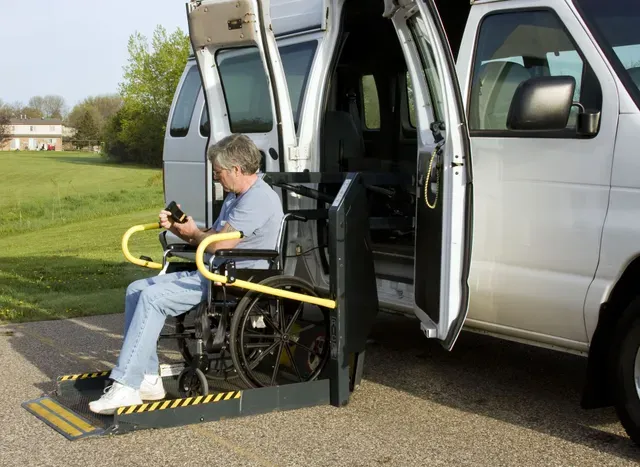
Wheelchair Transportation allows certain passengers to remain in their wheelchair during the journey, depending on the vehicle and transportation arrangement.
Accessibility Features
Accessible vehicles may use ramps or lifts to allow a wheelchair to enter the vehicle. Securement equipment can then be used to keep the wheelchair appropriately positioned during travel.
The type and size of the wheelchair can be relevant when determining whether a particular vehicle can accommodate it.
Planning Around Mobility Needs
Passengers or caregivers can provide information about the wheelchair and mobility requirements when transportation is arranged. This may include whether the passenger uses a manual or powered wheelchair and whether assistance is needed during boarding.
Providing accurate information can help transportation arrangements match the passenger's circumstances.
Ambulatory Transportation for Medical Visits
Not everyone who needs medical transportation uses a wheelchair. Some passengers can walk but experience difficulty with long distances, standing, balance, or entering and exiting vehicles.
Ambulatory Transportation is generally associated with passengers who can walk but may need some level of transportation assistance.
Walking Ability Can Vary
A passenger may be able to walk around their home but struggle with the distance between a parking area and a large medical facility.
This is particularly relevant at hospitals and large healthcare campuses, where the distance from a vehicle drop-off point to a particular department may be considerable.
Mobility Aids
Passengers may use canes, walkers, or rollators to support their mobility. These items need to be considered during transportation because they require appropriate storage while the vehicle is moving.
Knowing what mobility equipment a passenger uses can help clarify the practical requirements of the trip.
Stretcher Transportation for Medical Needs
Some passengers cannot safely sit upright for transportation and may require a stretcher. This can occur because of certain medical conditions, injuries, recovery requirements, or mobility limitations.
Stretcher Transportation Services address transportation situations in which a passenger needs to remain on a stretcher during travel.
Planned Medical Trips
Stretcher transportation may be relevant to scheduled medical appointments or transfers when the passenger does not require an emergency response.
These trips often require additional planning because of the equipment involved and the need to maintain an appropriate passenger position throughout the journey.
Access at Residential Locations
The pickup location can affect the transportation process. A residence may have stairs, narrow hallways, elevators, ramps, or other access considerations.
Providing accurate information about the pickup environment can help identify potential challenges before the scheduled trip.
Planning Ahead for Medical Transportation
Advance planning can make scheduled transportation easier to coordinate. Patients and caregivers can review appointment details, transportation requirements, and destination information before the travel date.
This is particularly useful for recurring medical appointments.
Confirming Appointment Information
Before arranging transportation, it is useful to have the correct appointment date, time, destination address, and relevant department or building information.
Large healthcare facilities can have multiple entrances, so knowing the appropriate destination can reduce confusion upon arrival.
Allowing Additional Travel Time
Medical transportation may involve additional boarding or mobility assistance. Traffic, parking, facility access, and walking distance can also affect the total travel time.
Allowing enough time for the complete journey can help reduce pressure when attending scheduled appointments.
The Importance of Pickup and Drop-Off Details
A transportation plan is not limited to the distance between two addresses. The specific pickup and drop-off locations can influence how easy the journey is for a passenger with mobility limitations.
Home Pickup
At a residential property, the pickup point may involve a driveway, apartment entrance, parking area, or building lobby.
If the passenger uses a wheelchair, walker, or stretcher, the accessibility of the route from the residence to the vehicle can be particularly important.
Medical Facility Drop-Off
Healthcare facilities may have designated patient drop-off areas. Some buildings have separate entrances for outpatient services, emergency departments, rehabilitation, or other departments.
Providing accurate destination information can make the final part of the journey easier to organize.
Transportation for Recurring Healthcare
Some people need medical appointments regularly over an extended period. Transportation can therefore become part of a recurring schedule.
Examples may include physical therapy, rehabilitation, specialist follow-ups, and other ongoing healthcare activities.
Creating a Transportation Routine
A transportation calendar can help patients and caregivers keep track of upcoming appointments. This can be particularly helpful when several appointments occur during the same week.
Recording pickup times, destination information, and mobility requirements in one place can make future planning more consistent.
Adjusting to Schedule Changes
Medical appointments can sometimes be rescheduled or extended. Transportation arrangements may need to change accordingly.
Communicating changes as early as possible can help ensure that transportation details remain aligned with the updated appointment schedule.
The Role of Family Members
Family members may play an important role in arranging transportation for people who cannot drive or manage transportation independently.
However, family availability can vary because of work schedules, distance, and other responsibilities.
Coordinating Multiple Appointments
A family caregiver may need to organize transportation for several different appointments or family members. Keeping an organized schedule can help identify potential conflicts.
For recurring appointments, transportation planning can become part of a broader weekly or monthly routine.
Providing Relevant Information
Family members often know the passenger's mobility requirements and daily routine. Information about mobility aids, wheelchair use, assistance requirements, and pickup conditions can be useful when organizing transportation.
Clear information helps ensure that the transportation arrangement reflects the passenger's actual circumstances.
Medical Transportation and Independence
Transportation can influence a person's ability to maintain independence. Being able to attend healthcare appointments without depending entirely on relatives or friends can provide additional flexibility.
For older adults and individuals with disabilities, access to planned transportation can be particularly important when driving is no longer practical.
Staying Connected to Healthcare
Regular healthcare appointments can be an important part of managing ongoing health needs. Transportation difficulties should not be overlooked when considering access to these appointments.
Having transportation options available can help patients plan around their scheduled healthcare activities.
Supporting Everyday Routines
Healthcare is only one part of a person's daily routine. Patients may also need transportation for shopping, family visits, community activities, or other errands.
Transportation planning can therefore be viewed as part of broader community mobility rather than only a way to reach medical facilities.
Understanding Different Transportation Categories
Medical transportation can involve several different categories depending on passenger needs.
| Transportation Type |
Typical Mobility Situation |
| Non Emergency Medical Transportation |
Planned healthcare-related travel |
| Wheelchair Transportation |
Passenger remains in a wheelchair during travel |
| Ambulatory Transportation |
Passenger can generally walk but may need assistance |
| Stretcher Transportation Services |
Passenger needs to remain on a stretcher |
| Senior Transportation Services |
Transportation needs associated with older adults |
These categories can overlap. For example, an older adult may require non-emergency medical transportation while also using a wheelchair. Another passenger may need ambulatory transportation for one appointment and a different arrangement during recovery from an injury.
Safety and Preparedness
Transportation planning should take the passenger's mobility and circumstances into account. Mobility equipment should be handled appropriately, and passengers should follow any relevant medical or mobility instructions provided by their healthcare professionals.
Communicating Special Requirements
If a passenger has specific mobility restrictions or equipment requirements, those details should be communicated when transportation is planned.
Relevant information might include wheelchair use, stretcher requirements, walking limitations, or the need for assistance during boarding.
Preparing Personal Items
For medical appointments, passengers may need identification, appointment information, medication lists, mobility equipment, or other personal items.
Preparing these items before transportation arrives can make the overall departure process more organized.
Making Medical Travel More Manageable
Medical appointments can already involve preparation, paperwork, waiting, and travel. When mobility limitations are added to the process, transportation can require additional coordination.
Planning the trip in advance can help address practical questions before the day of travel. This may include determining how the passenger will reach the vehicle, what type of transportation is appropriate, how long boarding may take, and where the vehicle should arrive at the destination.
Considering the Complete Journey
A transportation plan should consider the entire journey rather than just the drive. The passenger must be able to move from their starting point to the vehicle and from the vehicle to the healthcare facility.
This broader view can help identify access challenges that might otherwise be overlooked.
Adapting to Changing Needs
Transportation requirements may change over time. Someone recovering from an injury may initially require stretcher transportation, later use wheelchair transportation, and eventually return to ambulatory travel.
Similarly, an older adult's mobility may change gradually. Reviewing transportation requirements periodically can help ensure that arrangements continue to match current circumstances.
Final Thoughts
Non Emergency Medical Transportation provides a planned transportation option for people who need to reach healthcare-related destinations without requiring an emergency response. It can be relevant to older adults, individuals with disabilities, people recovering from injuries, and passengers with different mobility requirements.
In Wesley Chapel, FL, healthcare travel may involve primary care appointments, specialists, therapy, rehabilitation, diagnostic facilities, and other medical destinations. Depending on the passenger's circumstances, transportation may involve ambulatory travel, wheelchair accessibility, or stretcher transportation.
Understanding these different transportation needs can help patients and caregivers plan more effectively. Details such as mobility level, equipment, pickup accessibility, appointment times, destination information, and assistance requirements can all contribute to a more organized travel plan.
Ultimately, planned medical transportation is one part of maintaining access to healthcare and everyday community activities. When transportation arrangements are considered alongside individual mobility needs, scheduled medical travel can be approached in a more informed and practical way.




Share this page with your family and friends.