A bar of soap is simple, but the carton around it has to work harder than most. It must resist moisture and scent oils, hold its shape on a shelf and look inviting in a shopper's hand. Choosing the right custom paper soap boxes starts with knowing which paper types, box styles and coatings suit the kind of soap you make. This guide covers the main options so you can decide with confidence.
Why Paper Suits Soap So Well
Paper is light, recyclable and easy to print, which fits the natural image many soap brands want. It folds flat for cheap shipping and storage, and it accepts simple one-color stamping as well as full-color artwork. Customers also tend to link paper with lower waste, which supports handmade and eco-minded lines. The main challenge is moisture, since damp or oily soap can stain and soften untreated paper, so the right grade and coating matter.
Paper Types Worth Comparing
Coated white board gives the sharpest print and the brightest colors, which suits bold or detailed designs. Kraft paper has a warm, earthy look and pairs well with simple stamps and natural-toned inks. Recycled board supports sustainability claims, though its surface can be slightly rougher. Textured or specialty papers add a tactile, premium feel, but cost more and can soften fine print. Request a sample in each candidate and feel the stiffness yourself before deciding.
Box Styles for Different Bars
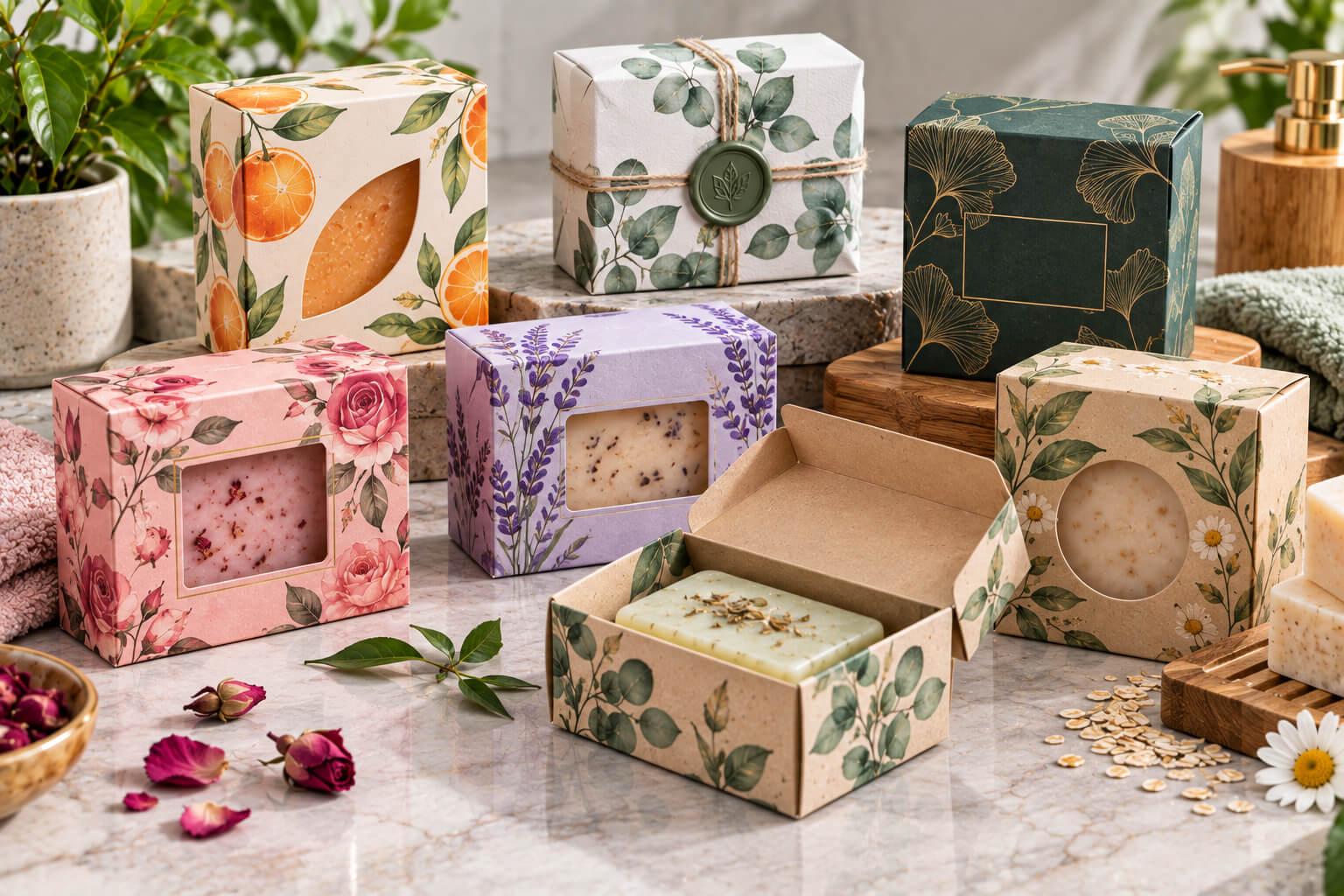
Tuck-end cartons are the everyday choice, with simple flaps and low cost on larger runs. Sleeves slide over a bar wrapped in tissue or film and give a neat, gift-like reveal. Window cartons let shoppers see and sometimes smell the product, though the film must resist fogging. Pillow boxes suit small guest-size bars, and tray-and-lid styles hold gift sets with two or three items. Choose the style around how the soap is sold and handled.
Four Points to Confirm Before You Request a Quote
Settle these early, and your first proof will need fewer changes.
- Bar dimensions, measured after the soap has fully cured and shrunk.
- Order quantity, since larger runs lower the cost per unit once the design is final.
- Paper weight, chosen to balance stiffness, feel and price.
- Moisture protection, deciding between a coating, an inner wrap or a liner.
Coatings That Guard Against Moisture and Oil
An uncoated surface looks natural but marks easily around damp or heavily scented bars. A light water-based coating adds protection without changing the look much. Matte varnish keeps a soft, modern finish, while gloss brightens color and wipes clean. Wrapping the bar in tissue or wax paper adds a second barrier, which is often cheaper than a heavy coating on the carton itself. Test a filled sample for two weeks before approving a large order.
Getting the Size and Fit Right
Soap shrinks as it cures, so measure bars at their final size rather than fresh from the mold. Allow a gap of one or two millimeters on each side, so the bar slides in easily without rattling. Remember that paper thickness reduces the inside space at every fold. A quick mock-up folded from the flat template often shows fit problems before any board is cut.
Labels and Required Information
Ingredient lists, net weight and business details must stay readable and sit on a flat area away from folds. Check the labeling rules in your selling region before printing, and keep a dated copy of each approved label. Whenever your recipe changes, request a new proof so outdated information never reaches a customer.
Working With a Printer That Tests With Your Bars
The Custom Printers builds each order around the soap it has to hold. You can send cured bars, request samples in the paper and coating you are considering, and review how they cope with moisture before production begins. That process gives you clear evidence of how your custom paper soap boxes will look and perform on a real shelf.
Good soap cartons balance look, protection and cost. Choose the style around the bar, pick a paper that suits your brand and test a filled sample before you approve the run. If you want help working through those choices, The Custom Printers is ready to assist.
Luxury Cosmetic Packaging: Materials, Finishes and Tips
A customer who pays a premium price expects the experience to start before the lid comes off. The weight of the box, the sound of the closure and the feel of the surface all signal quality in a few seconds. Choosing luxury cosmetic packaging means balancing these sensory cues with protection, cost and brand identity. This guide covers the main materials, finishes and checks so you can plan with confidence.
What Makes a Box Feel Premium
Premium is a combination of small details. Thick board gives a solid feel in the hand, while crisp corners suggest careful construction. A snug lid that lifts with gentle resistance feels more expensive than one that falls away. Restraint matters too, since a few well-chosen features usually look richer than a box loaded with effects. Think of the unboxing as a short story with a clear beginning, middle and end.
Materials That Set the Tone
Rigid board is the classic choice, built from thick grayboard wrapped in printed or textured paper. It feels heavy and lasts well, which suits gift sets and high-value items. Specialty papers, such as linen, suede-touch or pearlescent stock, add texture that customers remember. Thick folding carton works for lighter items at a lower price while still printing sharply. Magnetic closures, ribbon pulls and fabric linings raise the feel further. Ask for physical samples, since paper swatches tell you far more than screens.
Finishes That Catch the Light
Soft-touch lamination gives a velvety surface that invites handling. Foil stamping adds a metallic shine to logos or borders, and embossing raises a design so it catches light at an angle. Debossing presses a pattern inward for a subtle, refined look. Spot gloss highlights one element against a matte background. Choose one or two signature features, because too many can look busy and push up the price without improving the impression.
Four Decisions to Settle Before You Request a Quote
Agree on these early, and your first proof will need fewer changes.
- Product dimensions, measured with the cap, label and any wrap included.
- Order quantity, since higher volumes lower the cost per unit once the design is final.
- Closure type, choosing between magnet, ribbon, tuck or lift-off lid.
- Insert material, deciding between card, foam, velvet or molded pulp.
Inserts That Protect and Present
An insert does two jobs, holding products still and showing them off. Foam gives a soft cradle for glass bottles, while velvet or fabric covers add a jewelry-like touch. Molded pulp is a firm, recyclable option that suits eco-minded brands. Cutouts should match the product exactly, leaving no rattle. Test with real, filled items, since an empty sample bottle can hide fit problems.
Sustainability Without Losing the Luxury Feel
Many shoppers now expect premium goods to be responsible too. Recycled rigid board, FSC-certified paper and water-based coatings all reduce impact without harming the look. Avoid mixing materials that make recycling difficult, such as heavy plastic lamination over paper. A short note on the inside lid explaining how to recycle the box shows care for both the planet and the customer.
Proofing and Sampling
Digital proofs cannot show texture, weight or true color. Request a finished sample on the actual board, and compare the colors in daylight and shop lighting. Open and close the lid repeatedly to test the hinge, magnet or ribbon. Press the corners and edges to check for weak glue. Keep an approved sample on file so later runs can match it.
Working With a Printer That Builds Premium Samples
The Custom Printers builds each order around the product and the experience you want customers to have. You can share your item, request a finished sample in the board, finish and closure you are considering, and review it by hand before production begins. That process gives you clear evidence of how your luxury cosmetic packaging will look and feel.
A premium carton earns its cost through small, carefully judged details. Choose materials that feel right in the hand, limit the number of finishes and test a real sample with the actual product. If you want help working through those decisions, The Custom Printers is ready to assist.



Share this page with your family and friends.