Payroll is no longer just about calculating employee salaries at the end of every month. As businesses become more digital, HR teams need faster, more accurate, and flexible ways to manage employee compensation, attendance, deductions, and payroll records. This is where Cloud Based Payroll Software is becoming an important part of modern business operations.
What Is Cloud Based Payroll Software?
Cloud Based Payroll Software is a payroll management system that operates through cloud technology. Instead of relying on software installed on a specific office computer, authorized users can access payroll information through an internet-connected device.
Depending on the platform, businesses can use it to manage salary calculations, payslips, employee information, attendance, leave, deductions, payroll reports, and other payroll-related processes.
Why Is Cloud Payroll the Future?
1. Greater Accessibility
One of the biggest advantages of cloud technology is accessibility. HR managers and authorized employees can access payroll information from different locations without being dependent on a particular office computer.
This is especially useful for businesses with multiple branches or employees working remotely.
2. Reduced Manual Work
Traditional payroll processes often involve spreadsheets, repetitive calculations, and manual data entry. These activities can consume significant time and may increase the possibility of human error.
Cloud payroll solutions can automate many routine calculations and processes, allowing HR teams to focus on more strategic responsibilities.
3. Better Payroll Accuracy
Salary calculations can involve multiple components, including basic salary, allowances, deductions, overtime, leave adjustments, and other benefits. Automated calculations can help maintain consistency and reduce errors caused by manual processing.
HR teams can also review payroll records and reports before finalizing salary payments.
4. Real-Time Information
Cloud-based systems can provide access to updated payroll information in one centralized platform. HR professionals can review employee records, payroll status, reports, and other available information without searching through multiple spreadsheets or files.
Having centralized information can make payroll administration more organized.
5. Improved Employee Experience
Employees increasingly expect quick and convenient access to workplace information. Many modern payroll platforms include employee self-service features.
Employees may be able to:
These features can reduce routine HR queries and give employees greater visibility into their payroll information.
The Growing Importance of Payroll Automation
Payroll automation is likely to become increasingly important as organizations grow. A larger workforce means more employee records, salary structures, attendance data, and payroll transactions to manage.
Rather than increasing administrative work at the same rate as employee growth, businesses can use automation to streamline recurring payroll activities.
For example, attendance data can potentially be integrated with payroll calculations so that HR teams do not have to repeatedly enter the same information manually.
Cloud Payroll and Data Security
Payroll contains sensitive employee information, so security is an important consideration when selecting a cloud payroll platform.
Businesses should evaluate whether a provider offers appropriate security controls such as:
-
Role-based access
-
Data encryption
-
Secure authentication
-
Regular backups
-
Access monitoring
-
Data protection policies
Organizations should also establish internal policies defining who can access payroll information and what actions different users are permitted to perform.
Cloud Payroll for Growing Businesses
Small businesses may initially manage payroll using spreadsheets or manual processes. However, as the workforce expands, these methods can become increasingly difficult to maintain.
Cloud payroll can provide a scalable approach where businesses can add employees and manage payroll information through the same centralized platform.
This can be particularly useful for companies expecting continued growth or operating across multiple locations.
Integration With Other Business Systems
The future of payroll is also closely connected to integration. Modern businesses often use separate systems for HR, attendance, accounting, employee management, and finance.
Cloud payroll platforms can integrate with other business applications, allowing relevant information to move between systems more efficiently.
For example, attendance information can be connected to payroll, while payroll data can potentially be transferred to accounting systems for financial reporting.
The Role of Technology in Future Payroll Management
Emerging technologies are expected to continue changing how payroll departments operate. Automation, analytics, artificial intelligence, mobile access, and system integrations can help HR professionals manage increasingly complex payroll requirements.
However, technology should support—not replace—the need for proper payroll oversight. Businesses still need appropriate processes, accurate employee data, compliance monitoring, and qualified personnel to review payroll activities.
How to Choose the Right Cloud Payroll Solution
Before adopting a cloud payroll platform, businesses should consider:
-
Payroll requirements: Check whether the software supports the company's salary structures and payroll processes.
-
Compliance features: Ensure it supports applicable statutory and tax requirements.
-
Integration: Look for compatibility with HR, attendance, accounting, and other systems.
-
Security: Review access controls and data protection measures.
-
Scalability: Make sure the solution can accommodate future employee growth.
-
Employee self-service: Consider features that allow employees to access their payroll information.
-
Support: Evaluate the provider's implementation and customer support services.
Conclusion
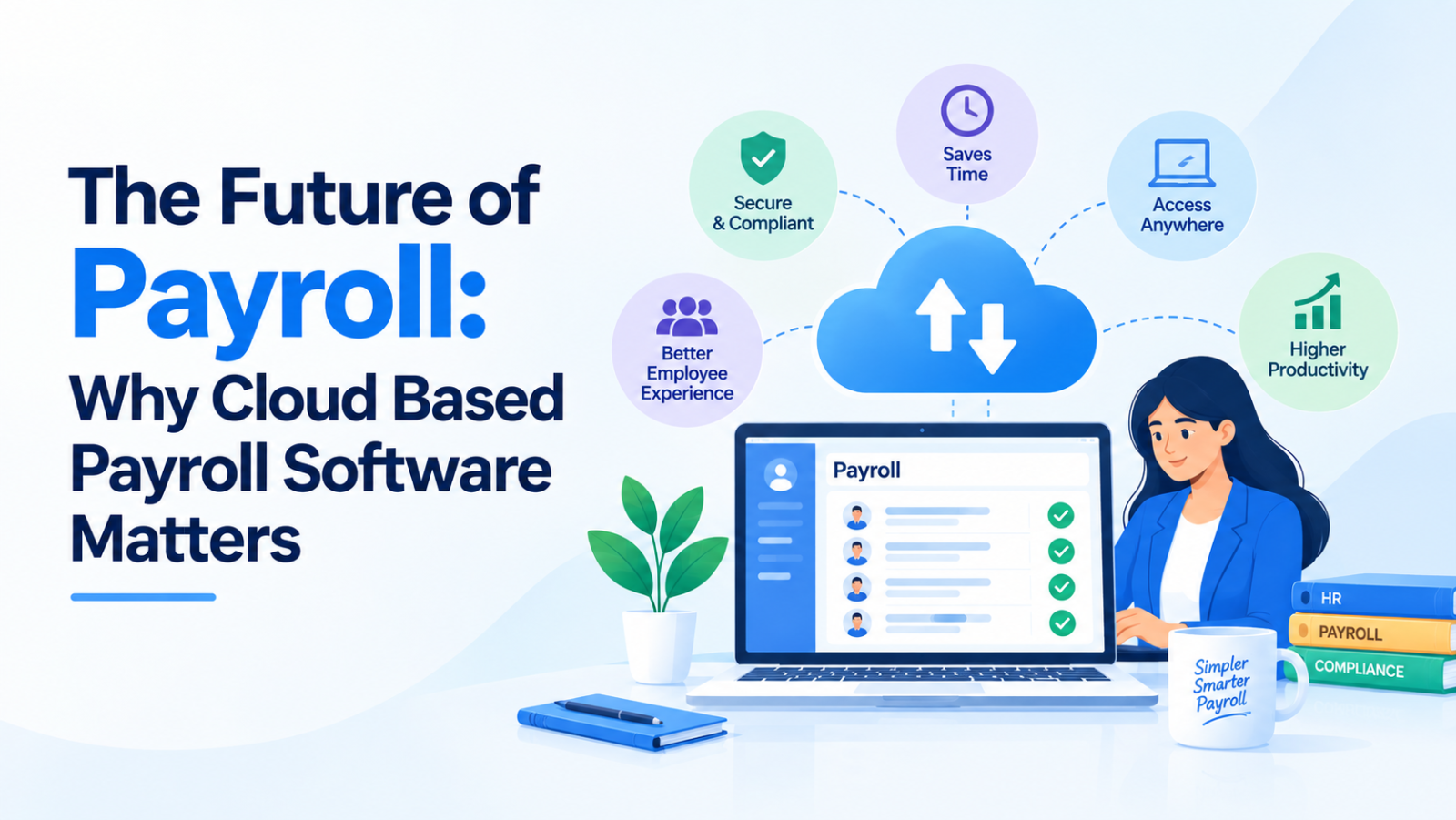
The future of payroll is moving toward greater automation, accessibility, integration, and employee self-service. Cloud Based Payroll Software can help businesses modernize payroll management by reducing repetitive administrative work, centralizing information, and providing authorized users with convenient access to payroll data.
As organizations continue to adopt digital HR solutions, cloud payroll can become an important component of a more connected and efficient payroll management strategy.




Share this page with your family and friends.