There is a moment every buyer knows. You find a leather jacket that looks exactly right. The surface is worn in. The cut is clean. The zipper has that old school feel. And then a question hits you: does this thing actually do anything on the road, or does it just look like it does?
That question matters more than most people think. A vintage motorcycle jacket built for actual riding and one built to look like a rider wore it are two completely different products. They can look nearly identical from across the room. But when the road goes wrong, only one of them does its job.
This guide breaks down exactly what to check before you spend your money.
Why the Line Between Function and Fashion Is Blurry
This iconic jacket silhouette became a fashion statement long before most of its current buyers were born. Marlon Brando wore a Perfecto in 1953. Since then, the design has been copied hundreds of times by brands that had zero interest in road safety.
The result is a market flooded with jackets that look vintage and feel authentic but are built with thin leather, weak stitching, and no protective inserts anywhere. A few numbers that put this in perspective:
• The global motorcycle apparel market was valued at over 9.5 billion USD in 2023 and is still growing year over year
• A significant portion of that growth is driven by fashion forward riding jackets that blend looks with genuine safety features
• However, a large share of leather jackets sold as motorcycle jackets carry no protective rating at all
• CE certified riding jackets make up a relatively small percentage of total leather jacket sales worldwide
Most buyers are choosing based on looks alone. That is where problems start.
Check the Leather First
Real riding leather has to hold up against road rash. Fashion leather does not have to do anything except look good on a rack.
Here is what separates them:
• Full grain cowhide is the standard for protective riding jackets. It is dense, tightly fibered, and holds together on impact
• Fashion jackets often use corrected grain leather or split leather. Both feel soft but tear far more easily under friction
• A riding jacket should feel stiff when new. If it feels broken in right out of the bag, it was likely processed to look aged rather than worn in through actual use
• Thickness is a real indicator. Riding leather sits between 1.2mm and 1.4mm at minimum. Fashion leather is often thinner than 1mm
Pick the jacket up and turn it inside out if you can. Look at the backing of the leather. Full grain leather has a tight, visible fiber structure on the flesh side. Corrected grain leather looks smoother and more uniform because it has been sanded and coated.
Look for Armor Pockets
This is the easiest tell of all. A jacket built for riding will have pre sewn pockets for CE rated armor at the shoulders, elbows, and ideally the back. These pockets are usually visible on the inside lining when you flip the jacket open.
A fashion jacket will not have them. Some fashion jackets do have quilted padding sewn onto the shoulders that looks like armor but provides no real impact protection.
Check every interior pocket on the jacket. If you see flat zippered or velcro pockets positioned at the shoulder and elbow joints, those are armor slots. If you see only regular lining fabric and standard chest pockets, it is a style jacket.
Stitching Quality Tells the Story
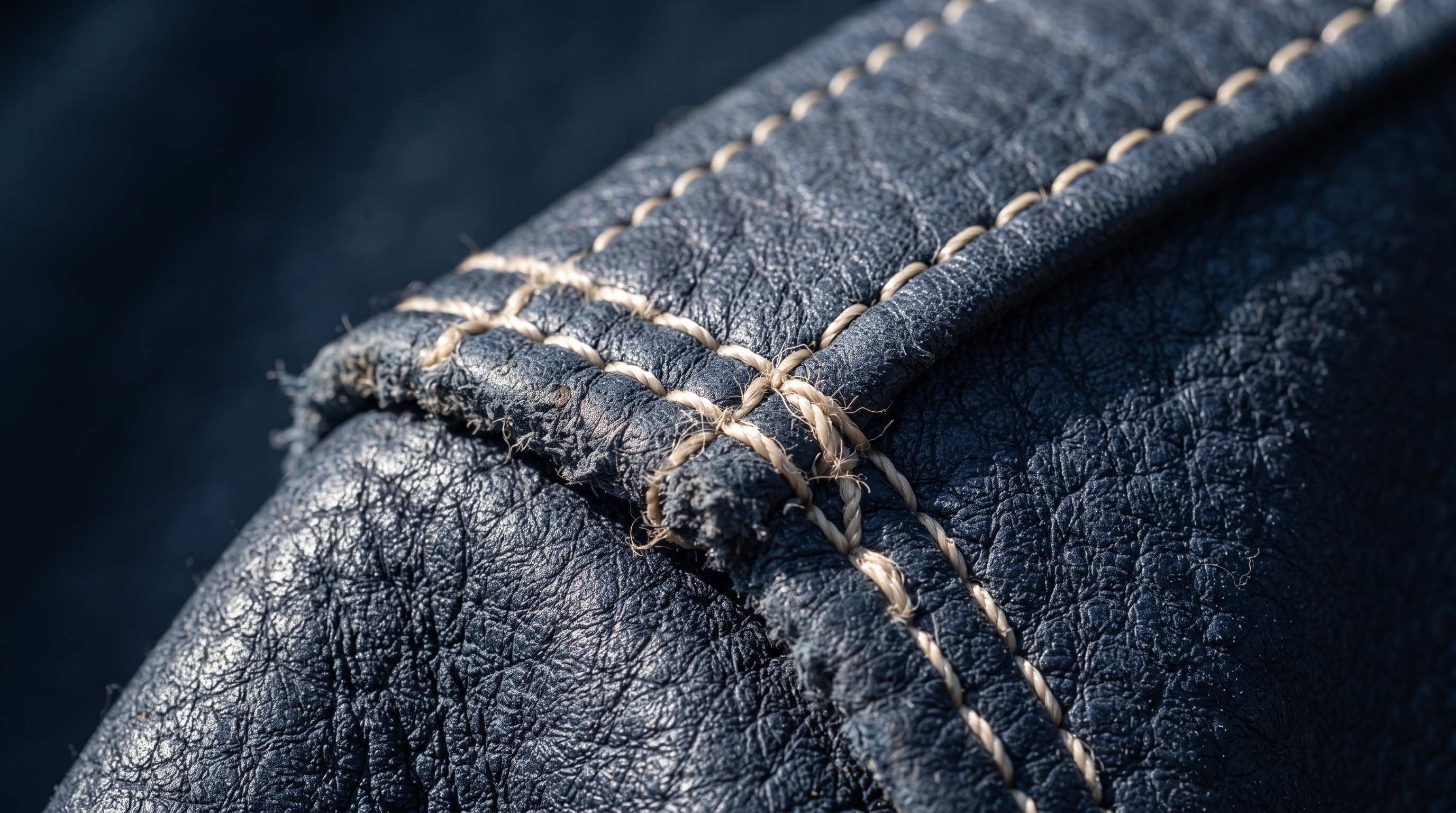
This is the step most buyers skip entirely. Stitching on a real riding jacket is doubled or tripled at every major seam. That redundancy exists because a single seam will blow out in a high speed slide.
Look closely at the seams along the shoulders, underarms, and side panels. On a real riding jacket:
• The thread count per inch is noticeably higher and the rows are more tightly packed
• Seams are reinforced with extra rows of stitching running parallel to the main seam
• The thread itself is thicker and more visible compared to fashion stitching, which is often fine and decorative
On a fashion jacket, single needle stitching is common because it looks clean and costs less. It is not built to absorb the kind of stress that comes from road contact.
The Fit Is Different
Riding jackets are cut specifically for a forward leaning riding position. If you stand completely upright in one, the sleeves may feel slightly long and the back panel may feel stretched. That is intentional. The armor pockets are designed to sit correctly over your joints when you are bent forward over handlebars, not when you are standing up straight in a shop.
Fashion jackets, by contrast, are cut to look good while standing. If a vintage style jacket fits you perfectly upright but feels tight across the back when you hunch forward, it was designed for aesthetics and not for riding.
The Zipper Closure Matters More Than You Think
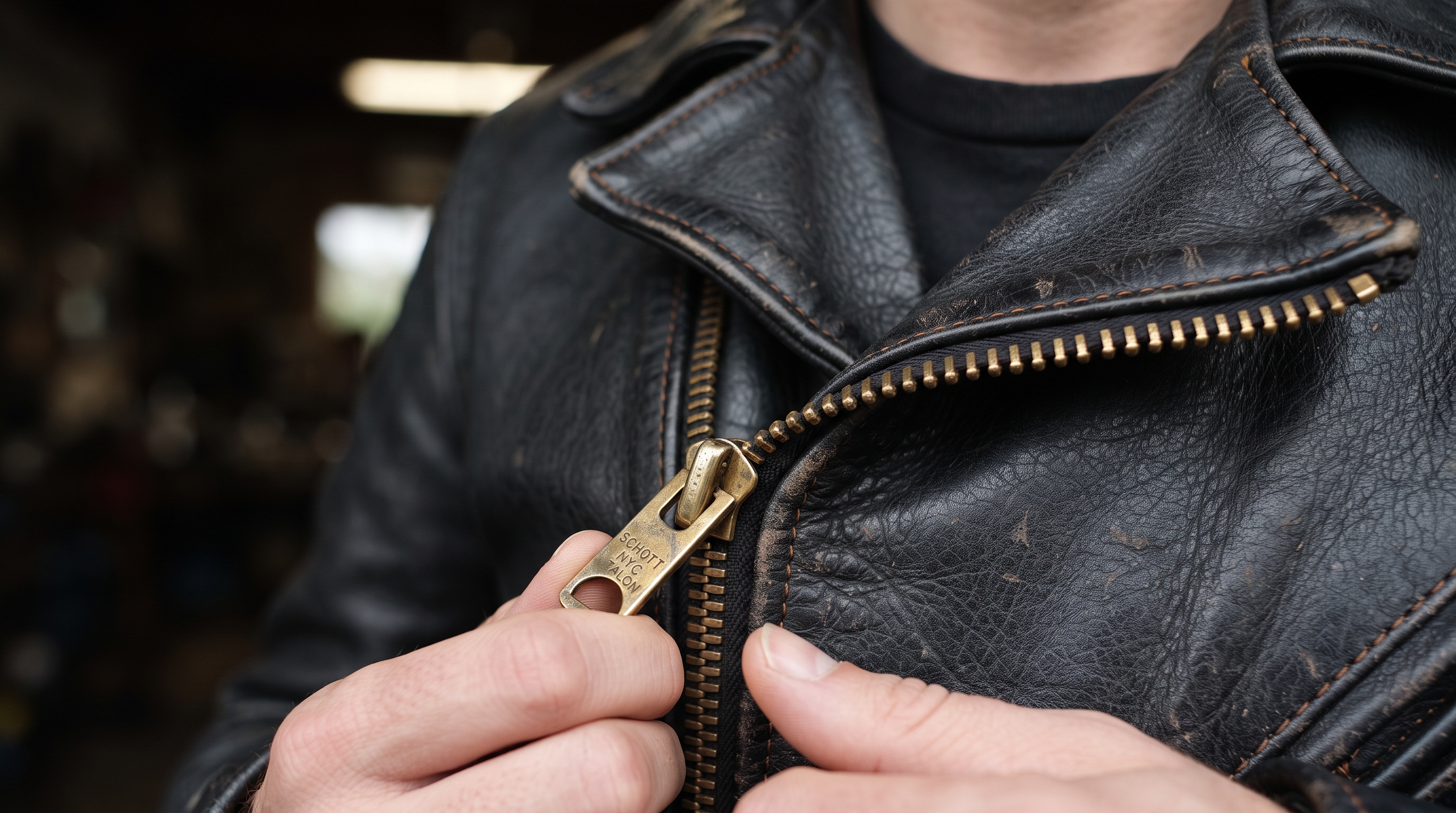
On classic riding jackets, the main zipper runs at an angle from the waist on one side up to the opposite shoulder. This asymmetric layout is called a Perfecto style closure and it serves a real purpose. It sits away from the sternum on impact and creates a natural seal against wind when you are leaned forward on a bike.
Many fashion jackets use a symmetric center front zip because it is easier to manufacture and looks cleaner on a hanger. That is a valid design choice for style. But it signals that the designer was working from an aesthetic brief, not a riding performance brief.
Also check the zipper hardware up close. Brass or heavy gauge metal zippers are standard on jackets built for the road. Lightweight chrome plated alloy zippers are far more common on fashion pieces.
Different Jacket Types and What They Signal
Understanding different jacket types helps you set the right expectations before you start comparing individual pieces. A classic biker jacket, a racing jacket, and a cafe racer jacket all fall under the motorcycle jacket umbrella. But they were each built around specific riding styles and protection requirements.
A classic biker jacket was designed for upright cruiser riding. The cut is more relaxed and the primary protection zones focus on the shoulders and arms.
A racing jacket is purpose built for speed. The fit is close, the panels are heavily reinforced, and the armor system is comprehensive across shoulders, elbows, and the back.
A touring jacket adds weather protection on top of impact protection. It is typically heavier and built to handle long hours in varying conditions.
When a leather jacket does not fit cleanly into any of these categories, and has no identifiable design roots in actual riding, it was almost certainly built for the fashion market.
The Cafe Racer Jacket: Where Style and Function Actually Meet
If there is one vintage style that naturally bridges both worlds, it is the cafe racer jacket. The original cafe racer riders of 1960s Britain needed jackets that performed at speed on lightweight, nimble bikes. The design that came out of that era is minimal, slim, and functional by origin.
Today, a well built cafe racer jacket should still carry those original qualities. Look for the same markers covered throughout this guide: full grain cowhide leather, pre sewn armor pockets, strong doubled seams, and a cut that accounts for a forward leaning riding position. A cafe racer that checks every one of those boxes gives you both the look and the protection, which is exactly what good vintage inspired riding gear should deliver.
What Leather Jacket Black Gets Right
At Leather Jacket Black, the approach is to build jackets that work for both riders and buyers who prioritize quality. The leather across the collection is full grain cowhide. Stitching is reinforced at the seams. The cuts are designed with real wearability in mind rather than just visual appeal on a product page.
You should not have to choose between a jacket that looks right and one that actually performs. The best vintage style pieces do both without asking you to compromise.
Quick Checklist Before You Buy
Run through this before committing to any vintage style motorcycle jacket:
• Is the leather full grain and at least 1.2mm thick when you feel the weight of it?
• Are there dedicated armor pockets at the shoulders and elbows on the inside lining?
• Is the stitching doubled at every major seam rather than single needle throughout?
• Does the fit feel slightly relaxed upright but snug and correct when you lean forward?
• Is the main zipper asymmetric rather than running straight down the center front?
• Is the zipper hardware solid metal rather than thin lightweight alloy?
If most of those boxes do not check out, the jacket was built for style. That is not a problem as long as you know going in what you are buying and what you are not.
Frequently Asked Questions
Can a fashion leather jacket ever protect you in a crash?
It can offer some minimal protection, but it will not perform the way a purpose built riding jacket will. The leather is thinner, the seams are weaker, and there are no armor inserts. In a serious slide at road speed, the jacket may tear well before it has a chance to protect you.
What does CE rated armor actually mean?
CE stands for Conformite Europeenne and indicates that protective armor inserts have passed European safety standards testing. CE Level 1 is the entry tier. CE Level 2 offers stronger impact absorption. If a jacket includes CE rated armor slots, it was at least designed with rider safety as part of the brief.
Is a vintage motorcycle jacket always less safe than a modern one?
Not automatically. Some original vintage pieces from the 1950s and 1960s were built from incredibly thick, durable leather that still outperforms a lot of modern fashion copies. The real concern is with modern jackets that are made to look vintage but use inferior materials throughout.
How do I know if the leather is full grain without a label?
Look at the flesh side of the leather if you can access it. Full grain leather shows visible, tight fibers on the underside. Corrected grain and split leather look smoother and more uniform because they have been processed to hide natural variation. You can also feel it. Real full grain leather has slight texture differences across its surface, because it has not been buffed flat.
Does a center front zipper automatically mean a jacket is not safe for riding?
Not automatically. Some modern riding jackets use a center zip with a storm flap behind it for wind protection. But an asymmetric Perfecto style zipper is a much stronger signal that the jacket was designed with riding function in mind from the very start of the design process.
The market will keep offering leather pieces that look authentic without being built for the road. Knowing what to check puts you ahead of most buyers. A jacket that gets the leather right, has the armor slots, carries reinforced seams, and fits for riding is worth the search. Those pieces exist. You just need to know where the differences actually show up.




Share this page with your family and friends.