Finding the right business prospects is one of the biggest challenges in modern B2B marketing. Sales teams, marketing agencies, and business owners often spend hours searching online directories, collecting contact details, and organizing information into spreadsheets. Although these activities are important, manual research can consume valuable time that could be spent building relationships and closing deals.
A Yellow Pages Scraper offers a more efficient approach to business prospecting by helping users collect and organize available information from online business directories. Instead of copying listings individually, businesses can streamline repetitive research tasks and discover potential customers based on industry, location, and business category.
When combined with accurate data, relevant targeting, and personalized outreach, this tool can help businesses develop a more organized and productive lead generation strategy.
What Is a Yellow Pages Scraper?
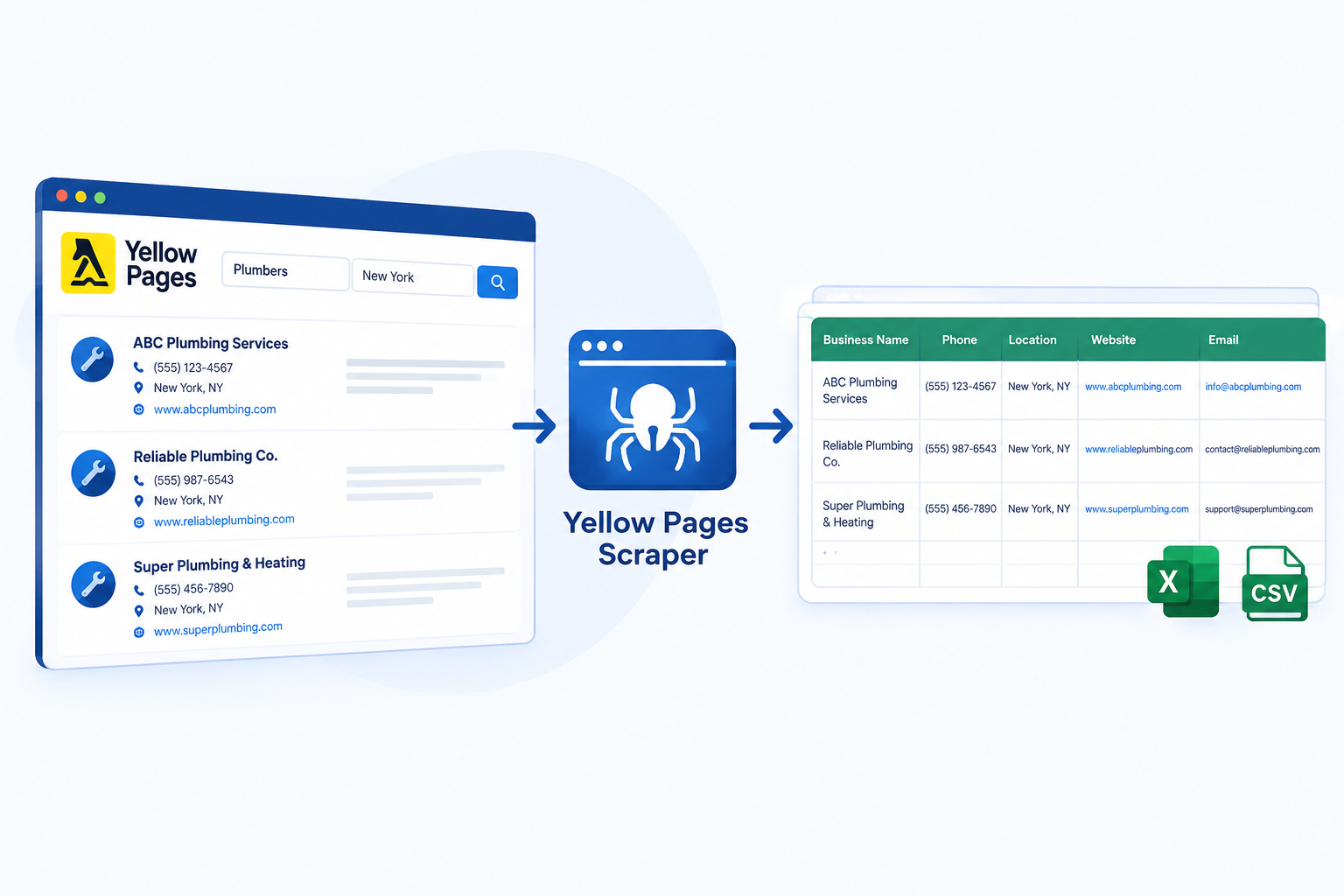
A Yellow Pages Scraper is a software tool designed to collect business information from online directories, such as Yellow Pages websites, where permitted. Depending on the platform and its features, it may gather details such as business names, phone numbers, addresses, website URLs, business categories, and publicly available email addresses.
The collected information can then be organized into structured records for further research and analysis.
For example, a digital marketing agency looking for potential clients in the restaurant industry can search relevant business listings within selected locations. Rather than manually recording every listing, the agency can use a scraper to streamline the collection process.
However, the information available depends on the directory, website structure, and capabilities of the tool. Email addresses, in particular, may require additional website research and verification.
Why Traditional Prospecting Methods Fall Short
Traditional prospecting often involves searching multiple websites, opening individual business profiles, copying contact information, and entering it into spreadsheets. While this approach can work for small projects, it becomes increasingly difficult as the number of prospects grows.
Several challenges make manual prospecting less efficient:
-
Time-consuming research: Collecting information one listing at a time slows down lead generation.
-
Repetitive data entry: Copying similar details repeatedly increases administrative work.
-
Inconsistent records: Different formatting styles can make contact databases difficult to manage.
-
Limited market coverage: Researchers may overlook relevant businesses in nearby locations or less familiar categories.
A Yellow Pages Scraper can help reduce these challenges by automating suitable data collection tasks. This allows teams to spend less time gathering information and more time evaluating prospects and planning effective outreach campaigns.
Key Benefits of Using a Yellow Pages Scraper
1. Faster Business Lead Collection
Time is an important resource in sales and marketing. A scraper can simplify repetitive collection tasks by gathering multiple business listings according to selected search criteria.
Instead of manually processing each result, users can collect available information in a more structured workflow. This is particularly useful for businesses that regularly research new markets or maintain prospect databases.
The time saved can be redirected toward qualifying leads, preparing proposals, and communicating with potential customers.
2. Access to Industry-Specific Prospects
Not every business is a suitable customer for every product or service. Effective prospecting requires identifying companies that match a specific target audience.
A Yellow Pages Scraper can help users discover businesses across relevant categories, including construction, healthcare, restaurants, retail, automotive services, and professional services.
For example, a company selling appointment management software may focus on clinics and healthcare providers. A marketing agency specializing in local businesses may target restaurants, salons, and home service companies.
Industry-based research helps businesses create more relevant prospect lists and avoid wasting resources on unsuitable contacts.
3. Location-Based Business Discovery
Geographic targeting is especially valuable for businesses offering local services or operating within specific territories.
A Yellow Pages Scraper may support searches by city, region, postal area, or surrounding locations, depending on the directory and software features.
A commercial cleaning company, for instance, could identify businesses within its service area. Similarly, a regional distributor could research retailers and wholesalers in neighboring cities.
Location-based prospecting makes it easier to organize sales territories, identify potential local partnerships, and explore expansion opportunities.
4. Organized and Exportable Data
Collecting business information is only the first step. Teams also need a practical way to store, review, and use that information.
Many scraping tools support exports to formats such as CSV and Excel. These formats make it easier to sort records, remove duplicates, categorize prospects, and transfer information into compatible CRM systems.
A well-organized spreadsheet might include business names, categories, locations, website URLs, phone numbers, and available email addresses.
Before using the data, businesses should review its accuracy, remove duplicate entries, and verify important contact details. Organized data is more useful when it is also relevant and reliable.
5. More Efficient Sales Workflows
A successful prospecting process involves more than finding contact information. Sales teams must qualify prospects, personalize communications, follow up, and measure results.
By reducing repetitive research, a Yellow Pages Scraper can help teams devote more attention to these activities.
For example, a sales representative can segment collected businesses by industry and location, identify the most promising prospects, and prepare tailored messages for each group.
Automation does not replace relationship building. Instead, it helps create more time for the human activities that contribute to stronger business relationships.
How a Yellow Pages Scraper Supports Different Business Goals
A Yellow Pages Scraper can support several business functions when used appropriately.
-
B2B lead generation: Discover companies that may benefit from a product or service.
-
Local marketing: Identify businesses within specific service areas for relevant campaigns.
-
Market research: Explore business categories and understand the types of companies operating in a market.
-
Agency prospecting: Research potential clients for marketing, web development, or consulting services.
-
Sales expansion: Identify businesses in new regions and investigate potential commercial partnerships.
The effectiveness of these activities depends on how well the collected information matches the company's objectives.
What Features Should You Look for in a Yellow Pages Scraper?
Choosing the right tool can make a significant difference in daily prospecting operations. Businesses should evaluate features based on their actual requirements.
Important capabilities include:
-
Category and location filters: Help narrow searches to relevant businesses.
-
Email extraction: May identify publicly available email addresses from associated websites where supported and permitted.
-
Surrounding-area searches: Help discover prospects beyond a single location.
-
CSV and Excel exports: Simplify data organization and reporting.
-
Easy-to-use interface: Makes the collection process more accessible to different team members.
-
Data quality controls: Help identify duplicates, missing fields, and potentially outdated information.
Businesses should also review the tool's supported websites, usage limits, pricing, and compliance requirements before making a decision.
How to Use a Yellow Pages Scraper Effectively
A structured approach helps turn collected listings into useful business opportunities.
Step 1: Define your target audience. Identify the industries, business sizes, locations, and customer characteristics most relevant to your offering.
Step 2: Choose suitable search criteria. Select the appropriate business categories and geographic areas to keep research focused.
Step 3: Collect available information. Use the scraper to gather permitted business listing details according to your requirements.
Step 4: Clean and verify the data. Remove duplicate records, review missing information, and verify email addresses where applicable.
Step 5: Segment your prospects. Organize businesses by industry, location, or potential customer needs.
Step 6: Plan personalized outreach. Develop relevant messages that explain how your product or service may benefit each prospect. Track responses and refine your approach over time.
This process helps ensure that prospecting focuses on business relevance rather than simply collecting a large number of records.
Best Practices for Responsible Business Data Collection
Responsible data collection is essential when working with online directories. Businesses should review website terms of service, follow access restrictions, and comply with applicable privacy and data-protection laws.
They should also distinguish between collecting publicly visible information and having permission to use it for particular marketing activities. Public availability does not automatically authorize every type of use.
Before launching email campaigns, verify contact details, follow applicable consent requirements, provide required sender identification, and honor unsubscribe requests. Avoid excessive requests that could burden websites or violate their rules.
These practices support a more sustainable approach to prospecting while helping protect business reputation.
Common Mistakes to Avoid
Even with automation, certain mistakes can reduce the value of a prospecting campaign.
One common problem is collecting too many irrelevant contacts without defining a target audience. Another is assuming every extracted email address is valid or that every business listing is current.
Failing to remove duplicate records can also lead to repeated outreach, while generic messages may struggle to generate meaningful responses.
Businesses should prioritize data quality, audience relevance, personalization, and email deliverability. A smaller, well-targeted prospect list can be more useful than a much larger collection of poorly qualified contacts.
How to Choose the Right Yellow Pages Scraper
The right scraper should match your business goals, research volume, and workflow requirements. Compare available search filters, supported directories, export options, ease of use, and pricing.
It is also worth evaluating whether the tool can collect the specific information you need and whether its collection methods comply with relevant website rules.
Rather than choosing a tool solely because it promises a large volume of leads, consider how effectively it helps your team identify suitable prospects and maintain organized records.
Conclusion
A Yellow Pages Scraper can make business prospecting more efficient by simplifying directory research, organizing available business information, and supporting industry- and location-based targeting. These capabilities can help sales teams, agencies, and business owners spend less time on repetitive collection tasks and more time developing meaningful business opportunities.
However, automation alone does not guarantee successful lead generation. Accurate information, relevant targeting, responsible data practices, and personalized communication remain essential.
By combining a suitable Yellow Pages Scraper with a well-planned prospecting strategy, businesses can build a more organized process for discovering potential customers and supporting long-term growth.
Frequently Asked Questions (FAQs)
1. What is a Yellow Pages Scraper used for?
A Yellow Pages Scraper collects and organizes available business listing information from online directories, helping users research potential customers and business opportunities.
2. How does a Yellow Pages Scraper help with B2B lead generation?
It streamlines repetitive research, supports industry and location filtering, and helps businesses organize prospect information for further qualification and outreach.
3. Can a Yellow Pages Scraper find business email addresses?
Some tools can extract email addresses available in listings or associated websites. Coverage varies, and collected addresses should be verified before use.
4. Can scraped business data be exported to Excel or CSV?
Many tools support CSV or Excel exports, allowing users to organize, filter, and review collected information in compatible spreadsheet applications.
5. Is using a Yellow Pages Scraper legal?
Legality depends on the collection method, website terms, jurisdiction, type of information, and intended use. Businesses should check applicable laws and website restrictions before scraping.




Share this page with your family and friends.