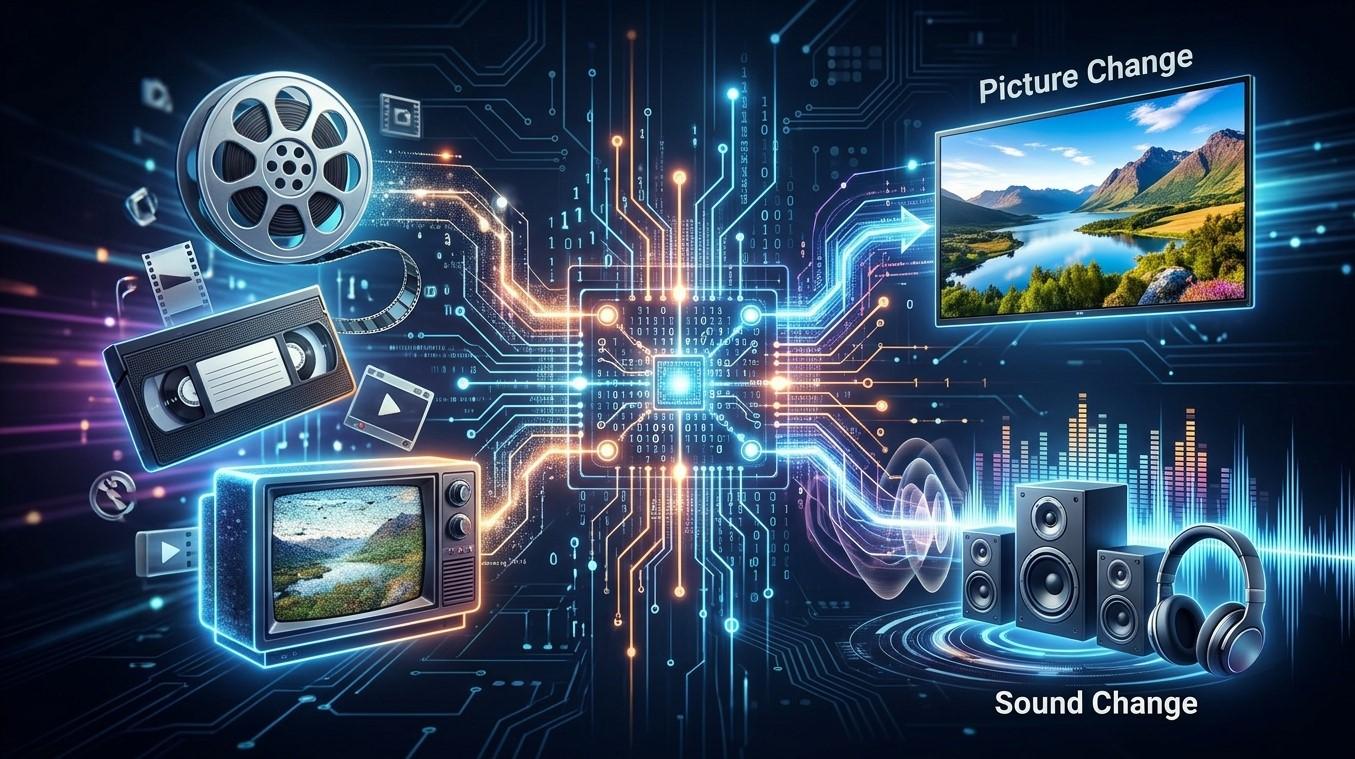
Transcoding is a technology used in digital streaming to convert video and audio from one format, resolution, bitrate, or encoding standard into another. It helps streaming services deliver content to different devices and internet connections. However, this conversion can sometimes affect picture sharpness, sound quality, and overall viewing performance.
Understanding how transcoding works can help you identify why a program looks different on your screen or why its audio sounds slightly changed. Whether you watch television through an IPTV service or a compatible IPTV India subscription, knowing the basics can make it easier to choose suitable streaming settings and equipment, including an Indian IPTV Box.
Table of Contents
-
What Is Transcoding?
-
How Does Transcoding Work?
-
Why Does Transcoding Change Picture Quality?
-
How Can Transcoding Affect Sound?
-
Transcoding vs. Encoding vs. Decoding
-
How to Get Better Picture and Sound Quality
-
Frequently Asked Questions
1. What Is Transcoding?
Transcoding is the process of converting an existing digital media file or stream into a different format or technical configuration.
For example, a streaming service may receive a high-quality video stream and convert it into several versions, such as:
-
4K resolution for compatible devices.
-
Full HD for standard high-definition screens.
-
HD or SD for slower internet connections.
-
Lower-bitrate versions to reduce data usage.
This allows different viewers to watch the same content using devices with different capabilities and internet speeds.
2. How Does Transcoding Work?
During transcoding, software or dedicated hardware processes the original video and audio. It may change the resolution, bitrate, codec, frame rate, or audio format.
A typical process involves:
-
Receiving the original stream: The system takes in the source video and audio.
-
Decoding: The original media is interpreted so it can be processed.
-
Conversion: The system changes selected technical settings.
-
Encoding: The media is compressed into the new format.
-
Delivery: The converted stream is sent to viewers.
Some services create multiple versions in advance, while others transcode content in real time.
3. Why Does Transcoding Change Picture Quality?
Picture quality can change because transcoding may reduce the amount of visual information in a stream.
Common reasons include:
-
Lower bitrate: Less data is available to represent each second of video, which can create blur or visible compression.
-
Reduced resolution: Converting 4K content to HD or SD means fewer pixels are displayed.
-
Codec changes: Different video codecs compress images differently, affecting detail and efficiency.
-
Frame-rate changes: Converting frame rates can make motion look less smooth.
-
Repeated compression: Transcoding an already compressed video can introduce additional quality loss.
For example, a cricket match with fast-moving players and a detailed stadium background may show more compression artifacts when converted to a lower bitrate.
4. How Can Transcoding Affect Sound?
Transcoding can also change audio quality, depending on the selected format and settings.
Possible effects include:
-
Reduced audio detail after heavy compression.
-
Lower volume or differences in audio levels.
-
Changes in stereo or surround-sound output.
-
Audio format incompatibility with certain televisions or soundbars.
-
Occasional synchronization problems if processing or playback introduces delays.
For example, a surround-sound source may be converted into stereo because the receiving device does not support the original audio format.
5. Transcoding vs. Encoding vs. Decoding
These terms are related, but they describe different processes.
| Term |
Meaning |
| Encoding |
Converts raw media into a compressed digital format. |
| Decoding |
Converts compressed media into a playable form. |
| Transcoding |
Converts media from one encoded format or configuration into another. |
In simple terms, encoding prepares media, decoding makes it playable, and transcoding changes an existing media stream or file.
6. How to Get Better Picture and Sound Quality
You cannot control every part of a streaming provider's transcoding process, but you can improve your playback setup.
Consider these practical tips:
-
Check your internet speed: A stable connection helps prevent unnecessary quality reductions.
-
Use a compatible device: Make sure your television and streaming box support the selected video and audio formats.
-
Choose suitable playback settings: Select the highest quality option your connection and device can reliably handle.
-
Update your apps and firmware: Updates can improve codec support and playback compatibility.
-
Check audio settings: Confirm that your TV or soundbar supports the selected audio output.
-
Use Ethernet when possible: A wired connection can provide more consistent performance than congested Wi-Fi.
If picture quality remains poor across different channels or programs, contact your streaming provider to ask whether the source stream or transcoding settings may be responsible.
7. Frequently Asked Questions
Q1. Does transcoding always reduce video quality?
No. Transcoding can maintain good quality or improve compatibility, but converting to a lower bitrate or repeatedly compressing media can reduce detail.
Q2. Why does my video look blurry after transcoding?
It may have been converted to a lower resolution or bitrate, reducing the amount of visual information available.
Q3. Can transcoding affect live television?
Yes. Live streaming services may transcode broadcasts in real time to support different devices and internet speeds.
Q4. Does transcoding change audio quality?
Yes. It can change audio compression, channel configuration, and supported formats, potentially affecting clarity or surround sound.
Q5. Can my IPTV box prevent quality loss?
A compatible box can play supported formats correctly, but it cannot restore picture or sound details already lost during transcoding.
Conclusion and Call to Action
Transcoding makes digital streaming more flexible by allowing video and audio to work across different devices, formats, and internet speeds. However, changes to bitrate, resolution, codecs, and audio settings can affect the viewing experience.
Understanding these processes helps you troubleshoot picture and sound issues more effectively. For a smoother experience, choose compatible equipment, maintain a stable internet connection, and use reliable streaming services. Explore IPTV India options and learn more about choosing a suitable Indian IPTV Box for your home entertainment setup.




Share this page with your family and friends.