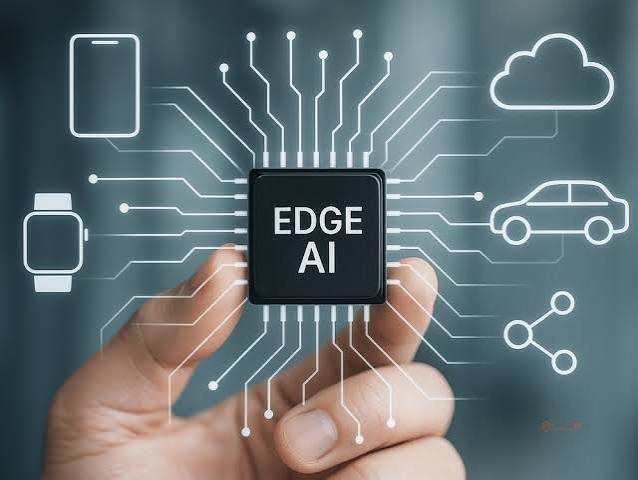
Artificial intelligence is becoming part of everyday technology, from smartphones and smart home devices to industrial machines and healthcare equipment. However, many AI applications depend on cloud computing to process information and generate results. Edge AI offers another approach by bringing artificial intelligence closer to the devices that collect data. Instead of sending every piece of information to a distant data centre, an edge device can process data locally and respond more quickly. This approach supports real-time decision-making, reduces reliance on constant internet connectivity, and creates new opportunities across different industries.
Understanding what Edge AI is, how it works, and where it can be used helps explain its growing role in modern technology.
What Is Edge AI?
Edge AI, also known as edge artificial intelligence, refers to the use of AI models on devices or nearby computing systems where data is generated. These devices can include smartphones, security cameras, industrial sensors, vehicles, and Internet of Things (IoT) equipment.
Traditional cloud-based AI usually sends data to remote servers for processing. Edge AI performs at least some of this processing locally, allowing devices to analyse information without relying on a continuous connection to a central cloud platform.
How Does Edge AI Work?
Edge AI works by placing a trained AI model on a device or a nearby computing system. The model processes incoming information and produces a result based on patterns it has learned during training.
The process generally involves several stages.
1. Data Collection
The first stage involves collecting information through devices such as cameras, microphones, sensors, and other connected equipment.
For example, a temperature sensor in a manufacturing facility may continuously collect information about machine temperature. A smart camera may capture images of products moving along a production line.
2. AI Model Training
Before an AI model can make useful predictions, it needs to be trained using relevant data. This training usually takes place on more powerful computers or cloud infrastructure because it may require significant processing resources.
3. Model Deployment
The trained model is installed on a compatible device or nearby edge computing system. Since edge devices may have limited memory, processing power, and battery capacity, models sometimes need to be optimised to operate efficiently.
4. Local Data Processing
Once deployed, the model analyses new information directly on the device or nearby system. This process is known as inference.
For example, an AI-powered camera can examine a video frame and determine whether it contains a person, vehicle, or other object. The device can then produce an alert or take another approved action.
5. Results and Continuous Improvement
After processing the data, the device can display a result, send an alert, or communicate selected information to another system.
The cloud may still be used to store information, monitor devices, analyse larger datasets, and update AI models. New or updated models can then be deployed to edge devices when needed.
Key Benefits of Edge AI
Edge AI provides several advantages, particularly in situations where devices need to respond quickly or operate with limited connectivity.
Faster Response Times
One of the main advantages of Edge AI is reduced latency. Since information is processed close to where it is generated, devices do not always need to wait for data to travel to a remote server and return.
This is useful for applications that require immediate responses, such as driver assistance systems, industrial monitoring, and security equipment.
Reduced Internet Bandwidth Usage
Sending large amounts of data to cloud servers can consume significant network bandwidth. Edge AI can reduce this requirement by processing information locally and transmitting only important results or selected data.
For example, a factory camera may analyse video footage on-site and send an alert only when it detects a quality issue. This reduces the need to transfer continuous video streams.
Improved Data Privacy
Some applications process sensitive information, including personal images, health measurements, and business data. Local processing can reduce the amount of raw information that needs to leave a device.
However, Edge AI does not automatically guarantee privacy or security. Devices still require appropriate encryption, access controls, software updates, and secure data-handling practices.
Better Scalability
Businesses can deploy AI capabilities across multiple locations and connected devices. Instead of sending every task to one central system, processing can be distributed across suitable edge devices.
Managing a large network of devices still requires proper monitoring, maintenance, and security planning.
Common Applications of Edge AI
Edge AI is being used in different industries to support automation, monitoring, and real-time analysis.
Healthcare and Medical Devices
Healthcare equipment can use Edge AI to analyse information collected from sensors and monitoring devices. Wearable devices, for example, may process selected health measurements locally and notify users when readings require attention.
Medical imaging systems can also use AI to assist professionals with image analysis. These systems are intended to support clinical workflows rather than replace qualified medical judgement.
Manufacturing and Industrial Automation
Manufacturing facilities use sensors and cameras to monitor equipment, production lines, and product quality.
Edge AI can analyse sensor readings to identify unusual machine behaviour or detect visible defects in products. This may help maintenance teams respond to problems earlier and reduce unnecessary production interruptions.
Smart Homes and Consumer Devices
Smart home devices such as cameras, speakers, and appliances can use local AI processing to respond to user activity.
For example, a smart camera may identify movement and send a notification, while a voice-enabled device may process certain commands locally. These features can improve responsiveness and reduce dependence on cloud services.
Automotive Technology
Modern vehicles use cameras, radar, and other sensors to understand their surroundings. Edge AI can help process this information for functions such as object detection, lane monitoring, and driver assistance.
These systems need to operate quickly because delays can affect vehicle safety. They must also be thoroughly tested and supported by appropriate safety mechanisms.
Retail and Customer Services
Retail businesses can use AI-powered cameras and smart sensors to monitor inventory, understand store activity, and identify operational issues.
For instance, a smart shelf system may detect when product levels are low and notify staff. Local processing can also help stores analyse selected information without transferring every data point to a remote server.
Challenges and Limitations of Edge AI
Although Edge AI offers practical advantages, implementing it also involves certain challenges.
Limited Processing Power
Edge devices often have less processing capacity and memory than cloud servers. This means developers must choose or optimise models that can operate within the device's hardware limitations.
Device Security
Deploying AI across many connected devices creates additional security responsibilities. Each device needs suitable protection against unauthorised access, malware, and data theft.
Maintenance and Updates
Managing software and AI models across a large number of devices can become complicated. Businesses need reliable processes for testing, updating, and monitoring deployed systems.
Development Costs
Edge AI may require specialised hardware, software development, integration, and ongoing maintenance. Organisations should evaluate these costs before deciding whether local AI processing is appropriate for their needs.
The Future of Edge AI
Edge AI is likely to become increasingly important as connected devices and intelligent systems continue to develop. Improvements in processors, sensors, and machine learning models are making it possible to run more AI applications on smaller devices.
Future applications may include smarter industrial equipment, more responsive vehicles, advanced healthcare monitoring, and connected infrastructure.
Conclusion
Edge AI brings artificial intelligence closer to the devices that collect and generate data. By processing information locally, it can support faster responses, reduce bandwidth requirements, improve certain aspects of data privacy, and allow devices to operate without constant internet connectivity.
Its applications across healthcare, manufacturing, retail, automotive technology, and agriculture demonstrate its potential to support modern operations.



Share this page with your family and friends.