The automotive industry is becoming increasingly competitive, and car dealerships need effective ways to manage customer relationships, sales activities, and follow-ups. As customers expect faster responses and personalized services, traditional methods of managing customer information may no longer be sufficient. This is where automotive CRM software becomes valuable.
An automotive CRM helps dealerships organize customer data, track sales opportunities, manage leads, and improve communication throughout the buying journey. Understanding how this technology works can help dealership owners and sales teams make informed decisions about improving their business operations.
What Is Automotive CRM?
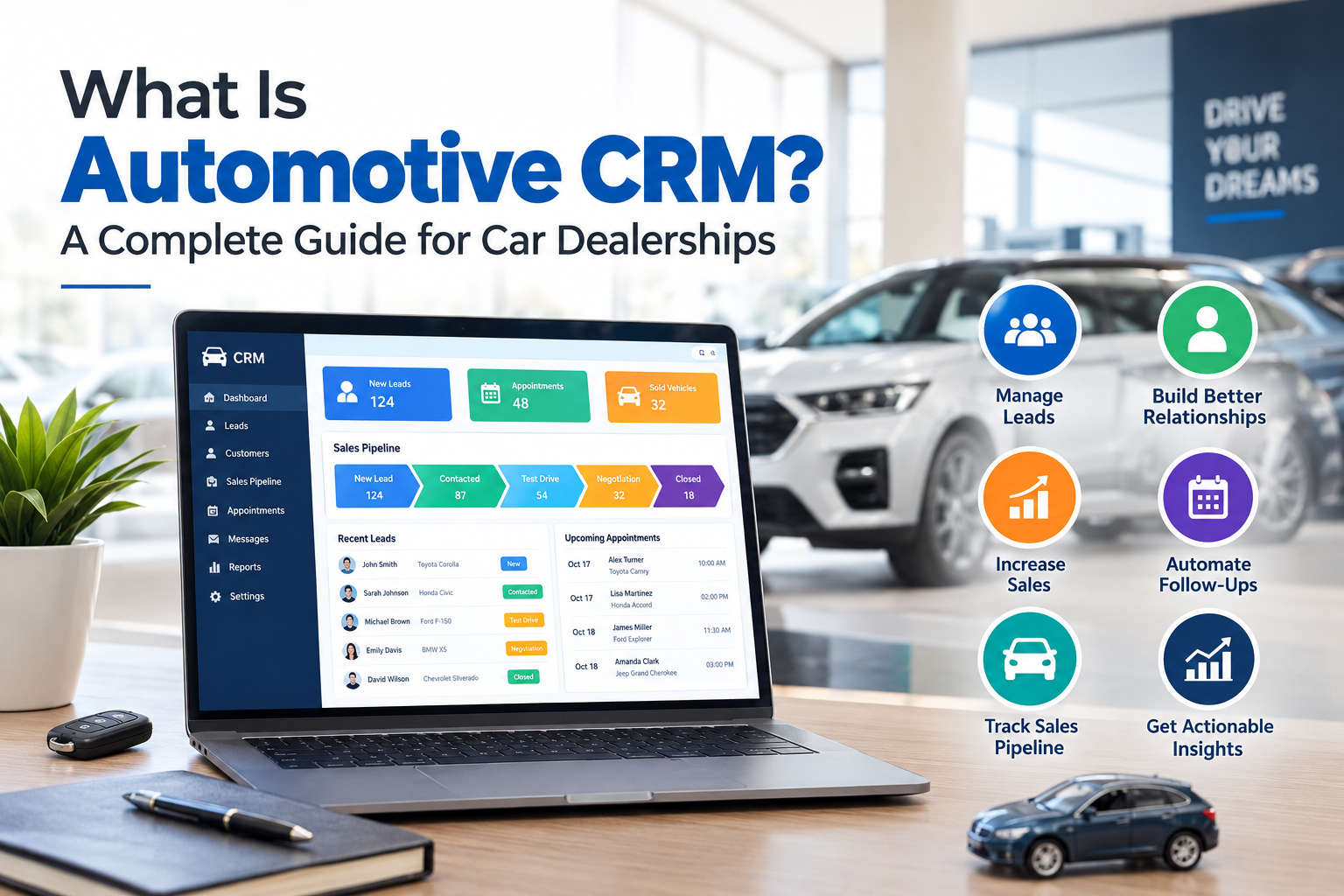
Automotive CRM stands for Automotive Customer Relationship Management. It is a software solution designed to help car dealerships manage interactions with potential buyers, existing customers, and service clients.
Unlike general CRM platforms, automotive CRM systems are often tailored to the specific requirements of vehicle sales and dealership management. They can help businesses track inquiries, manage test-drive appointments, monitor sales pipelines, and maintain customer records in one centralized system.
For example, when a customer submits an inquiry about a vehicle through a dealership website, the CRM can record the lead, assign it to a sales representative, and help the team schedule follow-up communication.
How Does Automotive CRM Work?
An automotive CRM brings customer information and sales activities together in one platform. It allows dealership teams to monitor customer interactions from the first inquiry to the final purchase and beyond.
Here are some common ways automotive CRM software works:
1. Lead Management
Car dealerships receive leads from multiple sources, including websites, online advertisements, social media, phone calls, and walk-in customers. Automotive CRM software helps collect and organize these inquiries so sales representatives can manage them efficiently.
2. Customer Information Management
A CRM stores important customer details, such as contact information, vehicle preferences, previous inquiries, purchase history, and communication records. Having this information readily available helps sales teams understand customer needs and provide more relevant assistance.
3. Sales Pipeline Tracking
Sales pipeline management allows dealerships to track leads through different stages, such as initial inquiry, appointment scheduling, test drive, negotiation, and completed sale. This visibility helps managers identify opportunities and understand where leads may be getting lost.
4. Follow-Up Reminders
Timely communication is important when selling vehicles. Automotive CRM systems can help sales representatives schedule follow-ups, set reminders, and automate certain communications. These features reduce the risk of overlooking potential customers.
5. Reporting and Performance Monitoring
Many CRM platforms provide reports on lead volume, response times, conversion rates, and sales performance. Dealership managers can use these insights to identify operational challenges and make data-driven decisions.
Key Benefits of Automotive CRM Software
Implementing an automotive CRM can improve several aspects of dealership operations.
Improved Lead Conversion
When leads are recorded, assigned, and followed up with consistently, dealerships can reduce missed opportunities. Sales teams can prioritize interested buyers and maintain better communication throughout the sales process.
Better Customer Experience
Customers appreciate timely responses and relevant information. By maintaining a history of previous interactions, dealership representatives can offer more personalized support and avoid repeatedly asking customers for the same details.
Increased Sales Team Productivity
Managing leads through spreadsheets, paper records, or disconnected systems can consume valuable time. A centralized CRM helps sales representatives access customer information, manage tasks, and organize their daily activities more efficiently.
Stronger Customer Relationships
The relationship between a dealership and a customer does not necessarily end after a vehicle purchase. CRM software can support ongoing communication about maintenance appointments, service reminders, customer feedback, and future vehicle upgrades.
More Effective Business Decisions
Automotive CRM reporting can help managers understand which lead sources generate inquiries, how quickly sales teams respond, and where improvements may be needed. These insights support more informed decisions about marketing and sales processes.
Important Features to Look for in an Automotive CRM
Not every CRM platform offers the same functionality. Before selecting a solution, dealerships should evaluate their operational requirements and compare available features.
Some important capabilities include:
-
Lead tracking: Organizes inquiries from different marketing channels.
-
Contact management: Maintains customer details and interaction histories.
-
Sales pipeline management: Tracks opportunities from inquiry to purchase.
-
Automated reminders: Helps sales teams manage follow-ups and appointments.
-
Marketing integration: Connects with relevant advertising and communication tools.
-
Reporting and analytics: Provides insights into sales performance and lead conversion.
-
Mobile accessibility: Allows staff to access relevant information while working away from their desks.
-
Integration capabilities: Connects the CRM with dealership management systems and other business applications where supported.
The right feature set depends on dealership size, sales volume, budget, and existing technology.
Automotive CRM vs. Traditional CRM
A traditional CRM is designed to manage customer relationships across a wide range of industries. An automotive CRM applies similar principles to the vehicle sales and dealership environment.
For instance, a general CRM may support contact management and sales tracking, while an automotive-focused solution may also provide vehicle-related lead workflows, test-drive scheduling, dealership-specific reporting, and integration with automotive business systems.
However, capabilities vary by provider. Dealerships should evaluate individual products rather than assume every automotive CRM includes all these features.
How to Choose the Right Automotive CRM
Selecting the right software requires more than comparing prices. Dealerships should consider how a platform fits their existing sales process and long-term business goals.
Start by identifying the main challenges your team faces. These might include delayed responses to inquiries, inconsistent follow-ups, limited reporting, or difficulty managing customer information.
Next, compare CRM solutions based on ease of use, available integrations, customization options, data security, customer support, and scalability. It is also helpful to request a demonstration and ask whether the system can support your dealership's specific workflows.
Before making a final decision, consider implementation costs, staff training requirements, and the ongoing effort needed to maintain accurate customer data.
The Role of Automotive CRM in Modern Dealership Management
As customer expectations and digital sales channels continue to evolve, dealerships need organized processes for managing inquiries and maintaining customer relationships. Automotive CRM software can provide the structure needed to coordinate sales activities, improve follow-up practices, and gain better visibility into business performance.
For dealerships exploring digital transformation, understanding how automotive CRM fits into their existing operations is an important first step. A suitable solution can help connect customer information, sales workflows, and reporting in one place.
Conclusion
Automotive CRM is an important tool for car dealerships looking to manage leads, organize customer information, and improve sales operations. From lead tracking and follow-up reminders to customer relationship management and performance reporting, it can support a more structured approach to dealership management.
By understanding the features, benefits, and selection criteria associated with automotive CRM software, dealership owners can make better-informed decisions and identify opportunities to improve their customer experience and business efficiency.




Share this page with your family and friends.