A small, soft growth on your neck or underarm can be easy to overlook. You might only notice it when a necklace catches against it, clothing rubs over it or you see it while looking in the mirror. These growths are often skin tags, medically known as acrochordons.
Skin tags are common, generally harmless growths made up of skin and supporting tissue, including collagen and small blood vessels. They are usually soft, flesh-coloured or slightly darker, and may hang from the skin on a narrow stalk. Most do not cause pain, although repeated rubbing can make them sore or irritated.
They often appear on the neck, armpits and eyelids because these areas are exposed to skin folds, movement and friction. Their presence does not automatically mean that something is wrong, and most do not need treatment.
This article explains why skin tags develop in these areas, how to recognise them, when removal may be appropriate and why professional assessment matters, particularly around the eyes.
A small skin growth may be harmless, but identifying it correctly should come before removing it.
Why Do Skin Tags Develop?
The exact reason some people develop skin tags is not fully understood. Friction is thought to play a role, particularly where skin repeatedly rubs against itself, clothing or jewellery. This helps explain why they are frequently seen in skin folds.
Age and certain individual factors may also influence how likely someone is to develop them.
Common Contributing Factors
Skin tags are more frequently seen in people who:
- Have skin folds where rubbing occurs regularly.
- Are living with overweight or obesity.
- Have type 2 diabetes or insulin resistance.
- Are pregnant and experiencing hormonal changes.
- Have a family history of skin tags.
- Are getting older.
Having one or more of these factors does not mean skin tags will definitely develop. They can also appear in people without any obvious risk factors.
It is also worth remembering that skin tags are not caused by poor hygiene. Washing more frequently or scrubbing the affected area will not remove them and may irritate the surrounding skin.
Why Are Skin Tags Common on the Neck, Armpits and Eyelids?
Skin tags can develop on different parts of the body, but they are particularly common in areas where skin touches, folds or moves repeatedly. The neck, armpits and eyelids each have characteristics that can make them susceptible.
Neck
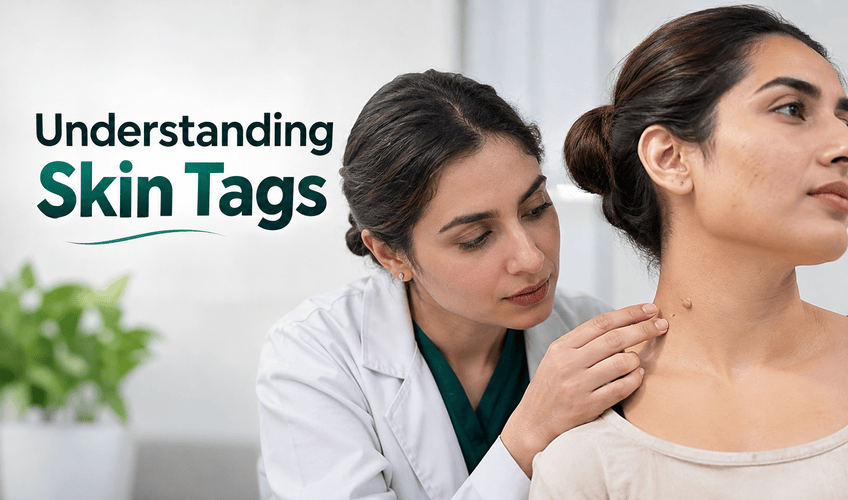
The neck experiences regular movement and friction from collars, scarves, necklaces and surrounding skin. Small skin tags may appear along the sides or in the folds of the neck.
They can become irritated when jewellery catches on them or clothing repeatedly rubs against them. Some people also notice several small tags developing close together.
Armpits
The underarms are naturally warm, folded areas where skin moves against skin throughout the day. Friction from arm movement, clothing and shaving can irritate existing skin tags.
A tag in this area may become uncomfortable if it catches while shaving or rubs against a sleeve. Larger growths can be particularly troublesome when they sit directly in a skin fold.
Eyelids
Skin tags can also develop on the upper or lower eyelids. Even a small growth may become noticeable because the surrounding skin is delicate and constantly moves when you blink.
A tag near the lash line may catch against the eyelashes or cause irritation. If it interferes with vision or makes blinking uncomfortable, it should be assessed rather than treated as a routine cosmetic concern.
How Can You Tell a Skin Tag From a Mole or Wart?
Not every small growth is a skin tag. Moles, warts and other skin conditions can sometimes look similar, particularly when a growth is raised or has a narrow base.
A typical skin tag is soft, often hangs slightly from the skin and is usually skin-coloured or darker. Moles may be flat or raised and can vary in colour, while common warts tend to have a firmer, rougher surface.
Appearance alone is not always enough to identify a lesion confidently. A growth that is changing, unusually coloured, painful or bleeding should be examined before removal is considered.
A clinician can usually identify a typical skin tag through visual examination. If the appearance is unusual or the diagnosis is uncertain, further assessment may be needed.
When Should a Skin Tag Be Removed?
Most skin tags do not require medical treatment. Leaving a small, comfortable growth alone is generally reasonable once it has been correctly identified.
Removal may be considered when a tag repeatedly catches on clothing or jewellery, becomes irritated, bleeds after friction, causes discomfort or affects appearance. An eyelid growth that interferes with vision or normal eyelid movement also deserves assessment.
People considering skin tag removal treatment in London should discuss the reason for removal and the most appropriate method with a qualified medical professional.
What Removal Methods May Be Used?
The method depends on the size, position and characteristics of the growth. Options can include:
- Snip removal: The area is numbed where appropriate, and the skin tag is removed using sterile surgical scissors or a blade.
- Cryotherapy: Controlled freezing is used to destroy the growth.
- Electrosurgery: A controlled electrical current is used to remove or destroy the skin tag.
Each method has limitations. Possible effects include temporary soreness, bleeding, infection, scarring and changes in skin pigmentation. The risk and expected recovery depend partly on the treatment site and the individual.
Why Should You Avoid Removing Skin Tags at Home?
Cutting, tying off or burning a skin tag yourself may seem simple, especially if it is small. But a growth that looks like a skin tag may be something else, and home removal can cause avoidable problems.
Household scissors, blades and improvised tools are not suitable for removing skin growths. Attempting to remove one can cause bleeding, infection, skin injury and scarring. Over-the-counter wart treatments are also not designed for ordinary skin tags and can damage surrounding skin.
Extra care is needed around the eyelids. The skin is delicate, and products or tools used too close to the eye can cause injury.
A medical assessment helps confirm what the growth is and whether removal is appropriate. It also allows the clinician to explain the likely result, possible side effects and aftercare.
What Should You Expect After Skin Tag Removal?
Recovery depends on the method used, the size of the growth and the body area treated. A small removal site may settle relatively quickly, while some treatments create a temporary blister, scab or area of discolouration.
Follow the aftercare instructions provided by the treating clinician. These may include keeping the area clean, protecting it from friction and avoiding picking at a scab.
Contact a healthcare professional if you notice increasing pain, spreading redness, swelling, pus or bleeding that does not settle.
Skin pigmentation can also change after removal. A darker or lighter mark may develop, particularly in people whose skin is more prone to post-inflammatory pigmentation. A scar is possible, even after a small procedure.
When Should a Growth Be Checked?
Arrange an assessment if a supposed skin tag grows quickly, becomes painful, starts bleeding without clear irritation or appears alongside a sudden increase in the number of growths. Do not assume that every hanging or raised lesion is a skin tag.
Safe removal starts with confirming what the growth is and choosing a method suited to its location.
Choosing a Clinic for Skin Tag Assessment and Removal
If you are considering treatment, ask how the clinician confirms that a growth is a skin tag, which removal methods are available and what risks apply to its location.
A Harley Street skin clinic should be able to explain the assessment process, the clinician's relevant experience, expected healing and possible cosmetic effects. This is particularly important for growths around the eyes or in areas where scarring and pigmentation changes may be more noticeable.
Frequently Asked Questions
Are skin tags harmful?
Most skin tags are harmless and do not need treatment. A growth that changes, grows quickly, becomes painful or bleeds should be assessed to confirm its identity.
Can skin tags disappear on their own?
Some may eventually fall off, but many remain unless removed. Avoid trying to speed up the process by cutting or tying them.
Do skin tags mean I have diabetes?
No. Skin tags can occur in people with or without diabetes. They are more common in people with insulin resistance, but their presence alone cannot diagnose a metabolic condition.
Can skin tags grow on the eyelids?
Yes. They can develop on the upper or lower eyelids. If a growth affects vision, blinking or causes irritation, arrange an assessment before considering removal.
Will a skin tag return after removal?
The same growth does not usually return once completely removed, but new skin tags can develop elsewhere. Removal does not prevent future growths.
Final Thoughts
Skin tags are common, usually harmless growths that often appear where skin folds or rubs together. This explains why the neck, armpits and eyelids are frequent locations. Most can be left alone, but removal may be worth considering when a growth becomes irritated, catches on clothing or causes cosmetic concern.
The first step is to confirm that the growth really is a skin tag. Professional assessment is especially useful for unusual, changing or eyelid lesions, where an incorrect removal attempt could cause injury.
If a skin tag is bothering you, discuss the available removal methods, possible scarring and aftercare with a qualified clinician before proceeding.
Medical Disclaimer: This article provides general educational information and does not replace an individual medical assessment. Any new, changing, painful or bleeding skin growth should be checked by a qualified healthcare professional.




Share this page with your family and friends.