Sudoku: A Timeless Puzzle Game for Every Mind
Sudoku is one of the most popular logic puzzle games in the world. It attracts millions of players because of its simple rules and deep strategic gameplay. Unlike many puzzle games that depend on vocabulary or mathematical calculations, Sudoku focuses on logical thinking. Every puzzle presents a challenge that can be solved through careful observation, analysis, and deduction.
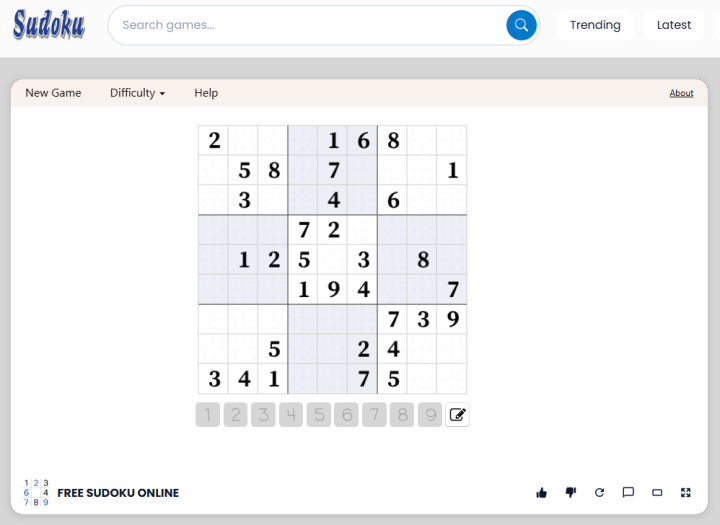
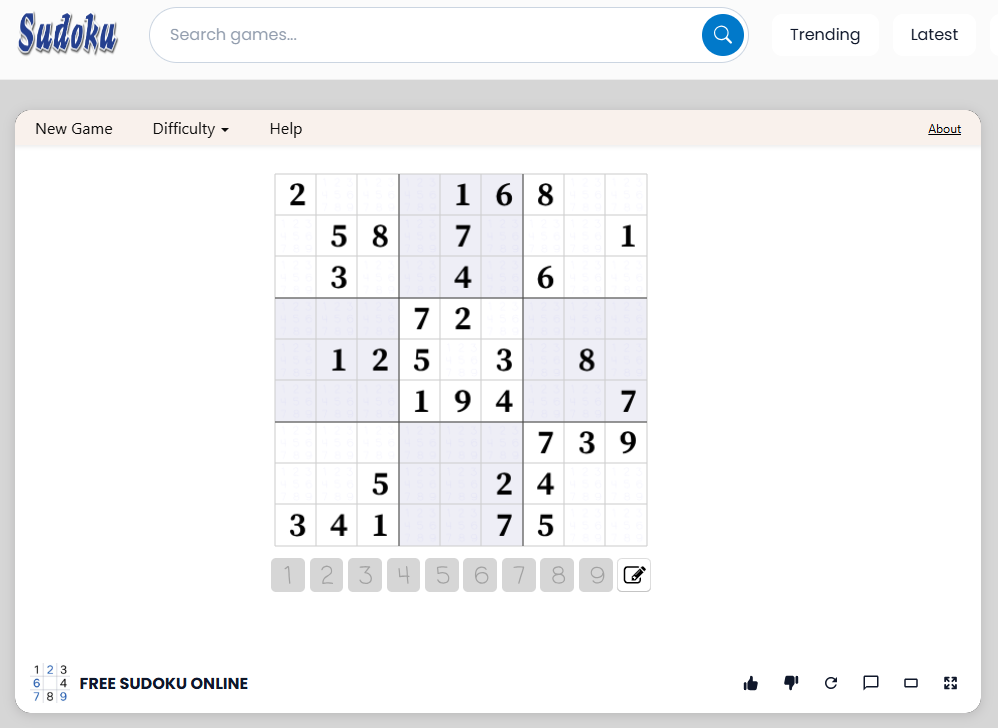
The standard Sudoku grid contains nine rows and nine columns. These rows and columns create nine smaller 3x3 sections. The objective is straightforward: fill every empty cell with a number from 1 to 9. Each number can appear only once in every row, every column, and every 3x3 section. While the rules are easy to understand, the path to completion can range from relaxing to highly challenging.
Sudoku has become a favorite activity for students, professionals, and retirees. It provides entertainment while also encouraging concentration and mental engagement. This unique combination has helped Sudoku remain relevant for many years.
Why Sudoku Continues to Grow in Popularity
Easy Rules, Deep Strategy
One major reason behind the popularity of Sudoku is accessibility. New players can learn the rules within minutes. There are no complicated instructions, character abilities, or lengthy tutorials. Anyone can begin solving a puzzle almost immediately.
However, mastering Sudoku requires practice. Advanced puzzles often demand careful planning and the ability to identify hidden patterns. This balance between simplicity and depth makes Sudoku appealing to a wide audience.
Suitable for All Ages
Sudoku can be enjoyed by people of different age groups. Children can use beginner puzzles to develop logical thinking and pattern recognition. Adults often enjoy Sudoku as a way to relax after work or during travel. Older players frequently appreciate the mental stimulation that comes from solving challenging grids.
Because difficulty levels vary significantly, every player can find puzzles that match personal skill levels and goals.
Available Across Multiple Platforms
Another factor contributing to the success of Sudoku is availability. Players can solve puzzles in newspapers, books, websites, mobile applications, and gaming platforms. This convenience allows Sudoku fans to enjoy the game almost anywhere.
Many online versions also include helpful features such as hints, progress tracking, daily challenges, and difficulty customization. These additions create a more engaging experience while maintaining the core gameplay.
How Sudoku Improves Cognitive Skills
Strengthening Logical Thinking
Sudoku encourages players to evaluate information systematically. Every move requires consideration of existing numbers and potential placements. This process helps strengthen logical reasoning and analytical thinking.
Regular practice can improve the ability to identify patterns and solve problems efficiently. These skills often extend beyond puzzle solving and can be useful in academic, professional, and everyday situations.
Enhancing Concentration
Completing a Sudoku puzzle requires focus. Players must examine rows, columns, and sections while avoiding mistakes. This level of attention helps develop concentration and patience.
In a world filled with constant distractions, Sudoku offers an opportunity to slow down and focus on a single objective. Many players find this experience both relaxing and rewarding.
Supporting Memory Development
Although Sudoku is primarily a logic game, memory also plays an important role. Players often remember potential number placements while evaluating different possibilities throughout the puzzle.
This mental activity helps exercise memory functions and encourages active engagement with information. Consistent practice can contribute to improved mental sharpness over time.
Strategies for Solving Sudoku Efficiently
Start With Obvious Numbers
The best approach for beginners is to identify cells with limited possibilities. Rows, columns, or sections that already contain many numbers often reveal easy placements.
Completing these straightforward moves creates additional opportunities and reduces overall puzzle complexity.
Scan Rows and Columns Carefully
A useful technique involves scanning rows and columns to locate missing numbers. By comparing existing values across different areas of the grid, players can often identify correct placements without guessing.
Careful observation is one of the most effective tools in Sudoku. Rushing through a puzzle often leads to errors and unnecessary confusion.
Focus on Individual Sections
Analyzing one 3x3 section at a time can simplify complex puzzles. When a section contains only a few empty cells, the available options become easier to evaluate.
This method helps break larger challenges into smaller and more manageable tasks. Many experienced players rely on this strategy when tackling difficult puzzles.
Avoid Random Guessing
Sudoku is designed to be solved through logic. Random guessing can create mistakes that affect the entire puzzle. Instead of making uncertain moves, players should continue analyzing available information until a logical solution appears.
Developing patience is an important part of becoming a stronger Sudoku player.
Different Types of Sudoku Puzzles
Classic Sudoku
Classic Sudoku remains the most recognizable version of the game. It follows the traditional 9x9 format and serves as the foundation for most variations.
This version is ideal for both beginners and experienced players because of its balanced design and familiar structure.
Mini Sudoku
Mini Sudoku uses smaller grids, often 4x4 or 6x6. These puzzles can be completed more quickly and provide an excellent introduction for new players.
The reduced size creates a less intimidating experience while preserving the essential logic-based gameplay.
Killer Sudoku
Killer Sudoku introduces additional rules involving grouped cells and numerical totals. Players must combine traditional Sudoku logic with arithmetic reasoning.
This variation appeals to puzzle enthusiasts who enjoy more complex challenges and advanced problem-solving techniques.
Samurai Sudoku
Samurai Sudoku features multiple interconnected grids. Solving these puzzles requires attention to several puzzle areas simultaneously.
The increased complexity offers a rewarding experience for advanced players seeking a greater challenge.
The Lasting Appeal of Sudoku
Sudoku remains one of the most respected puzzle games because it combines accessibility, challenge, and mental stimulation. Every completed puzzle provides a sense of accomplishment while encouraging continued improvement.
Whether solving a quick beginner puzzle during a break or tackling an advanced challenge over an extended period, Sudoku delivers a rewarding experience. The game continues to attract new players while retaining dedicated fans across the world.
As digital platforms expand and puzzle communities grow, Sudoku remains a timeless source of entertainment and intellectual engagement. Its simple concept, combined with endless possibilities for logical exploration, ensures that Sudoku will continue to inspire puzzle enthusiasts for many years to come.



Share this page with your family and friends.