Introduction
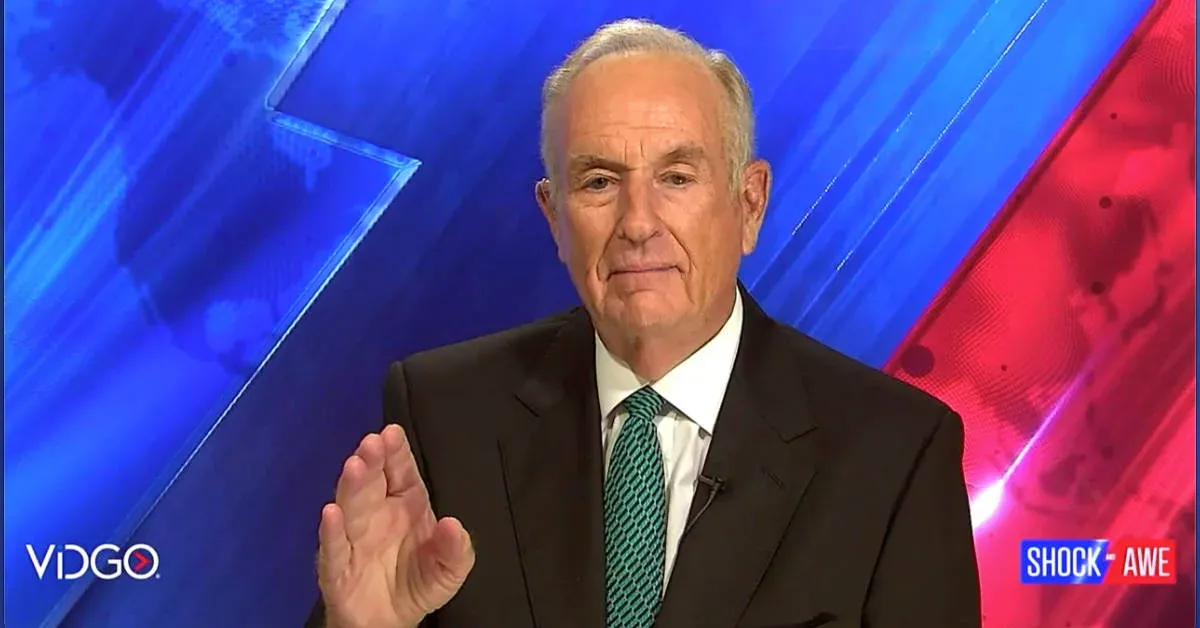
Bill O’Reilly has been one of the most recognizable and controversial figures in American television journalism and political commentary. Over several decades, he built a career that moved from local television reporting to national news, syndicated television, cable commentary, radio, publishing, and political discussion. His influence cannot be understood simply through his years as the host of The O’Reilly Factor. His larger importance lies in the way he helped reshape the relationship between television audiences, political opinion, entertainment, and news. His career demonstrated how a strong personality could become as important to a news program as the stories being discussed.
O’Reilly entered national prominence during a period when American television was undergoing major changes. Traditional network news remained important, but cable television was expanding rapidly and creating more opportunities for specialized programming. Viewers were no longer limited to a small number of nightly news broadcasts. Cable networks could provide news throughout the day and devote entire programs to political debate, interviews, opinion, and commentary. O’Reilly became one of the most successful personalities within this changing environment click here.
His broadcasting style was direct, confrontational, and highly personal. Rather than presenting himself as a detached newsreader, he often positioned himself as an active participant in debates over politics, culture, morality, crime, education, government, and social change. Supporters considered this approach honest, energetic, and willing to challenge powerful people. Critics argued that it blurred the boundaries between reporting and opinion and contributed to a more combative style of television political coverage. Both interpretations are important when considering his influence.
Early Broadcasting Career
O’Reilly’s path to national prominence began with traditional journalism. After studying history at Marist College, he worked as a teacher before pursuing graduate education in broadcast journalism at Boston University. His early television career took him through several American cities, where he worked in local news before moving into national broadcasting. These experiences gave him an understanding of television journalism from the ground level and exposed him to the practical demands of reporting, anchoring, interviewing, and producing news.
His work at CBS News and ABC News placed him in the environment of major network journalism. During this period, he covered serious national and international stories and developed a reputation as a capable reporter. His reporting career also earned recognition, including Emmy Awards and National Headliner Awards. This part of his career is sometimes overshadowed by his later political commentary, but it is important because it established his credentials before he became primarily associated with opinion television.
O’Reilly's move to Inside Edition in 1989 represented a significant change in direction. The syndicated program combined news, celebrity stories, crime, unusual events, and entertainment. As an anchor, O’Reilly gained experience in a format that required immediacy, strong presentation, and the ability to hold the attention of a broad audience. His success on the program demonstrated that he could connect with viewers outside the traditional boundaries of network journalism.
His experience at Inside Edition also helped develop the television personality that audiences would later see on Fox News. He learned how to frame stories in an accessible way, how to create memorable television moments, and how to use interviews to produce conflict and discussion. These skills became central to his later success.
The Rise of The O’Reilly Factor
The defining chapter of O’Reilly’s broadcasting career began in 1996 when he joined the newly launched Fox News Channel. His program initially carried the name The O’Reilly Report before becoming The O’Reilly Factor. The program quickly developed a distinct identity based on commentary, interviews, political discussion, and O’Reilly’s strong personality.
The program's most recognizable phrase was the “No Spin Zone,” a description that communicated O’Reilly’s claim that he would cut through political language and present issues directly. The phrase became closely associated with his public image. It also reflected one of the central characteristics of his broadcasting approach: the belief that television audiences wanted clarity and confrontation rather than lengthy institutional explanations.
The O’Reilly Factor became a major success in cable news. By the early 2000s, it had become one of the most watched programs in the American cable news industry. Its success was important not only for O’Reilly but also for Fox News. The program demonstrated that political commentary could attract a large and loyal audience when combined with a distinctive host and a consistent format.
O’Reilly's success also showed the commercial value of political personality. Viewers were not simply tuning in to learn what had happened during the day. Many were tuning in to hear what O’Reilly thought about what had happened. This distinction was significant because it helped establish a television model in which the host became part journalist, part commentator, and part public celebrity.
A New Style of Political Broadcasting
One of O’Reilly’s most significant contributions to broadcasting was his development of a highly recognizable style of political television. He frequently challenged guests, interrupted interviews, questioned political assumptions, and demanded direct answers. His approach created a sense of urgency that differed from the more restrained style associated with traditional network news.
This style had considerable appeal. Many viewers found conventional political interviews too cautious or predictable. O’Reilly offered something different. His interviews often felt like arguments rather than formal conversations. Guests knew they could be challenged, and viewers were encouraged to take sides. This created a dramatic quality that helped turn political discussion into compelling television.
The approach also had limitations. Critics argued that confrontation could sometimes overshadow the complexity of an issue. Political questions rarely have simple answers, yet television rewards short statements, strong reactions, and memorable exchanges. O’Reilly's format was highly effective at producing these moments, but it also contributed to a broader television culture in which conflict became an important part of political communication.
The influence of this style extended beyond O’Reilly himself. Other cable news personalities adopted similarly forceful approaches, while political commentators increasingly understood the importance of developing a recognizable personal identity. Television news became less centered exclusively on institutions and more centered on individual hosts.
For more information check now.
Influence on Fox News
O’Reilly played an important role in the development of Fox News as a major force in American cable television. When the network launched in 1996, it was a new competitor entering an industry dominated by established networks. The success of The O’Reilly Factor helped demonstrate that there was a substantial audience for conservative-oriented political commentary delivered through a personality-driven format.
For years, O’Reilly occupied a central position in the network's prime-time schedule. His ratings success helped establish the value of political commentary as a major component of cable programming. The network could build a recognizable identity around hosts who were not simply presenters but strong public personalities with loyal audiences.
His success also helped create opportunities for other commentators. A successful program proved that viewers could develop long-term relationships with television hosts. The host's voice, personality, opinions, and recurring segments could become part of the audience's daily routine.
In this sense, O’Reilly's influence went beyond his own program. He became part of the larger transformation of cable news into a personality-driven medium. His career helped demonstrate that television audiences could be organized around commentators as much as around networks.
The Power of the Interview
Interviewing was one of the most important elements of O’Reilly’s television style. His interviews were often structured around disagreement. Rather than allowing a guest to give a long uninterrupted response, he frequently pushed back, questioned assumptions, or challenged statements.
This method created memorable television because the audience could immediately understand the conflict. A political disagreement that might appear complicated in a newspaper could become much more accessible when presented as a direct exchange between two people.
The method also gave O’Reilly considerable control over the conversation. His role was not passive. He established the topic, determined the direction of questioning, and frequently returned to the central point when he believed a guest was avoiding it. This approach reinforced his public identity as someone who was willing to confront politicians, activists, academics, celebrities, and other public figures.
At the same time, the confrontational interview became a model that other broadcasters could imitate. Political interviews increasingly became opportunities for debate rather than simply opportunities to gather information. This contributed to the growing importance of performance in television journalism.
O’Reilly and Political Culture
O’Reilly's influence extended into American political culture because his program frequently addressed subjects that went beyond daily political events. He discussed crime, religion, education, family life, popular culture, immigration, national security, political correctness, and changing social values. As a result, The O’Reilly Factor became a place where political questions and cultural arguments could be discussed together.
His program often presented politics as a struggle over values. Questions about government policy could become questions about morality, responsibility, patriotism, family, or national identity. This approach appealed to viewers who saw political issues as part of larger cultural conflicts.
O’Reilly also developed a language and set of recurring expressions that became recognizable among viewers. His phrases and segments contributed to the sense that the program had its own identity and community. People could discuss an episode the following day even if they had not watched the entire program because certain statements or exchanges had become widely discussed.
This was an important feature of his influence. A television program did not have to remain confined to the television screen. Its arguments could move into newspapers, radio programs, political conversations, workplaces, and eventually online discussions.
Influence Beyond Television
O’Reilly's influence was not limited to broadcasting. He became a successful author and expanded his public profile through books, radio, newspaper columns, public appearances, and other media projects. Several of his books became major bestsellers, including works of political commentary and historical books written with Martin Dugard.
His historical books demonstrated another side of his media strategy. Instead of limiting his audience to current political debates, he entered the popular history market and focused on dramatic events and prominent figures from American history. Books such as Killing Lincoln, Killing Kennedy, Killing Jesus, and Killing Reagan reached large audiences and were later adapted for television.
Publishing gave O’Reilly another avenue for communicating with the public. Television required a nightly or weekly schedule, while books allowed him to develop longer narratives and arguments. His success as an author also showed how modern media personalities could build brands across several forms of communication.
His radio work similarly extended his reach. The Radio Factor, which ran nationally for several years, allowed O’Reilly to communicate with audiences in a format that depended heavily on spoken commentary and listener interaction. Radio and television reinforced each other, creating a broader media presence.
The Importance of Branding
O’Reilly understood the importance of creating a recognizable personal brand. The phrase “No Spin Zone” became more than a slogan; it represented a particular approach to political discussion. His name was closely connected to the program, and the program itself became closely connected to his personality.
This type of branding has become increasingly common in modern media. Audiences often follow individual commentators across different platforms rather than remaining loyal to a single television network or newspaper. O’Reilly was an important example of this development before social media became central to political communication.
His career demonstrated that a media personality could become a recognizable institution in his own right. The audience relationship was not only between viewers and a network. It was between viewers and a particular host.
Controversy and Criticism
Any serious discussion of O’Reilly's influence must also address the controversies surrounding his career. His confrontational style generated criticism from political opponents, journalists, media organizations, and other commentators. Critics questioned his methods, his presentation of political issues, and the boundary between commentary and journalism.
His departure from Fox News in 2017 marked a major turning point. The network ended its relationship with him following reports concerning allegations of sexual harassment and settlements involving allegations against him. O’Reilly denied wrongdoing. His departure demonstrated how quickly a long-established media career could be affected by controversies involving workplace conduct and public accountability.
The controversy also became part of the larger discussion about the culture of television news organizations. His case raised questions about the responsibilities of powerful media personalities and the obligations of networks toward employees and viewers.
Whatever one's political opinion of O’Reilly, these events are essential to understanding his complete public legacy. His career cannot be discussed only in terms of ratings and broadcasting achievements. His controversies became an important part of the public debate surrounding his influence.
The O’Reilly Legacy
O’Reilly's legacy is complicated because his influence contains both achievements and controversies. He helped make political commentary a major form of cable television entertainment and demonstrated the commercial power of a strong individual host. He also helped create a format in which political debate could be presented as an ongoing confrontation between competing viewpoints.
His influence can be seen in the careers of later television personalities who adopted strong opinions, recognizable catchphrases, aggressive interviewing styles, and highly loyal audiences. The growth of personality-driven political media owes something to the environment that O’Reilly helped establish.
At the same time, his career raises questions about the role of opinion in journalism. The more television relies on personality and conflict, the more difficult it can become for audiences to distinguish reporting from commentary. O’Reilly's success demonstrated the enormous audience potential of opinion-based programming, but it also contributed to debates about whether news programs should prioritize information, analysis, entertainment, or ideological argument.
Influence on Modern Media
The media environment has changed considerably since The O’Reilly Factor began. Television is no longer the only major platform for political commentary. Podcasts, online video, social networks, streaming services, and independent websites now allow personalities to communicate directly with audiences.
Yet many of the principles that helped O’Reilly succeed remain relevant. Strong personalities continue to attract audiences. Political commentators still rely on direct language, confrontation, recurring segments, recognizable phrases, and personal branding. Interviews continue to function as entertainment as well as information.
In this sense, O’Reilly belongs to an important transitional period in American media. He rose during the expansion of cable television and remained influential as political communication moved toward a more fragmented media environment. His career demonstrates how an individual broadcaster could build a large following by creating a consistent voice and maintaining a recognizable public identity.
The growth of digital media has made some of these techniques even more powerful. A provocative television exchange can now be shared online within minutes. A short statement from a political commentator can circulate far beyond the original broadcast. The boundary between television, social media, radio, publishing, and online discussion has become increasingly weak.
Conclusion
Bill O’Reilly's influence on broadcasting and American political culture is difficult to measure through one program or one period of his career. His importance comes from the broader changes he represented and helped accelerate. From his early years as a reporter to his success at Inside Edition, his rise at Fox News, his work on The O’Reilly Factor, his radio career, and his success as an author, O’Reilly demonstrated the power of a media personality who could command attention across multiple platforms.
The O’Reilly Factor became one of the most successful cable news programs of its era and helped establish a model in which political commentary, debate, personality, and entertainment existed together. O’Reilly's direct and confrontational interviewing style influenced the presentation of political issues and helped make the television host an increasingly important part of the news product.
His career also illustrates the risks that accompany personality-driven media. When the presenter becomes central to the program, personal conduct, public reputation, and professional controversies can have consequences far beyond the individual. His departure from Fox News showed that even a highly successful media figure could see a long-running career brought to an abrupt end.
Ultimately, O’Reilly's influence extends beyond the years he spent behind the television desk. He helped shape the language, tone, and commercial possibilities of modern political broadcasting. He demonstrated that audiences could form strong connections with commentators and that political discussion could become a form of mass entertainment. His books and radio programs further expanded the reach of his ideas, while his controversies ensured that his career would remain part of wider debates about journalism, television, workplace conduct, political polarization, and media responsibility.
The lasting significance of Bill O’Reilly is therefore not simply that he was a successful television host. It is that his career reflected a major transformation in American media. News and opinion became increasingly intertwined, television personalities became powerful brands, political debate became more confrontational, and audiences became more divided around distinctive voices. O’Reilly was one of the most prominent figures in that transformation. His influence continues to be visible in the way political commentators communicate, the way television networks build prime-time programming, and the way audiences consume political information in an increasingly personality-centered media environment.



Share this page with your family and friends.