Technology is changing how businesses observe their surroundings, identify objects, and respond to important events. Tasks that once required continuous human attention can now be supported by intelligent computer systems capable of analyzing images and video streams. From manufacturing facilities and warehouses to retail stores and transportation networks, visual data is becoming an important source of operational information. This shift has increased interest in AI Object Detection Software, which enables machines to recognize, locate, and classify objects within digital images and video footage.
Unlike traditional monitoring systems that simply record visual activity, AI-powered detection solutions can identify specific objects and provide useful information about what is happening. These capabilities help organizations improve monitoring, automate repetitive inspections, and make decisions using visual information.
How AI Object Detection Software Works
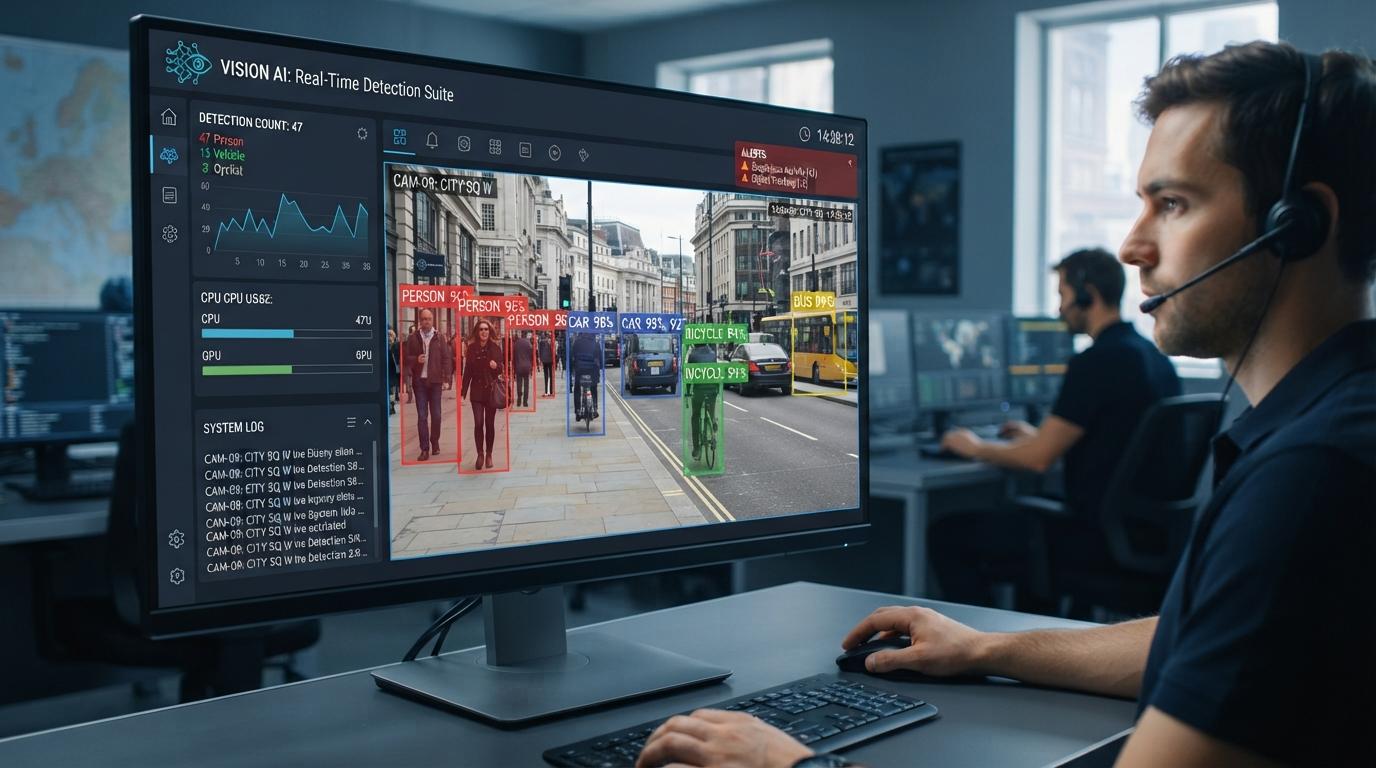
AI object detection combines computer vision and machine learning to identify objects within images or video frames. The system analyzes visual patterns and determines which objects are present and where they appear.
For example, a detection system installed in a warehouse may identify boxes, vehicles, workers, and equipment within a camera's field of view. It can locate these objects and mark their positions in the video.
Most object detection systems follow several basic steps.
-
Image collection: Cameras or other imaging devices capture visual information.
-
Image processing: The system prepares the image for analysis.
-
Object recognition: AI models identify objects based on learned visual patterns.
-
Location detection: The system determines where each object appears within the image.
-
Output generation: Results are displayed through labels, bounding boxes, alerts, or connected applications.
The accuracy of detection depends on factors such as image quality, lighting, camera position, model training, and environmental conditions.
Why Businesses Are Adopting Intelligent Visual Detection
Organizations generate large amounts of visual information through security cameras, inspection systems, and monitoring equipment. Reviewing all this information manually can require significant time and resources.
AI-powered detection helps automate parts of this process. Instead of relying entirely on employees to observe every camera feed or inspect every image, businesses can use intelligent systems to identify specific objects and highlight activities that require attention.
Faster Identification of Objects
Human operators may find it difficult to monitor several video streams simultaneously. AI detection systems can analyze multiple visual inputs and identify predefined objects within supported conditions.
This can help businesses locate products, vehicles, equipment, and other important items more quickly.
Reduced Manual Inspection
Manufacturing and industrial operations often require regular visual inspections. AI systems can support these activities by identifying visible defects, missing components, or unusual object positions.
Automated detection does not eliminate the need for quality control professionals, but it can reduce repetitive inspection work and help employees focus on more complex issues.
Improved Operational Visibility
Visual detection systems can provide information about how objects move through a particular environment.
For example, warehouse managers may use camera-based analytics to understand vehicle movement, monitor storage areas, and identify operational bottlenecks.
This information can support better planning and more organized workflows.
Real-World Applications of AI Object Detection Software
Object detection has applications across several industries. Its usefulness depends on the objects being monitored, the environment, and the decisions that businesses need to support.
Manufacturing and Quality Control
Manufacturing facilities often inspect products at different stages of production. Identifying missing components, damaged packaging, and visible product defects is important for maintaining quality standards.
AI-powered visual detection can analyze products as they move along production lines and highlight items that require further inspection.
This can improve inspection consistency and help manufacturers identify recurring production problems.
Retail and Inventory Management
Retail businesses manage shelves, products, customer activity, and stock availability. Manual monitoring can become difficult in large stores with extensive product ranges.
Object detection systems can identify products on shelves, monitor stock arrangements, and help staff locate areas that require restocking.
Retailers may also use visual analytics to understand movement patterns within stores. Such systems should be implemented with appropriate privacy protections, especially when people are visible in camera footage.
Transportation and Traffic Monitoring
Transportation systems generate continuous visual information through roadside cameras, parking systems, and vehicle monitoring equipment.
AI detection can identify vehicles, classify vehicle types, and monitor traffic movement. These capabilities may support traffic analysis, parking management, and transportation planning.
In controlled environments, detection systems can also help identify vehicles entering or leaving specific areas.
Warehousing and Logistics
Warehouses handle products, containers, forklifts, and delivery vehicles throughout the day. Keeping track of these activities is essential for maintaining operational efficiency.
AI object detection can help identify packages, monitor equipment movement, and support automated inventory processes.
When integrated with warehouse management systems, visual detection can provide additional information about stock handling and movement.
Security and Facility Monitoring
Security teams often monitor multiple camera feeds across offices, industrial facilities, and commercial properties.
AI-powered detection can identify predefined objects or events and notify operators when something requires attention.
For example, a system may detect a vehicle entering a restricted area or identify an object left in a monitored location.
Such alerts should support trained security personnel rather than replace human judgment.
Object Detection and the Growth of Computer Vision
Object detection is one part of the wider computer vision field. Computer vision enables machines to extract useful information from visual inputs, but different applications perform different tasks.
Object detection identifies objects and their locations. Image classification determines the overall category of an image, while image segmentation identifies individual pixels belonging to specific objects or regions.
These technologies can work together to support more advanced applications.
For example, a manufacturing system may use object detection to locate a product, segmentation to examine its surface, and classification to determine whether it belongs to an expected category.
Combining these capabilities allows businesses to develop visual systems suited to more complex requirements.
Choosing the Right Object Detection Solution
Selecting suitable technology requires more than comparing software features. Businesses should understand their operational needs and evaluate whether a system can perform reliably in the intended environment.
Define the Detection Requirements
Organizations should identify which objects need to be detected and what the system should do after identifying them.
A warehouse may need package recognition, while a manufacturing facility may require defect identification. Clear requirements help developers select appropriate models and camera configurations.
Evaluate Detection Accuracy
Businesses should test solutions using images and videos that represent real operating conditions.
Lighting changes, object overlap, camera angles, movement, and background activity can affect performance. Testing with realistic data helps identify limitations before deployment.
Consider Integration Capabilities
Object detection software may need to connect with existing security platforms, inventory applications, manufacturing systems, or business dashboards.
Integration allows detection results to become part of wider business workflows rather than remaining isolated visual information.
Review Data Security
Visual data may contain sensitive business information and identifiable individuals. Organizations should evaluate data storage, access permissions, encryption, retention policies, and applicable privacy requirements.
Security planning should be included from the beginning of implementation.
Plan for Maintenance and Updates
AI models may require updates when operating conditions change or new object categories are introduced.
Businesses should consider model maintenance, software updates, performance monitoring, and technical support as part of the total implementation cost.
Challenges and Limitations of Object Detection
Although AI detection offers significant possibilities, it is not completely reliable in every situation.
Poor lighting, low-resolution cameras, unusual object appearances, and crowded scenes can reduce detection accuracy. A model trained using limited or unrepresentative data may also struggle when exposed to new environments.
False detections are another concern. A system may identify an object incorrectly or fail to recognize something important.
Businesses should therefore test their systems carefully and establish procedures for human verification where necessary.
Processing requirements also deserve attention. High-resolution video and multiple camera streams can require significant computing resources. Some applications may benefit from edge computing, where visual information is processed closer to the camera rather than being transferred entirely to a central server.
The Future of AI-Powered Visual Detection
Advances in artificial intelligence are making computer vision systems more capable of understanding complex visual environments. Improvements in model architecture, image processing, and computing hardware are creating opportunities for faster and more flexible detection.
Future systems may combine object detection with predictive analytics, automated robotics, and other intelligent applications. This could support more advanced manufacturing inspections, warehouse automation, traffic monitoring, and facility management.
As these technologies develop, businesses will need solutions that balance detection accuracy, processing speed, security, and operational costs.
Final Thoughts
Machines are becoming increasingly capable of interpreting visual information that would otherwise require continuous human attention. AI object detection software supports this development by identifying objects, locating their positions, and converting images and videos into useful operational information.
From manufacturing and retail to transportation, logistics, and security, intelligent detection can improve monitoring and reduce repetitive manual work. However, successful implementation depends on realistic testing, reliable data, appropriate integration, and human oversight.
Businesses that understand their visual monitoring requirements can use object detection technology to build more efficient and informed operations.




Share this page with your family and friends.