Real-world asset markets are moving toward a model where physical and financial assets can be represented through blockchain-based tokens. Real estate, private credit, commodities, infrastructure projects, funds, collectibles, and other assets can be connected with digital ownership records and automated transaction systems. As this market develops, token creation alone may no longer be enough to support active digital markets.
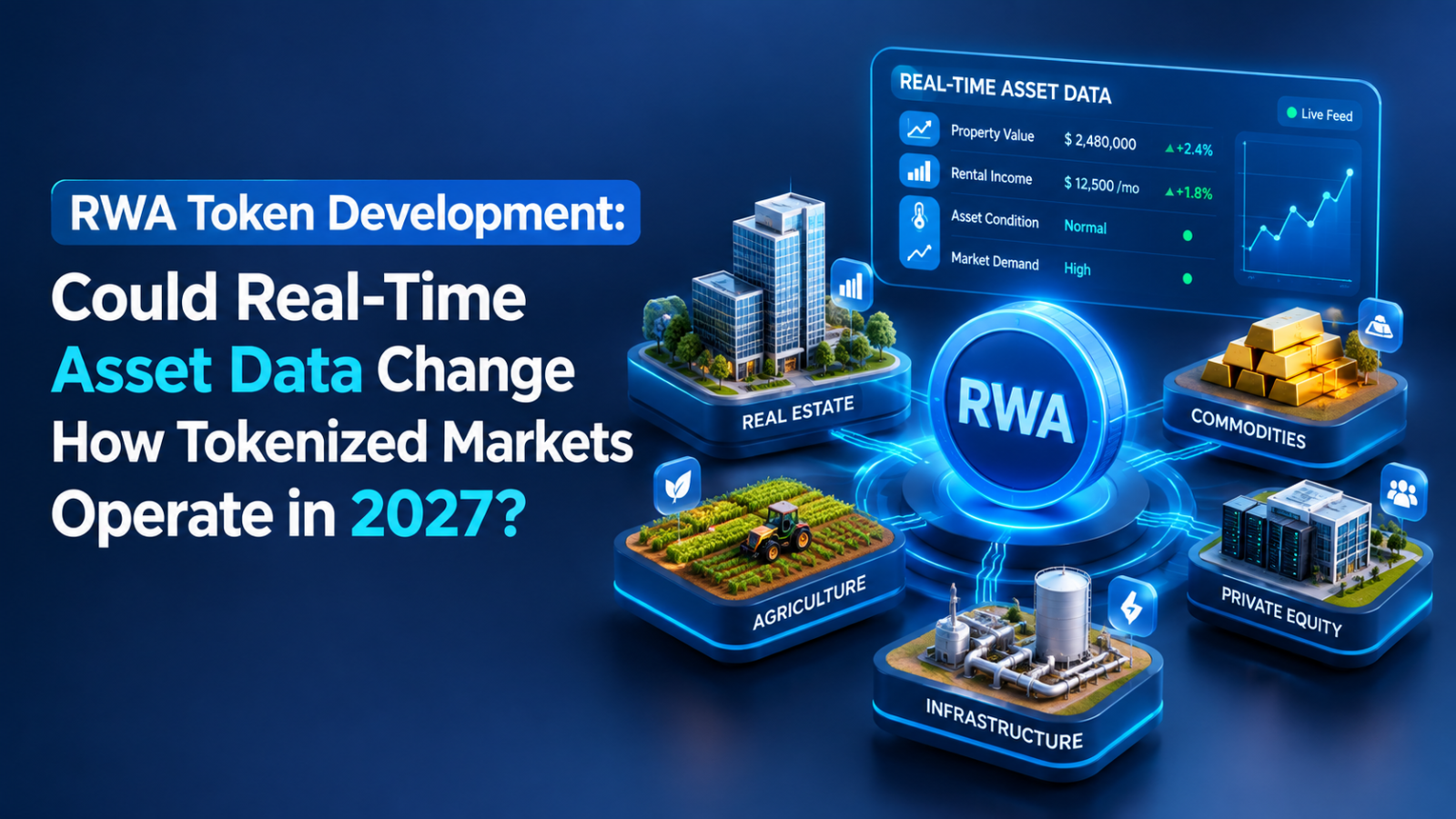
In 2027, real-time asset data could become a major part of RWA token development. Instead of treating a token as a static representation of an asset, platforms may connect tokens with continuously updated information about valuations, income, ownership, payments, collateral, asset conditions, and market activity. This could give investors, issuers, administrators, and secondary-market participants a more current view of the assets represented by tokens.
Why Real-Time Asset Data Matters for RWA Tokenization
RWA tokenization connects an off-chain asset with an on-chain representation. However, many important facts about that asset remain outside the blockchain. A property may change in value, a loan may receive repayments, a commodity may experience price changes, or an infrastructure project may generate new revenue.
If the token continues to display information from the date of issuance, investors may have limited visibility into what is happening with the underlying asset. Real-time or frequent data updates can address this information gap.
For example, consider a token representing a share of a commercial property. The property's rental income, occupancy rate, valuation, expenses, and ownership records can change over time. A tokenized platform could connect approved data sources with the digital asset so that relevant information is updated according to predefined rules.
This does not mean every piece of information has to update every second. The appropriate frequency depends on the asset. Publicly traded commodities may require frequent price updates, while real estate valuations may be revised monthly, quarterly, or when specific events occur.
How RWA Token Development Could Use Live Asset Information
RWA token development can incorporate several data layers into a tokenized asset ecosystem. These layers can connect asset information, smart contracts, investor interfaces, compliance systems, and secondary trading functions.
An RWA tokenization development company may design data pipelines that collect information from property managers, financial institutions, custodians, valuation providers, accounting systems, IoT devices, market feeds, or approved external databases. The information can then pass through verification and validation processes before being used by blockchain applications.
Smart contracts can reference approved data when performing predefined functions. For example, a tokenized lending product could use repayment information to update outstanding balances. A real estate product could use verified rental data when calculating distributions. A commodity token could refer to a recognized market price when determining redemption or settlement values.
The objective is not simply to put more data on a blockchain. The larger question is how reliable external information can interact with token ownership and transaction rules.
From Static Tokens to Data-Connected Assets
Early discussions around RWA tokenization often focus on converting ownership or economic interests into digital tokens. The next stage could involve making those tokens more closely connected to the ongoing condition of the underlying asset.
A token representing a private credit instrument, for instance, could contain or reference information about principal outstanding, repayment history, interest accrual, maturity date, collateral status, and payment events. Investors would then have a more detailed picture of the financial instrument instead of seeing ownership information alone.
The same idea applies to property. A tokenized property platform could show current rental income, occupancy information, expenses, valuation updates, and distributions associated with the property.
This approach could make tokenized assets more useful for portfolio monitoring. Investors could compare their holdings using current information rather than relying exclusively on reports prepared at fixed intervals.
The Role of Oracles in Tokenized Markets
Blockchain networks generally cannot obtain external information by themselves. Oracles can provide a connection between blockchain applications and external data sources.
In RWA tokenization platform development, oracle infrastructure could support information such as market prices, valuation updates, interest rates, foreign exchange rates, commodity prices, repayment events, and other asset-related information.
For example, suppose a tokenized commodity is linked to a physical inventory. The platform may receive inventory information from a warehouse management system. An oracle layer can pass approved information to the blockchain, where smart contracts use it according to predefined rules.
The quality of the resulting system depends heavily on the quality of the underlying data. If incorrect information enters the system, a smart contract may execute correctly according to incorrect input. For this reason, data verification, source selection, timestamping, access controls, and exception handling are important considerations for an RWA tokenization company.
Real Estate Could Benefit From Frequent Data Updates
Real estate is one area where current asset information could have a meaningful role in tokenized markets. Property ownership records can remain relatively stable, while financial and operational information changes regularly.
A tokenized commercial property may generate rental income every month. Tenants can leave or renew leases. Operating expenses can increase. Property valuations can change. Debt obligations can also affect the economic position of investors.
A real-world asset tokenization company could create a platform that brings these data points together for investors and administrators. Smart contracts could then use verified events to calculate distributions or update records.
For example, once rental income is confirmed, a smart contract could calculate the distribution associated with eligible token holders. The platform could also display historical distributions and updated property information.
Such systems would still depend on legal agreements and off-chain administration. A blockchain record does not automatically change the legal ownership of a property unless the relevant legal framework recognizes that arrangement.
Private Credit and Debt Markets
Private credit may also gain from data-connected tokenization. A tokenized loan or debt instrument can contain information relating to principal, interest, maturity, collateral, and repayment schedules.
As borrowers make payments, the platform could update relevant records. If a payment becomes overdue, the system could record the event and trigger predefined administrative workflows.
For investors, this could create a more frequent view of portfolio performance. For issuers and administrators, it could reduce the need to reconcile information across multiple systems, provided the external data sources are accurate and properly integrated.
However, credit information requires careful treatment. Not every borrower event should necessarily be public. Permission controls, investor eligibility, privacy requirements, and regulatory restrictions may determine who can access specific information.
Tokenized Funds and Portfolio Assets
Tokenized funds may also use real-time or frequent data feeds. A fund holding multiple securities, private assets, or other instruments needs updated information to calculate portfolio values and investor positions.
A tokenization platform could connect fund accounting systems with blockchain records. When the underlying portfolio changes, approved data could be reflected in investor dashboards and relevant token records.
For funds holding less frequently valued assets, data updates may happen according to accounting or valuation schedules. For assets with active markets, updates could occur much more frequently.
This distinction matters because the token's market price and the underlying asset valuation may not always move together. A tokenized fund may trade at a premium or discount depending on liquidity, demand, restrictions, and market conditions.
Commodity Tokenization and Physical Asset Tracking
Commodities present another interesting application. A token may represent a claim associated with gold, agricultural products, metals, energy products, or other physical assets.
Real-time information can include inventory levels, warehouse records, shipment information, market prices, and redemption activity.
For example, if a token represents a claim associated with stored metal, the platform may need to maintain records concerning the quantity held, location, custodian, and redemption status. External data systems can provide updates that are then reflected in the tokenized environment.
This can make the relationship between physical inventory and digital claims easier to monitor, but it does not remove the need for physical audits, custody arrangements, legal documentation, and independent verification.
How Secondary Markets Could Change
Real-time asset information may also influence secondary trading. Investors assessing a tokenized asset need information about both the token and the underlying asset.
Suppose a property token has recently received a valuation update and rental income has changed. Those developments could affect investor interest in the token. A secondary marketplace could display verified information alongside trading data, subject to applicable disclosure and regulatory requirements.
This could make secondary markets more information-rich. However, more information does not automatically mean greater liquidity. Trading activity also depends on investor demand, transfer restrictions, market structure, pricing, legal rights, and the number of participants.
An RWA tokenization platform development company may therefore need to consider data services and trading infrastructure together rather than treating them as completely separate components.
Smart Contracts and Automated Asset Events
Smart contracts can make use of approved asset data to trigger predefined actions. This is one of the more practical applications of RWA tokenization.
For example, a smart contract could record a coupon payment when a verified payment event is received. It could update a collateral ratio when approved valuation information changes. It could restrict certain actions when an asset falls outside predefined conditions.
These functions require carefully designed rules. A smart contract cannot understand an ambiguous real-world event in the same way a human administrator can. Therefore, the platform needs defined data formats, event conditions, fallback procedures, and dispute mechanisms.
The result is a system where automation handles specific predefined events while human and legal processes remain responsible for situations that require judgment.
Compliance and Investor Protection
More frequent asset information can also support compliance processes. Tokenized markets may involve investor identity checks, eligibility requirements, transfer restrictions, reporting obligations, and jurisdiction-specific rules.
A platform could connect investor identity information with token transfer rules. Certain assets might only be transferable between approved participants. Other assets could have holding limits or geographic restrictions.
However, data availability must be balanced with privacy. Putting sensitive information directly on a public blockchain may create unnecessary risks. Many platforms may instead keep confidential records in controlled systems while placing references, proofs, or selected information on-chain.
An RWA tokenization development company working on institutional products therefore needs to consider both data access and data protection.
What RWA Platforms May Need in 2027
As RWA tokenization develops, platform architecture may include several connected components. These can include token issuance modules, smart contracts, identity systems, compliance controls, custody connections, oracle services, asset databases, investor dashboards, payment systems, analytics tools, and secondary-market functions.
The data layer may become increasingly important because each component depends on reliable information.
For an RWA tokenization platform development project, development teams may need to define where each data point originates, how frequently it changes, who can modify it, how it is verified, and what happens when conflicting information is received.
This creates a broader development process than simply issuing tokens. The platform needs a practical relationship between physical assets, legal agreements, external data, blockchain records, and investor activity.
Challenges With Real-Time RWA Data
Real-time data also introduces several challenges. Data providers may publish inconsistent information. Valuation methodologies can differ. Physical assets may be difficult to inspect continuously. External systems can experience downtime. Market prices may vary across providers.
There is also the issue of responsibility. If a tokenized asset uses incorrect valuation information and a smart contract executes an action based on it, the platform needs a defined process for handling the event.
For these reasons, data provenance can become important. Platforms may need records showing where information came from, when it was received, whether it passed validation, and which system approved it.
Regulatory requirements will also influence how these systems operate across different jurisdictions. Token issuers and platform operators need to consider applicable securities, property, financial-services, privacy, tax, and custody rules.
What This Could Mean for RWA Token Development in 2027
By 2027, the discussion around RWA token development may increasingly move from token issuance toward ongoing asset management. The token could become one part of a larger digital system that connects ownership, asset information, payments, compliance, valuation, and trading.
Real-time data will not be suitable for every asset or every application. Some assets naturally require periodic valuations rather than continuous updates. Even so, the ability to connect verified external information with blockchain-based records could provide a more current view of tokenized markets.
The practical value will depend on data quality, legal recognition, platform design, investor requirements, and market participation. RWA tokenization is therefore likely to involve not only blockchain development but also data infrastructure and real-world operational processes.
Conclusion
Real-time asset data could become an important part of how tokenized markets operate in 2027 by connecting digital tokens with updated information about valuations, payments, ownership, collateral, inventory, and asset performance. Instead of treating a token as a static digital representation, RWA platforms may increasingly connect tokens with verified events occurring around their underlying assets. This could support better portfolio monitoring, automated distributions, more informative secondary markets, and more structured asset administration, although data accuracy, privacy, legal recognition, and regulatory requirements will remain significant considerations. As these systems develop, businesses considering RWA tokenization may need to evaluate the full relationship between blockchain records, external data providers, smart contracts, custodians, and real-world legal arrangements. Blockchain App Factory provides RWA tokenization development services.
FAQs
1. What is RWA token development?
RWA token development refers to creating blockchain-based tokens that represent ownership, claims, economic interests, or other rights associated with real-world assets such as property, commodities, credit instruments, funds, or infrastructure.
2. Why is real-time data important for RWA tokenization?
Real-time or frequent data can provide updated information about an underlying asset. Depending on the asset type, this may include valuation, income, repayment, inventory, ownership, or market-price information.
3. How do oracles support RWA tokenization?
Oracles connect blockchain applications with information from external systems. In RWA markets, they can provide approved data such as asset prices, valuation information, payment events, or other real-world conditions to smart contracts.
4. Can real-time data automatically change token prices?
Not necessarily. A data feed can provide information used by a platform or smart contract, but token prices in secondary markets depend on factors such as supply, demand, liquidity, restrictions, and market conditions.
5. What assets can use data-connected RWA tokens?
Potential applications include real estate, private credit, commodities, investment funds, infrastructure, invoices, equipment, and other assets where reliable external information can be connected with digital records.
6. What does RWA tokenization platform development involve?
RWA tokenization platform development can involve token issuance, smart contracts, investor management, identity verification, compliance functions, custody connections, payment systems, data feeds, oracle infrastructure, asset management, and trading features.
7. What should businesses consider before developing an RWA platform?
Businesses should consider the legal rights represented by the token, asset custody, investor eligibility, applicable regulations, data sources, valuation methods, smart-contract rules, privacy requirements, payment processes, and secondary-transfer restrictions.
8. What role can an RWA tokenization company play?
An RWA tokenization company can provide technical development and related infrastructure for converting eligible real-world asset interests into blockchain-based tokens and connecting those tokens with supporting systems such as compliance, data feeds, wallets, and marketplaces.



Share this page with your family and friends.