Managing psychiatric medications often involves regular appointments, symptom reviews, and treatment adjustments. However, traveling to a clinic for every follow-up visit can be difficult because of work, family responsibilities, or transportation. Telepsychiatry allows eligible patients to attend psychiatric appointments remotely when clinically appropriate.
Through online psychiatry , patients can discuss symptoms, review medications, and receive guidance from a qualified psychiatric provider. These appointments still require careful assessment and ongoing monitoring to support safe and effective treatment. According to the National Institute of Mental Health (NIMH), virtual mental health care may include medication prescriptions, assessments, and regular follow-up appointments.
Understanding how online medication follow-ups work can help patients prepare for appointments and make informed decisions about their mental healthcare.
What Is Medication Management Through Telepsychiatry?
Medication management involves reviewing psychiatric medications to assess their effectiveness, monitor side effects, and determine whether treatment changes may be appropriate.
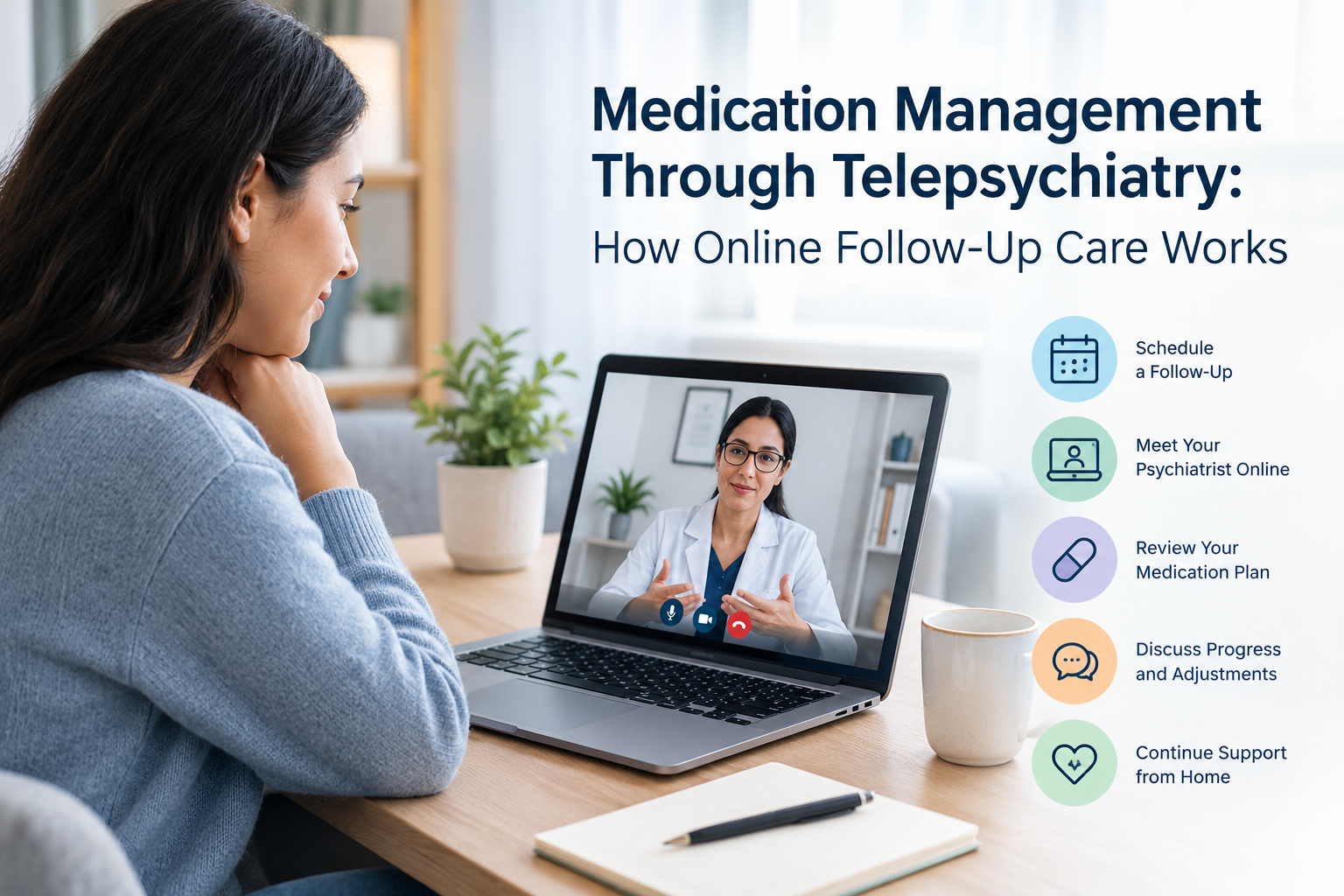
Through telepsychiatry, these appointments usually take place through a secure video platform. A psychiatric provider can discuss symptoms, review medication use, and evaluate progress without requiring an in-person visit for every consultation.
People searching for an online psychiatrist medication service may need support for depression, anxiety, attention-deficit/hyperactivity disorder (ADHD), bipolar disorder, or other mental health concerns. Available services depend on the provider's qualifications, the patient's needs, and applicable regulations.
Online medication follow-ups may include:
-
Reviewing current medications and how consistently they are taken.
-
Discussing changes in symptoms and daily functioning.
-
Monitoring possible side effects.
-
Evaluating whether the current treatment plan remains appropriate.
-
Arranging additional assessments or referrals when needed.
Medication decisions should be based on a clinical evaluation rather than a routine request for a prescription.
How Does Online Medication Management Work?
The process of medication management online is similar to in-person follow-up care, except that the consultation takes place remotely.
1. Scheduling an Appointment
The first step is arranging an appointment with a psychiatric provider who offers telehealth services. Patients may need to provide information about their symptoms, medical history, current medications, and previous treatments.
Before booking, confirm that the provider is authorized to treat patients in your location and can address your particular needs.
2. Reviewing Symptoms and Medical History
During the appointment, the provider may ask about mood, anxiety, sleep, concentration, energy, and daily activities. They may also review existing diagnoses, allergies, other medications, and relevant medical conditions.
This information helps the provider assess whether the current treatment is working and whether further evaluation is needed.
For example, someone receiving treatment for depression may report improved mood but continued sleep difficulties. The provider can explore these concerns and discuss appropriate next steps.
3. Discussing Medication Effectiveness
People respond differently to psychiatric medications. Some experience improvements in their symptoms, while others may experience side effects or limited benefits.
A virtual psychiatrist may ask whether symptoms have changed, whether doses have been missed, and how the medication affects daily life. The provider can then explain potential benefits, risks, and treatment options.
Medication adjustments are not always necessary. Continuing the current treatment may be appropriate, while other situations may require a different approach or additional assessment.
4. Developing a Treatment Plan
After reviewing the available information, the provider may recommend continuing the current medication, adjusting treatment, monitoring symptoms, or considering another option.
Prescriptions through telehealth depend on clinical suitability, the medication involved, and applicable regulations. Patients should not change doses, stop medication, or combine treatments without appropriate medical guidance.
5. Arranging Follow-Up Care
Follow-up appointments help providers evaluate treatment response and identify concerns. Appointment frequency depends on symptoms, medication, side effects, and recent treatment changes.
Patients starting a new medication or changing a dose may need closer monitoring. Those with stable symptoms may require less frequent visits, depending on their provider's recommendations.
Regular follow-ups also provide an opportunity to discuss new concerns before they become more difficult to manage.
Who May Benefit From Online Psychiatry Follow-Ups?
Online psychiatry may be suitable for people who need ongoing psychiatric support and can be assessed safely through remote appointments. The appropriate approach depends on symptoms, clinical needs, and access to suitable technology.
People Managing Depression
Patients receiving treatment for depression may discuss mood changes, motivation, sleep, energy, and daily functioning. These conversations help providers evaluate progress and identify concerns that may require further attention.
People Experiencing Anxiety
Anxiety symptoms can change over time. Online follow-ups provide an opportunity to discuss excessive worry, panic symptoms, sleep difficulties, and medication-related concerns. Providers may also discuss psychotherapy or other supportive approaches when appropriate.
People Receiving ADHD Treatment
ADHD follow-ups may involve reviewing attention, organization, impulsivity, and daily functioning. Depending on the medication, monitoring may include appetite, sleep, blood pressure, or heart rate.
Some assessments require physical measurements or an in-person appointment, so video consultations may need to be combined with other forms of care.
People With Other Psychiatric Conditions
Individuals receiving treatment for other mental health conditions may also benefit from remote follow-ups when clinically appropriate. However, significant symptom changes, complex medical concerns, or the need for a physical examination may require in-person assessment.
How to Prepare for an Online Follow-Up Appointment
Preparing for an appointment can help patients communicate their concerns and provide useful information about their treatment.
Before your visit, consider these steps:
-
Prepare a medication list: Include prescription medications, over-the-counter products, and supplements.
-
Track your symptoms: Note changes in mood, sleep, concentration, anxiety, or energy.
-
Record side effects: Write down when they started, how often they occur, and how they affect daily life.
-
Review your medication routine: Mention missed doses or difficulties following instructions.
-
Prepare questions: Ask about expected benefits, possible risks, and monitoring requirements.
-
Check your technology: Test your internet connection, camera, microphone, and appointment link.
Choose a quiet, private location where you can speak openly. Keeping your medication packaging or an updated medication list nearby can also help.
You do not need to have every detail prepared. Sharing accurate information about your symptoms and concerns is more important than having perfect records.
Is Medication Management Online Safe?
Medication management online can be appropriate when provided by a qualified professional who follows clinical standards and applicable telehealth regulations. Safety depends on the quality of the assessment, communication, and follow-up.
Monitoring Side Effects
Psychiatric medications can cause side effects that vary from person to person. Patients should report new or worsening symptoms rather than assuming they will resolve on their own.
Depending on the medication, monitoring may require symptom assessments, laboratory tests, physical measurements, or an in-person examination.
Reviewing Other Medications
Prescription medications, over-the-counter products, and supplements may interact with one another. Sharing a complete medication list helps the provider identify potential risks.
Patients should also mention allergies, relevant medical conditions, and previous problems with psychiatric medication.
Protecting Privacy
Attend appointments from a private location and use the provider's recommended consultation platform. Secure your device, avoid sharing appointment links, and ask how personal health information is protected.
Healthcare providers must follow the privacy and security requirements that apply to their practice and location.
Knowing When Online Care Is Not Enough
Remote appointments cannot address every clinical concern. A provider may recommend additional testing, an in-person examination, or a referral when necessary.
If you experience a severe medication reaction or rapidly worsening symptoms, seek appropriate medical assistance. For a life-threatening emergency or immediate risk of harm, contact local emergency services instead of waiting for a routine appointment.
Online Psychiatrist vs. In-Person Psychiatrist
Both online and in-person psychiatric care can support medication management. The appropriate option depends on symptoms, clinical needs, and personal circumstances.
Online psychiatry offers convenience by reducing travel time and making routine follow-ups easier to attend. It may be particularly useful for people who have difficulty traveling or managing busy schedules.
In-person appointments allow direct observation and physical assessments when needed. They may be more suitable when symptoms are complex, additional examinations are required, or remote care cannot provide enough information.
Some patients use a combination of both approaches. For example, they may attend an in-person evaluation and complete suitable follow-up appointments through telepsychiatry.
A qualified provider can help determine which approach is appropriate and whether the appointment format should change over time.
How to Choose a Virtual Psychiatrist for Medication Management
Choosing a virtual psychiatrist involves more than finding an appointment that fits your schedule. Patients should consider the provider's qualifications, communication style, monitoring practices, and approach to follow-up care.
Consider these factors when comparing providers:
-
Professional qualifications: Verify credentials and licensing in your location.
-
Clear communication: Choose a provider who explains treatment options, benefits, and risks in understandable language.
-
Follow-up arrangements: Ask how progress is monitored and how to report concerns between appointments.
-
Prescription policies: Confirm which medications can be prescribed and what restrictions may apply.
-
Privacy practices: Understand how appointments are conducted and how personal health information is protected.
-
Coordination of care: Ask whether the provider can coordinate with other healthcare professionals when necessary.
A suitable provider should welcome questions, explain treatment recommendations, and encourage patients to report changes in symptoms or medication-related concerns.
Frequently Asked Questions
1. Can an Online Psychiatrist Prescribe Medication?
A qualified psychiatric provider may prescribe medication through telehealth when clinically appropriate and legally permitted. Prescribing depends on the patient's location, the medication involved, and the provider's assessment. Some medications have additional restrictions or require in-person evaluation.
2. How Often Do I Need Online Medication Management Appointments?
Appointment frequency depends on symptoms, medication, treatment response, and side effects. Patients may need more frequent appointments when starting or changing medication. The provider can recommend a suitable schedule based on individual needs.
3. Can I Continue My Existing Medication Through Telepsychiatry?
A provider can review your current treatment and determine whether continued prescribing is appropriate. You may need to share your medication history, previous treatments, and relevant health information. A prescription is not guaranteed without an appropriate evaluation.
4. What Should I Do If My Medication Causes Side Effects?
Contact your prescribing provider and explain your symptoms, when they started, and how severe they are. Do not stop or change medication without appropriate guidance. Severe or life-threatening reactions require urgent medical attention.
5. Is Medication Management Online Suitable for Everyone?
No. Some patients need an in-person examination, additional testing, or more intensive support. A provider should assess whether telepsychiatry can meet the patient's clinical needs safely.
6. Can a Virtual Psychiatrist Help With Depression and Anxiety?
A qualified provider may assess and manage medication for depression or anxiety when appropriate. Follow-up appointments help monitor symptoms, side effects, and treatment response. Recommendations depend on the person's health history and individual circumstances.
7. What Should I Prepare for My First Online Psychiatric Appointment?
Prepare a list of current medications, relevant medical history, previous treatments, and questions about your symptoms. Choose a private location and test your device before the appointment.
8. Is Online Medication Management Private?
Privacy depends on the platform, the provider's security practices, and the applicable privacy regulations. Patients should use recommended platforms, attend appointments in a private location, and ask how their health information is stored and protected.
Conclusion
Medication management through telepsychiatry allows eligible patients to discuss symptoms, review medications, and receive follow-up care remotely. These appointments can help providers monitor treatment progress, identify side effects, and determine whether further assessment is needed.
The effectiveness of medication management online depends on accurate communication, appropriate clinical evaluation, and regular monitoring. Patients should report changes in symptoms, discuss medication-related concerns, and follow their provider's instructions.
Cordial Psychiatry provides psychiatric care from its practice in Yonkers, New York, and offers telepsychiatry options for eligible patients. Learning about Cordial Psychiatry's telepsychiatry services can help readers understand the available options for remote psychiatric consultations and ongoing mental health care.




Share this page with your family and friends.