The Atlas Mountains are among the most remarkable mountain ranges in Africa, stretching across northwestern Africa and covering large parts of Morocco, Algeria, and Tunisia. Known for their impressive peaks, beautiful valleys, traditional villages, and diverse landscapes.
These mountains are an important geographical feature of the continent. They also play a significant role in the region's climate, culture, tourism, and natural environment.
Understanding the map of the Atlas Mountains in Africa helps travelers, geography enthusiasts, and adventure seekers identify the major mountain ranges, important locations, and surrounding regions. From the famous High Atlas in Morocco to the rugged Aurès Mountains in Algeria, each section offers distinctive geographical features and experiences.
Where Are the Atlas Mountains Located?
The map of the atlas mountains in Africa are situated in northwestern Africa, extending approximately 2,500 kilometres across Morocco, Algeria, and Tunisia. Their western section begins near Morocco's Atlantic coastal region, while their eastern sections extend toward northern Tunisia.
The mountain range creates a natural geographical division between the Mediterranean and Atlantic coastal regions in the north and the Sahara Desert in the south. This position influences local weather patterns, rainfall distribution, vegetation, and agricultural activities.
The Atlas Mountains are divided into several major sections, each with its own geographical characteristics. These include the High Atlas, Middle Atlas, Anti-Atlas, Tell Atlas, Saharan Atlas, and Aurès Mountains.
1. High Atlas Mountains in Morocco
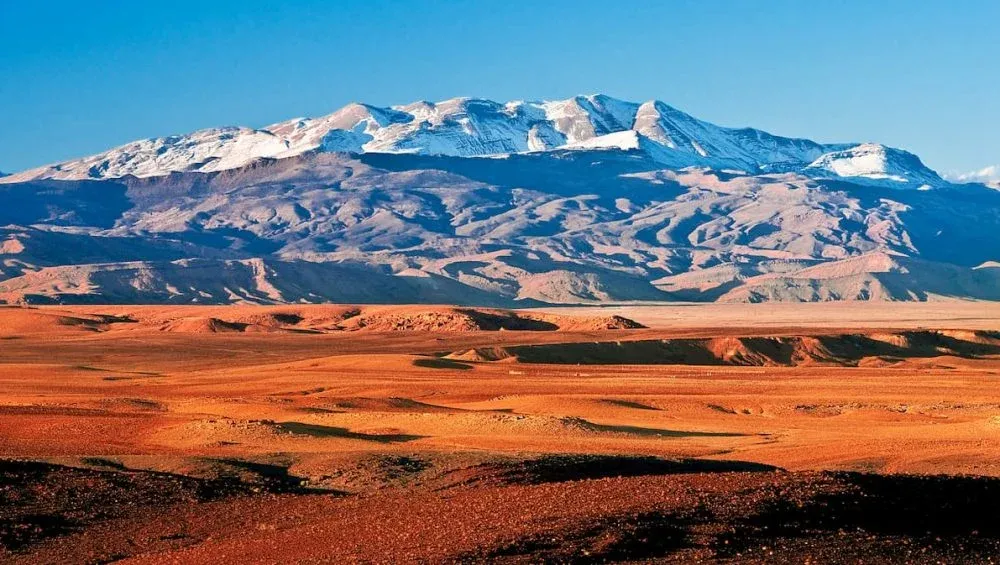
The High Atlas is the most famous and highest section of the entire mountain system. Located in central Morocco, it stretches from the southwest toward the northeast and contains some of Africa's most impressive mountain scenery.
Its most recognizable landmark is Mount Toubkal, which reaches approximately 4,167 metres above sea level. It is the highest mountain in North Africa and attracts hikers, climbers, and adventure enthusiasts from around the world.
The High Atlas is also known for its deep valleys, rocky landscapes, traditional Berber villages, and scenic mountain passes.
Important locations include:
Mount Toubkal: The highest peak in North Africa.
Imlil: A popular starting point for mountain trekking.
Oukaïmeden: A well-known mountain destination with winter sports opportunities.
Ourika Valley: Famous for its rivers, waterfalls, and traditional settlements.
Tizi n'Tichka Pass: A spectacular mountain route connecting Marrakech with southeastern Morocco.
These destinations make the High Atlas an important region for outdoor tourism and cultural exploration.
2. Middle Atlas Mountains
The Middle Atlas is another important section of Morocco's mountain system. It lies northeast of the High Atlas and is particularly famous for its green landscapes, cedar forests, lakes, and cooler climate.
Unlike the rugged and rocky High Atlas, the Middle Atlas contains extensive plateaus, rolling hills, and forest-covered slopes. It receives considerable rainfall compared with many surrounding areas, supporting a variety of plant and animal species.
Some important locations include:
Ifrane: A charming mountain town known for its European-style architecture.
Azrou: Famous for its cedar forests and Barbary macaques.
Michlifen: A popular winter destination.
Dayet Aoua: A beautiful lake surrounded by natural scenery.
The Middle Atlas is especially attractive to visitors interested in nature, wildlife photography, peaceful landscapes, and outdoor recreation.
3. Anti-Atlas Mountains
The Anti-Atlas is located in southwestern Morocco, south of the High Atlas. It is an ancient mountain system characterized by rocky hills, dry valleys, unusual geological formations, and desert landscapes.
This region has a different appearance from the greener northern mountain areas. Its climate is generally drier, and its landscapes include dramatic rock formations and traditional settlements.
Important locations include:
Tafraoute: A picturesque town surrounded by impressive granite formations.
Jbel Sirwa: A volcanic mountain area between the High Atlas and Anti-Atlas.
Aït Mansour Valley: Known for its palm groves and scenic surroundings.
Tiznit: A historic town associated with traditional Moroccan silver craftsmanship.
The Anti-Atlas offers opportunities to explore Morocco's geological history, rural communities, and less crowded mountain destinations.
4. Tell Atlas in Algeria and Tunisia
The Tell Atlas extends across northern Algeria and reaches into Tunisia. It forms part of the northern Atlas mountain system and runs relatively close to the Mediterranean coastline.
This region contains forested mountains, fertile valleys, agricultural plains, and several important rivers. Its geographical position contributes to relatively higher rainfall than the southern desert-facing slopes.
The Tell Atlas is particularly important for agriculture and settlement because its valleys and surrounding plains support farming activities.
Notable locations include:
Kabylie: A mountainous region in northern Algeria known for its villages and cultural traditions.
Djurdjura Mountains: Famous for dramatic peaks and natural scenery.
Blida: A city situated near the northern mountain foothills.
Kroumirie: A forested mountainous region in northwestern Tunisia.
The Tell Atlas demonstrates how the mountain system supports different ecosystems and human activities across North Africa.
5. Saharan Atlas Mountains
The Saharan Atlas is located in northern Algeria, south of the Tell Atlas. It forms an important geographical transition between the Mediterranean-influenced northern regions and the Sahara Desert.
This section consists of several mountain ranges, high plateaus, and dry valleys. Its landscapes are generally more arid, although some higher elevations receive seasonal rainfall and occasional snowfall.
Important areas include:
Djebel Amour: A mountainous region in western Algeria.
Ouled Naïl Range: Known for its distinctive mountain scenery.
Aflou: A town situated within the Saharan Atlas region.
Ksour Mountains: A rugged mountain area in western Algeria.
The Saharan Atlas is important for understanding the geographical relationship between the Atlas system and the surrounding desert environment.
6. Aurès Mountains
The Aurès Mountains are located in northeastern Algeria and represent another significant part of the wider Atlas mountain system. They are known for their rugged terrain, deep valleys, historic settlements, and distinctive cultural heritage.
The region is particularly associated with the Chaoui people, whose traditions and communities have developed around the mountainous environment.
Batna and nearby settlements provide access to several important natural and historical attractions.
The Aurès Mountains also contain beautiful landscapes, traditional architecture, and archaeological sites that highlight the area's historical importance.
Exploring the Atlas Mountains with mttoubkaltrek
For travelers interested in discovering Morocco's spectacular mountain landscapes, mttoubkaltrek offers a useful starting point for exploring trekking opportunities and mountain adventures. From the famous Mount Toubkal to traditional Berber villages and beautiful valleys.
The region provides memorable experiences for nature lovers and outdoor enthusiasts. Exploring these destinations with suitable planning and local knowledge can help visitors understand the area's natural beauty, cultural traditions, and geographical importance.
Conclusion
The Atlas Mountains represent one of Africa's most fascinating geographical systems, extending across Morocco, Algeria, and Tunisia. Their major sections, including the High Atlas, Middle Atlas, Anti-Atlas, Tell Atlas, Saharan Atlas, and Aurès Mountains, each offer unique landscapes and environmental characteristics.
Understanding the map of the Atlas Mountains in Africa makes it easier to recognize important peaks, valleys, towns, and mountain regions. Whether someone is interested in geography, cultural exploration, wildlife, or trekking adventures, the Atlas Mountains offer countless opportunities to discover the natural beauty of northwestern Africa.




Share this page with your family and friends.