Pest problems rarely appear overnight. In many cases, insects and rodents enter a property gradually, finding food, water, and shelter in areas that receive little attention. By the time residents notice visible activity, the problem may already have spread.
Regular property inspections help identify early warning signs before pests become a major concern. Whether you own a house, manage rental units, or operate a commercial building, routine checks can protect the property and support a cleaner, healthier environment.
Why Early Pest Detection Matters
Pests can cause more than inconvenience. Rodents may chew electrical wiring, damage stored belongings, and contaminate food. Cockroaches and other insects can spread through kitchens, bathrooms, and storage areas. Some pests may also trigger allergies or create sanitation concerns.
Finding these problems early makes it easier to identify their source and choose an appropriate response. It can also reduce the need for extensive treatments, repairs, and disruption to daily activities.
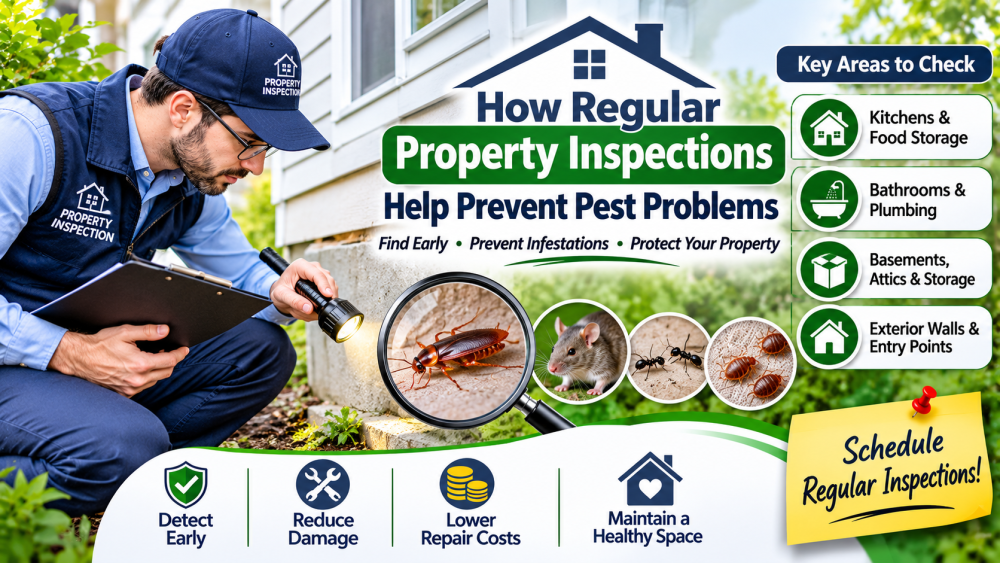
Key Areas to Check During Property Inspections
A useful inspection should cover both indoor and outdoor spaces. Pests often hide in quiet, dark, or damp locations, so it is important not to focus only on areas where activity is immediately visible.
Kitchens and Food Storage Areas
Kitchens provide food, water, and warmth, making them common locations for pest activity. Inspect cupboards, pantry shelves, appliance gaps, and areas beneath sinks.
Look for droppings, damaged food packaging, insect remains, and unusual odors. Check that dry goods are stored in sealed containers and that waste bins have secure lids.
Bathrooms and Plumbing Areas
Moisture can attract several types of household pests. Examine pipes, drains, cabinets beneath sinks, and areas around toilets for leaks or dampness.
Pay attention to peeling surfaces, standing water, and musty odors. Repairing plumbing problems and improving ventilation can help remove conditions that encourage pest activity.
Basements, Attics, and Storage Rooms
These areas often receive less frequent cleaning and inspection. As a result, they can provide suitable hiding places for rodents, spiders, and insects.
Check stored boxes, insulation, wall edges, and corners for droppings, nesting materials, gnaw marks, or shed insect skins. Keeping storage areas organized makes signs of pest activity easier to notice.
Exterior Walls and Entry Points
Walk around the outside of the property and inspect foundations, doors, windows, vents, and utility openings. Small cracks or gaps can give pests access to indoor spaces.
Also check gutters, drains, landscaping, and outdoor waste containers. Overgrown vegetation and accumulated debris near the building may provide shelter for unwanted pests.
Recognize the Early Warning Signs
Property owners do not always see pests directly. Often, the first evidence is a small sign that is easy to overlook.
Common warning signs include:
-
Small droppings near walls, cupboards, or storage areas.
-
Gnaw marks on wood, plastic, wiring, or food packaging.
-
Scratching sounds inside walls or ceilings.
-
Unusual odors in enclosed spaces.
-
Small holes or damaged screens near possible entry points.
-
Shed insect skins, egg cases, or live insects.
Bed bugs require particular attention because they can remain hidden around mattresses, bed frames, furniture seams, and nearby cracks. Small dark spots, shed skins, and repeated bites may indicate a possible issue, although bites alone cannot confirm an infestation. When signs are present, a thorough inspection can help determine whether professional bed bug treatments queens ny are appropriate.
Create a Consistent Inspection Schedule
Inspections are more effective when they follow a routine. The right frequency depends on the property's size, age, location, condition, and history of pest activity.
A practical schedule may include:
-
Weekly checks: Review kitchens, waste areas, and other locations where food or moisture may collect.
-
Monthly inspections: Examine storage spaces, plumbing areas, entry points, and exterior surroundings.
-
Seasonal reviews: Check for weather-related changes, new gaps, moisture issues, and signs of pests moving indoors.
Property managers should also encourage tenants or occupants to report unusual activity as soon as they notice it. Prompt reporting helps prevent minor concerns from being overlooked.
Take Action After Finding Pest Activity
An inspection is only useful when findings lead to appropriate action. Start by documenting the location and type of evidence. Photographs and written notes can help track changes and communicate concerns to maintenance staff or pest management professionals.
Next, address conditions that may be attracting pests. Repair leaks, remove food waste, seal suitable entry points, and reduce clutter. Avoid disturbing suspected nests or applying chemicals without understanding the pest involved and the correct safety precautions.
If activity continues or appears widespread, arrange a professional assessment. A qualified provider can help identify the pest, determine the extent of the problem, and recommend suitable treatment and prevention measures.
Conclusion
Regular property inspections are a practical way to identify pest problems before they become difficult to manage. By checking common hiding places, recognizing early warning signs, maintaining a consistent schedule, and responding promptly, property owners can reduce damage and protect indoor conditions. Making inspections part of routine property maintenance supports long-term cleanliness, comfort, and pest prevention.



Share this page with your family and friends.