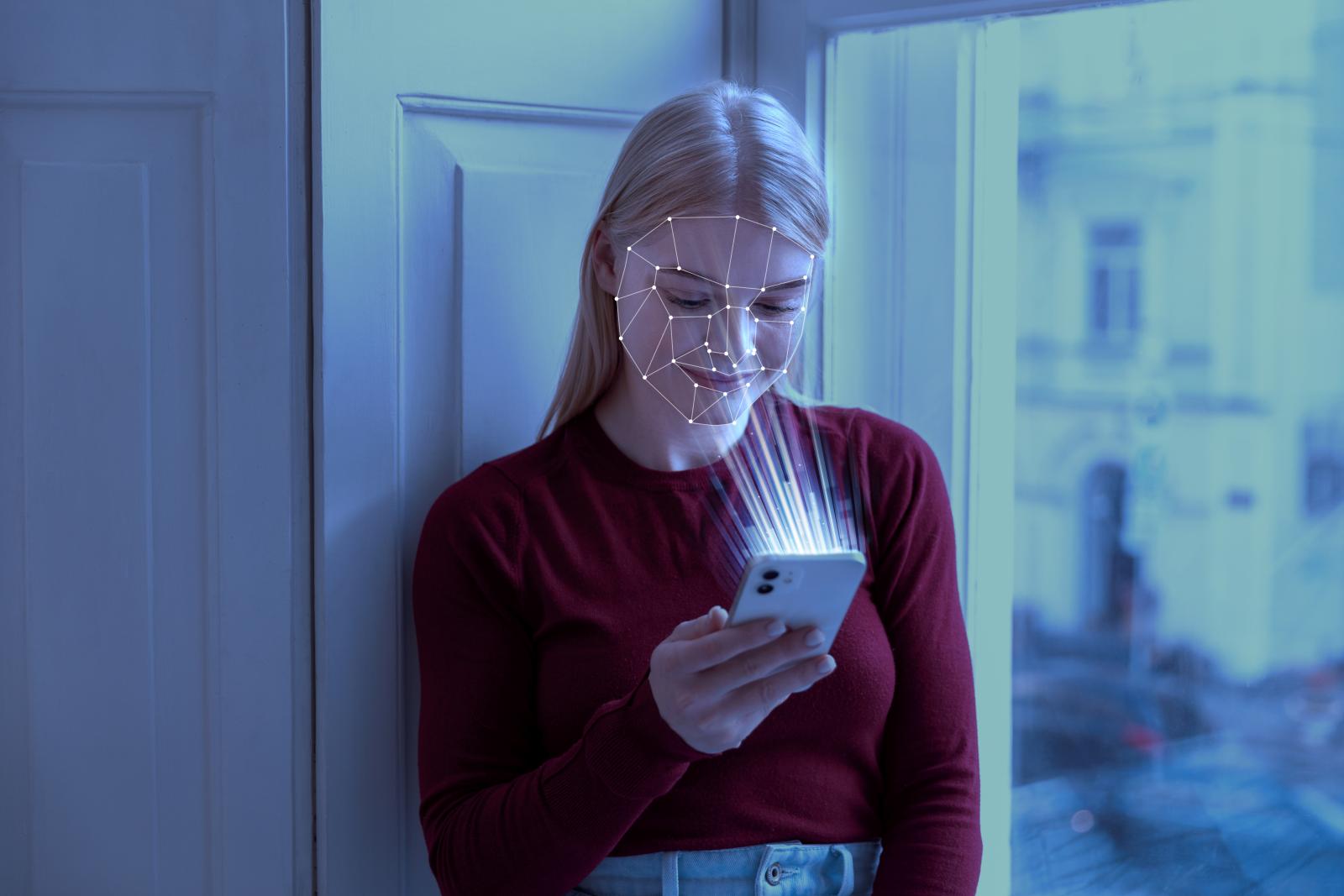
What allows software to analyze a picture and find patterns in a person’s face in less than a minute? Multiple methods support facial recognition. They all rely on the use of computers and technology to analyze and recognize facial features.
This guide will explain various types of facial recognition technology and the scientific concepts involved. In addition, this guide will explore the factors that influence the outcomes and results of facial recognition technology.
What Is a Facial Recognition Service?
A facial recognition service uses a software program to identify or verify a person using a digital image. Facial recognition systems are often used to identify individuals in photos or to verify the identity of a person using an image.
One way to understand facial recognition software is to look at how the program identifies a face and what characteristics of a face it uses. For example, the software may consider where a person's eyes, nose, and mouth are in relation to each other.
The software attempts to transform various aspects of a person's face into a form that is amenable to analysis and computation. For example, the software may calculate the vertical distance between the eyes. The calculation may be done thousands of times and for thousands of faces.
How AI Detects Facial Features
AI-based facial analysis usually involves several stages. Understanding these steps makes facial similarity results easier to interpret.
1. Face Detection
First, the system searches an image for a human face. Once detected, it separates the relevant facial area from the background.
2. Feature Mapping
The software identifies important points or patterns around areas such as the eyes, nose, cheeks, lips, and jaw. The exact features used depend on the model and its intended purpose.
3. Creating a Facial Representation
Machine-learning models can convert these characteristics into a mathematical representation, sometimes called a face embedding. This representation contains patterns that allow the system to compare one face with another.
4. Comparing the Results
When two photographs are analyzed, their representations can be compared mathematically. The resulting measurement indicates how closely the analyzed patterns correspond.
What Is Facial Recognition Analysis?
A facial recognition service can be used for various purposes. For example, a customer can use the service to verify their identity. Alternatively, a user can submit two photos and ask the service to determine if there is any similarity between the two.
The answer to the similarity question, however, is not an affirmation of identity. It can be quite the opposite. For example, a person can appear drastically differently in two photos because of differences in lighting, angle, and other environmental factors.
Therefore, depending on the purpose of the service and the constraints of the technology, the service can be used to answer different similarity questions.
What Affects Facial Similarity Testing?
The quality and consistency of the photographs can have a noticeable effect on facial similarity testing. A clear, well-lit image usually provides more usable facial information than a low-resolution or heavily edited photograph.
Common factors include:
For a basic comparison, using relatively clear photographs with the face fully visible can make the results easier to interpret.
Can Facial Analysis Prove Two People Are the Same?
No. A facial similarity result should not automatically be treated as conclusive proof of identity or biological relationship.
For example, a high similarity between two photographs may indicate that the analyzed facial patterns are close, but it does not establish that the individuals are related. Likewise, facial recognition technology and DNA testing examine fundamentally different types of information.
DNA testing examines genetic material, whereas facial analysis evaluates visible characteristics captured in an image.
Finding Reliable Facial Comparison Services
Numerous online resources utilize facial analysis technology to permit users to perform facial comparisons between photographs. A facial recognition analysis service may use different methods to analyze and compare facial features. The variability and reliability of these tools depend on the technology employed, comparison type, and the quality of the photographs.
DNA testing labs such as Face DNA Test in Mobile, AL, may also offer photograph-based facial comparison tools for examining similarities between visible facial features. However, these comparisons should not and cannot be used to establish legal or biological relationships, identity, or kinship.
Understanding Facial Recognition Results
AI has made facial analysis considerably faster and more accessible, but the technology still depends on the quality of its input and the purpose for which it was designed.
A facial recognition analysis service can detect measurable patterns and compare facial representations, but a similarity result is not automatically an identification or DNA-based conclusion. If you're evaluating two images, use clear photographs, consider the conditions under which they were taken, and avoid treating a single automated result as definitive evidence.
For cases involving legal identity, security, or other high-stakes decisions, the appropriate professional or formal verification method should be used.




Share this page with your family and friends.