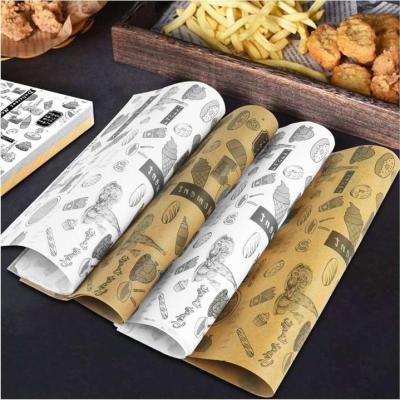
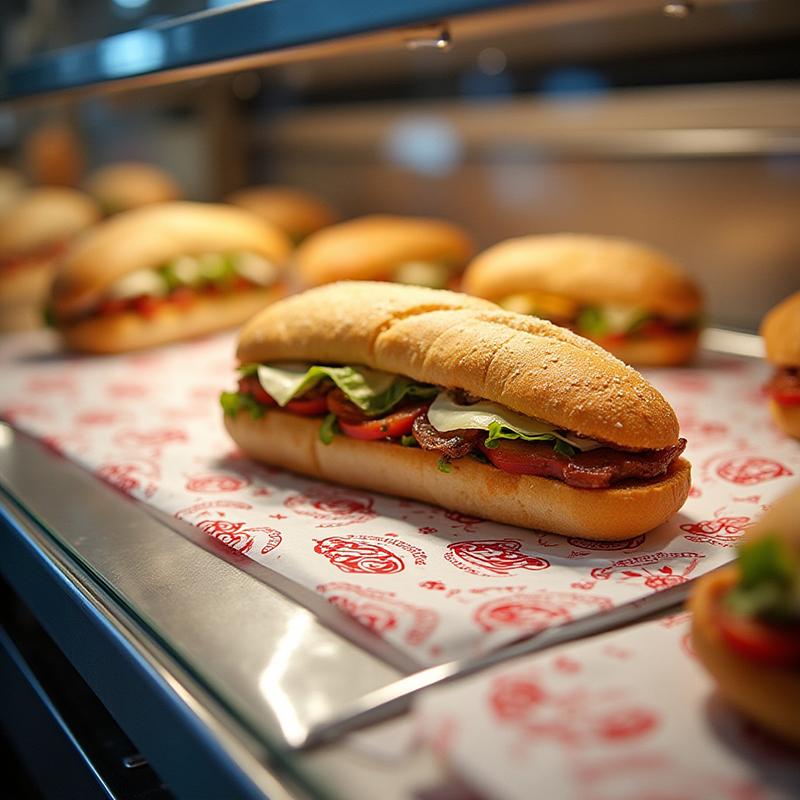
Sandwiches from any kitchen in town look the same if they’re wrapped in generic paper. Take the plain paper and replace it with a printed version, and the same sandwich has a logo, a color scheme, and a message that someone was mindful of the presentation. The first job of custom food wrapping paper is to get the job done: prevent grease and moisture from the food from spilling onto other surfaces and onto the food itself, and the second job is to make it memorable: make the wrapping paper a memorable way for the customer to notice it.
What is Food Wrapping Paper?
Typically a food-grade sheet, such as kraft or white stock, covered with a protective layer to prevent moisture and grease, and then branded with a restaurant’s logos. It’s used to wrap sandwiches, burgers, wraps, and baked goods, so it must be food-contact safe, not just look the part. The printing is done using a food-safe ink that will not rub onto whatever it is in contact with.
Here are some reasons why restaurants should consider custom printing.
Plain paper is a food protector. Printed food wrapping paper provides food security while creating food awareness at no extra cost per food item when ordered in bulk. Each wrap delivered across a counter is a potential picture or memory that a customer can share or reminisce about the next time they are looking for a spot to grab lunch. There’s a practical cost-saving aspect as well, when you shop wholesale for food wrap directly from the manufacturer, instead of purchasing from a distributor who is charging an extra margin on a third party’s product, you are saving money per sheet in your kitchen that places a lot of orders. And because it withstands grease, it results in fewer refunds, less grumbling about soggy packaging, and a cleaner unboxing experience for delivery orders in particular.
Some Specs To Check Before Placing An Order
For regular food items, you want to find a GSM in the 30-40 range, and for anything heavily fried, such as double burgers or lots of oil, you want to avoid the 30-40 range and move toward the 40-50 range. The type of coating is also important, as silicone-treated sheets will last longer under continuous exposure to heat than a plain wax finish. Typical dimensions are 12x12 and 15x15 inches, and specialty or bakery sizes can be customized. Don’t order based on the food packaging paper until it is FDA compliant and food-grade certified, that is not the case for every printed sheet on the market.
Criteria for selecting the appropriate paper.
Don’t choose the lightest food on the menu as a basis, as a sheet designed for pastries will not withstand a burger. But review their minimum order quantities first because some suppliers may require quantities that may not be what a single restaurant location is using for a month. The worst thing you can do in the long run is only focus on the price per sheet and not on the failure rate of that cheap sheet.
The Deli Paper is a choice for several reasons.
The Deli Paper makes restaurant wrapping paper directly, with quality control in the production process instead of after production. Orders can be placed quickly from production in the USA, and a low MOQ allows smaller restaurants to order without any need to purchase a year’s worth in advance.
FAQs
Q: Which size is the perfect size for most sandwiches?
A: Most sandwiches and burgers are wrapped in 12x12 or 15x15 inch wraps.
Q: Does custom printing take longer?
A: The typical turnaround is quick, even on printed runs, not with a manufacturer that operates on a continuous production schedule.
Q: Is this parchment paper?
A: Yes, parchment is oven-safe. This paper is for wrapping and serving, NOT baking.
Get a Free Quote
Looking for wholesale food wrapping paper that lasts? Please get in touch with sales@thedelipaper.com or call us at 832-900-9245 to obtain a custom quote for your sizes, GSM & print design.


Share this page with your family and friends.