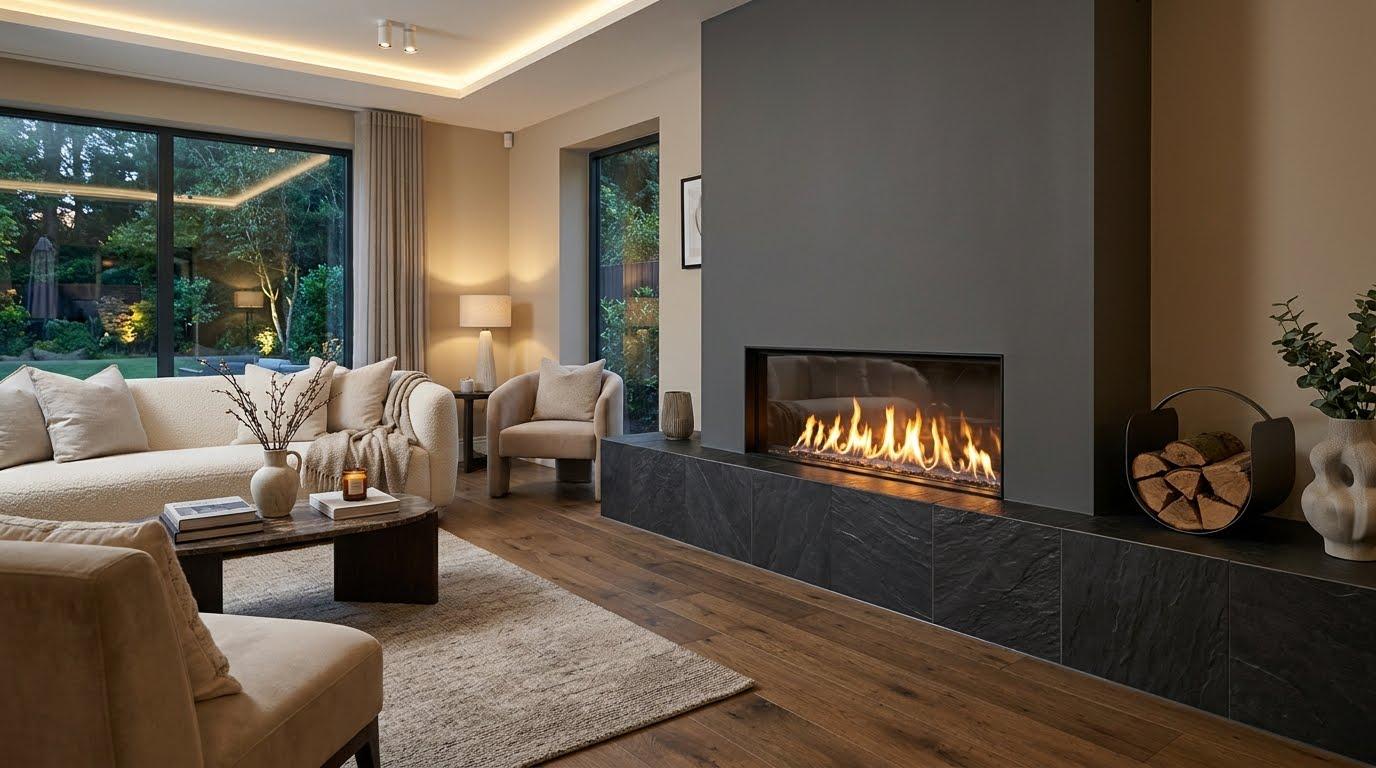
A fireplace often becomes the natural centre of attention in a living room, so choosing the right hearth finish can make a noticeable difference to the overall interior. A black riven slate effect tiled hearth offers a distinctive combination of dark colouring, textured appearance, and natural stone-inspired character. Its uneven-looking surface design creates visual depth, while the deep black tones provide a strong foundation for both traditional and contemporary fireplace settings. Whether paired with a wood-burning stove or a decorative fireplace, this style can introduce an understated yet impressive finish.
What Is a Black Riven Slate Effect Tiled Hearth?
A black riven slate effect tiled hearth is made using tiles designed to reproduce the appearance of naturally riven slate. The term riven describes a surface with natural-looking variations, rather than a completely smooth and uniform finish.
Slate effect tiles are manufactured in different materials and finishes, depending on the product. Some feature subtle surface texture, while others reproduce the layered appearance and tonal variations associated with natural slate.
The black colour gives the hearth a defined appearance and can help establish a visual connection between the fireplace, stove, and surrounding interior.
It is worth distinguishing between natural slate and slate effect tiles. Although they may look similar, their material composition, maintenance requirements, and technical properties can differ. Always check the manufacturer's specifications before selecting a product.
Why Is Black Slate Effect a Popular Choice for Hearth Design?
Dark hearth finishes have a distinctive visual quality. They can frame a fireplace, create contrast against lighter flooring, and complement a wide range of fireplace surrounds.
Black slate effect tiles are particularly appealing because they combine a natural stone-inspired appearance with the design flexibility of manufactured tiles.
Some of the reasons homeowners consider this finish include:
-
Strong visual contrast: Black tiles stand out against cream, white, and light grey interiors.
-
Textured appearance: Riven-style detailing creates more visual interest than a completely plain surface.
-
Versatile styling: The finish can complement rustic, industrial, traditional, and contemporary rooms.
-
Stone-inspired character: Slate effect designs introduce a natural material aesthetic.
-
Coordinated interiors: Dark tiles can be matched with black stove accessories, metal fittings, and fireplace details.
The final appearance depends on the specific tile design, its surface finish, and the surrounding materials.
How Does the Riven Texture Change the Appearance of a Fireplace?
Texture can make a fireplace feel more interesting without introducing additional colours or decorative patterns. A riven slate effect surface often includes subtle variations that resemble the natural layers and irregularities of slate.
These details can create different visual effects depending on the lighting. Light falling across the surface may highlight raised areas and create gentle shadows, giving the hearth a more tactile appearance.
Compared with a smooth, polished finish, a textured design can feel more natural and understated. It is particularly suitable for interiors featuring exposed brick, timber, stone, or other materials with visible surface detail.
However, textured finishes can collect more dust and debris than smoother surfaces. Consider the cleaning requirements before making your final choice.
Which Fireplace Styles Work Well with Black Slate Effect Tiles?
One of the advantages of a black slate-inspired finish is that it can complement different fireplace designs.
Wood-Burning Stove Installations
Black tiles can create a coordinated appearance beneath a dark wood-burning stove. Their colour can connect the hearth with the appliance, producing a visually consistent fireplace area.
The texture also works well with natural timber, exposed brick, and rustic decorative elements.
Traditional Fireplace Surrounds
A black hearth can provide contrast beneath a white or cream fireplace surround. This combination creates a defined base while allowing the decorative surround to remain a prominent feature.
Contemporary Fireplace Designs
For modern interiors, black slate effect tiles can complement simple lines, minimal decoration, and neutral wall colours. A restrained design allows the texture and colour of the hearth to provide sufficient visual interest.
Industrial-Inspired Interiors
Dark metal fittings, brick walls, concrete finishes, and exposed materials can work naturally alongside a black slate-inspired hearth. The combination creates a cohesive industrial appearance.
What Colours Complement a Black Slate Effect Hearth?
Although black is a versatile colour, the surrounding palette can influence whether the fireplace feels dramatic, warm, or understated.
White and cream: Light colours create a strong contrast and help the dark hearth stand out. This combination works particularly well in bright living spaces.
Natural wood: Timber flooring, shelves, and furniture introduce warmth and balance the darker surface.
Grey: Different shades of grey create a coordinated monochrome interior without relying on sharp colour contrasts.
Deep green: Dark green walls or decorative accessories can complement the natural stone-inspired appearance.
Warm beige: Beige and neutral fabrics soften the overall look and prevent the fireplace area from feeling too cold.
Before choosing a combination, consider the existing flooring, wall colour, furniture, and fireplace surround. Looking at physical tile samples under the room's lighting can help you make a more confident decision.
Is Black Riven Slate Effect Better Than Natural Slate?
Neither option is automatically better. The right choice depends on your preferred appearance, budget, maintenance expectations, and installation requirements.
Natural slate is a genuine natural stone, so individual pieces can have variations in colour, texture, and surface character. Some homeowners prefer these natural differences because they give each installation an individual appearance.
Slate effect tiles are manufactured to reproduce aspects of slate's appearance. They may provide more consistent patterns and colours, although the exact characteristics depend on the product.
When comparing the two, consider:
-
Material composition and product specifications.
-
Surface texture and visual consistency.
-
Suitability for the intended hearth application.
-
Cleaning and maintenance requirements.
-
Installation materials and workmanship.
-
Overall cost, including preparation and fitting.
Do not assume that a natural slate tile or a manufactured slate effect tile is automatically suitable for every fireplace installation. Confirm the manufacturer's guidance for the intended use.
What Should You Check Before Buying Black Hearth Tiles?
The appearance of a tile is important, but technical suitability should come first. A hearth is exposed to conditions that ordinary decorative wall tiles may not be designed to withstand.
Before purchasing, check the following:
-
Intended application: Confirm that the manufacturer approves the tile for the specific hearth or fireplace use.
-
Heat-related suitability: Review the product's technical documentation for relevant temperature and installation requirements.
-
Dimensions and thickness: Make sure the selected tile is compatible with the planned hearth construction.
-
Surface finish: Consider how the texture will look and how easily it can be cleaned.
-
Installation products: Check that the adhesive, grout, substrate, and supporting base are suitable for the application.
-
Maintenance instructions: Find out whether the product requires sealing or any particular cleaning method.
For wood-burning stoves, follow the appliance manufacturer's instructions and applicable local building and fire regulations. These may specify hearth construction, dimensions, thickness, projections, and clearances.
A qualified installer can help confirm that the complete hearth arrangement meets the necessary requirements.
How Do You Keep Black Slate Effect Tiles Clean?
Dark tiles can show dust, ash, water marks, and surface residue, depending on their finish. A regular cleaning routine can help maintain a neat appearance.
Start by removing loose debris with a soft brush or suitable vacuum attachment. Then use a cleaning product recommended by the tile manufacturer.
Avoid harsh chemicals and abrasive tools unless the manufacturer confirms they are suitable for the particular surface. These products may affect the finish or damage certain materials.
Grout joints should also be checked periodically. Cracked or deteriorating grout may need attention to maintain the condition of the tiled surface.
If the product is made from natural slate rather than a manufactured effect material, its care requirements may be different. Follow the relevant stone-care recommendations and ask whether sealing is necessary.
Can Black Slate Effect Tiles Make a Small Room Look Darker?
Dark surfaces can influence the overall atmosphere of a small room, but their effect depends on how much of the space they cover.
A black hearth usually occupies a relatively limited area, so it does not necessarily make the entire room feel darker. In fact, it can create a clear focal point against pale walls and light flooring.
To maintain a balanced appearance, consider using lighter colours around the fireplace. Good lighting, neutral furniture, and natural materials can also help prevent the room from feeling visually heavy.
If the fireplace is already surrounded by dark materials, a simpler tile layout may be more suitable than adding further decorative details.
Is Professional Installation Recommended for a Slate Effect Hearth?
Professional installation can be particularly useful when the hearth needs structural preparation or precise alignment with a fireplace or stove.
The installer should assess the supporting surface, plan the tile layout, and select compatible installation materials. They should also consider the finished height, edges, grout joints, and relationship between the hearth and surrounding flooring.
For stove installations, decorative tile work must not compromise the appliance's safety requirements. The complete installation should be checked against the manufacturer's instructions and applicable regulations.
Good preparation and appropriate workmanship are just as important as selecting an attractive tile.
Conclusion
Black slate-inspired tiles offer a distinctive way to create a fireplace hearth with depth, texture, and a strong visual presence. Their dark colour can complement traditional surrounds, modern fireplaces, and wood-burning stove settings, while the riven-style appearance introduces a natural stone-inspired finish. Before choosing a product, compare its material, surface characteristics, maintenance needs, and suitability for the intended application. With careful planning and appropriate installation, a black riven slate effect tiled hearth can provide an attractive foundation for a well-designed fireplace.
Frequently Asked Questions
1. What does riven slate effect mean?
Riven slate effect describes a manufactured tile finish designed to resemble the uneven, layered surface appearance of natural slate.
2. Do black slate effect tiles suit modern fireplaces?
Yes. Their dark colour and textured appearance can complement minimalist fireplace surrounds, contemporary interiors, and modern stove installations.
3. Are slate effect tiles the same as natural slate?
No. Natural slate is a genuine stone, whereas slate effect tiles are manufactured products designed to reproduce its appearance. Their properties and maintenance requirements may differ.
4. Do black hearth tiles show dust?
They can show dust, ash, and water marks depending on the surface finish and lighting. Regular cleaning helps maintain their appearance.
5. Can black slate effect tiles be used beneath a wood-burning stove?
Only when the selected product and complete hearth construction meet the stove manufacturer's requirements and applicable building and fire regulations. Always confirm suitability before installation.
6. Do black slate effect hearth tiles need sealing?
It depends on the material and manufacturer's recommendations. Some products may require sealing, while others may not. Check the specific product's care instructions before applying a sealant.




Share this page with your family and friends.