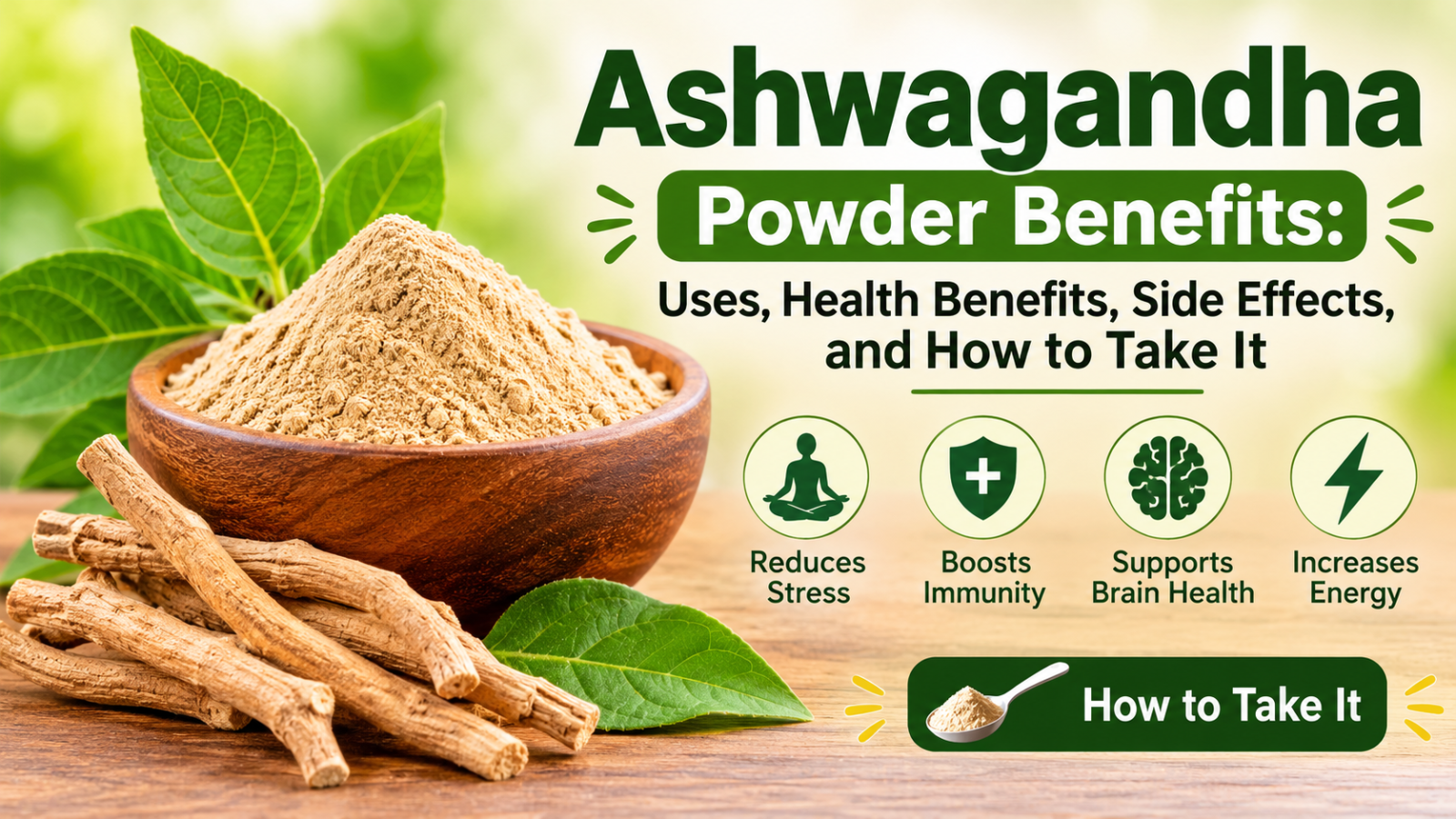
Ashwagandha is a popular medicinal herb traditionally used in Ayurvedic wellness practices for supporting overall health, managing stress, and improving physical and mental well-being. It has gained attention worldwide because of its potential adaptogenic properties, which may help the body respond to everyday stress.
Made from the roots of the Withania somnifera plant, ashwagandha powder is one of the most common ways to consume this traditional herb. People use it in warm milk, smoothies, herbal drinks, and other daily preparations.
But what makes this herbal powder so popular? Let's explore the potential health benefits, uses, dosage, and precautions before adding it to your routine.
What Is Ashwagandha Powder?
Ashwagandha is a small evergreen shrub native to India, parts of the Middle East, and North Africa. It is commonly known as Indian ginseng or winter cherry, although it is not botanically related to ginseng.
The roots contain naturally occurring compounds called withanolides, which are believed to contribute to many of the plant's biological effects.
Ashwagandha powder is generally prepared by drying and grinding the roots into a fine powder. It has an earthy, slightly bitter taste and is traditionally mixed with milk, honey, or water.
7 Potential Ashwagandha Powder Benefits
1. May Help Manage Everyday Stress
One of the most widely researched potential benefits of ashwagandha is stress management. Some clinical studies suggest that ashwagandha supplements may help reduce perceived stress and support healthy cortisol levels.
Cortisol is a hormone released by the body during stressful situations. Persistently elevated cortisol can affect sleep, mood, and general well-being.
Regular use of certain studied ashwagandha extracts may help some people feel calmer and better equipped to manage daily stress. However, results vary, and more research is needed to establish long-term effects.
2. May Support Better Sleep Quality
Getting enough restful sleep is essential for physical and mental health. Stress, irregular schedules, and lifestyle habits can make it difficult to fall asleep or stay asleep.
Some research suggests that ashwagandha may improve sleep quality, sleep efficiency, and the time it takes to fall asleep.
People who experience occasional sleep difficulties may find it helpful as part of a healthy bedtime routine. Combining good sleep habits with a balanced diet and regular exercise can also support better rest.
3. May Support Energy and Physical Performance
Ashwagandha has traditionally been used to support strength, stamina, and physical vitality.
Some clinical trials suggest that specific ashwagandha supplements may improve strength, muscle recovery, and exercise performance when combined with resistance training.
Its potential benefits may be useful for people who regularly exercise or participate in fitness activities.
However, it should not replace proper nutrition, adequate hydration, rest, or a well-planned workout routine.
4. May Support Memory and Brain Function
Ashwagandha has a long history of traditional use for supporting mental well-being.
Early research suggests that certain preparations may have potential benefits for memory, attention, and cognitive performance. Researchers are also investigating its antioxidant and anti-inflammatory properties.
Although these findings are promising, current evidence is still limited. Ashwagandha should not be considered a treatment for memory disorders or neurological conditions.
5. Contains Naturally Occurring Antioxidants
Antioxidants help protect cells from oxidative stress caused by unstable molecules known as free radicals.
Ashwagandha contains several naturally occurring plant compounds, including withanolides, that have demonstrated antioxidant activity in laboratory research.
These compounds are being studied for their potential role in supporting cellular health. However, laboratory findings do not automatically mean that consuming ashwagandha powder will prevent diseases.
6. May Support Healthy Male Reproductive Function
Some studies have investigated the effects of ashwagandha on male reproductive health.
Research suggests that certain standardized extracts may support testosterone levels and improve some sperm quality measures in selected men, particularly those experiencing fertility-related concerns.
However, the evidence is not conclusive, and results cannot be generalized to everyone. Anyone experiencing fertility problems should consult a qualified healthcare professional rather than relying on herbal supplements alone.
7. May Support Overall Well-Being
Ashwagandha is traditionally valued as a general wellness herb. Its potential effects on stress, sleep, and physical performance have made it a popular ingredient in modern herbal supplements.
Some people include it in their wellness routine to support relaxation and maintain a balanced lifestyle.
It is important to remember that ashwagandha is not a substitute for healthy eating, physical activity, or medical treatment.
How to Use Ashwagandha Powder
Ashwagandha powder can be incorporated into everyday drinks and recipes. Its earthy flavour is easier to enjoy when combined with other ingredients.
Here are some simple ways to use it:
1. Ashwagandha with Warm Milk
Mix a small amount of ashwagandha powder into a cup of warm milk. You can add a little honey or cinnamon for flavour.
2. Ashwagandha Herbal Drink
Stir the powder into warm water and mix thoroughly. Add honey if desired.
3. Ashwagandha Smoothie
Add a small measured amount to a banana smoothie with milk or your preferred plant-based alternative.
4. Ashwagandha with Honey
Mix the powder with a little honey to make it easier to consume. Use a measured amount rather than taking large quantities.
Always follow the product label and consult a healthcare professional about an appropriate amount.
How Much Ashwagandha Powder Should You Take?
There is no universally established dosage for ashwagandha powder. Research has used different preparations, concentrations, and amounts.
Many studies have examined standardized root extracts, often around 300–600 mg daily. These amounts should not be directly converted into an equivalent dosage of ordinary root powder because their concentrations and compositions differ.
For traditional root powder, follow the manufacturer's instructions and seek professional advice, particularly if you are taking medication or have an existing health condition.
Avoid increasing the quantity simply because you want faster results.
Possible Side Effects of Ashwagandha Powder
Although ashwagandha is generally tolerated by many healthy adults in short-term studies, it can cause side effects.
Possible side effects include:
-
Upset stomach or digestive discomfort.
-
Nausea and vomiting.
-
Diarrhoea.
-
Drowsiness or sleepiness.
-
Headaches in some individuals.
Rare cases of liver injury have also been reported. Stop taking ashwagandha and seek medical advice if you develop symptoms such as yellowing of the skin or eyes, dark urine, or unusual fatigue.
Long-term safety is not well established, so prolonged use should be discussed with a healthcare professional.
Who Should Avoid Ashwagandha?
Ashwagandha is not suitable for everyone. Certain groups should avoid it or seek medical advice before using it.
These include:
-
Pregnant and breastfeeding women.
-
People with thyroid disorders.
-
Individuals with autoimmune conditions.
-
People with liver disease.
-
Individuals preparing for surgery.
-
People taking medication for blood pressure, diabetes, thyroid conditions, seizures, or immune suppression.
Ashwagandha may interact with certain medicines, including sedatives and immunosuppressants.
If you take regular medication, speak with your doctor before adding this herb to your routine.
How to Choose Good-Quality Ashwagandha Powder
Choosing a quality product is important when purchasing herbal supplements in Pakistan.
Consider these factors before buying:
-
Ingredient quality: Look for products that clearly identify ashwagandha root powder.
-
Purity: Choose products without unnecessary fillers or artificial additives.
-
Packaging: Prefer sealed, food-grade packaging that protects the powder from moisture.
-
Lab testing: Look for independent testing for heavy metals, contamination, and product quality.
-
Clear labelling: Check the ingredients, expiry date, batch number, and usage instructions.
Buy from a reliable seller that provides transparent product information.
Frequently Asked Questions
Is ashwagandha powder good for daily use?
Some adults use ashwagandha regularly, but its long-term safety is not established. Consult a healthcare professional before making it part of your daily routine.
Can I take ashwagandha powder with milk?
Yes, it is traditionally mixed with warm milk. However, people with medical conditions or those taking medication should check with a healthcare professional first.
How long does ashwagandha take to show results?
Some studies report changes after several weeks of consistent use, but results vary depending on the individual and the preparation. There is no guaranteed timeline.
Is ashwagandha powder suitable for women?
Some women use ashwagandha as a wellness supplement, but it is not appropriate during pregnancy or breastfeeding. Women with hormonal or thyroid conditions should seek medical advice before using it.
Conclusion
Ashwagandha powder is a traditional herbal ingredient with growing scientific interest. Its potential benefits include supporting stress management, sleep quality, physical performance, memory, and general well-being.
However, research is still developing, and many studies have focused on standardized extracts rather than ordinary root powder. It is important to choose a quality product, follow appropriate usage instructions, and understand possible side effects.
For the best results, consider ashwagandha only as a possible addition to a balanced lifestyle that includes nutritious food, regular exercise, and sufficient sleep. Consult a healthcare professional before using it, especially if you have an existing medical condition or take medication.




Share this page with your family and friends.