Setting up a retail shop requires more than choosing products and arranging shelves. The way your shop is organised plays an important role in customer experience, staff efficiency and the overall appearance of your business. One of the most important fixtures is the shop counter. If you're planning to buy shop counters in the UK, choosing the right design, size and material can help create a professional and practical retail environment.
From independent convenience stores to supermarkets, boutiques and specialist retailers, every business needs a counter that suits its daily operations. A well-designed retail counter provides a dedicated checkout area, supports customer service and offers useful storage for everyday business essentials.
Whether you're opening a new shop or upgrading an existing retail space, understanding the available counter options can help you make a confident purchasing decision.
Why Should You Invest in Quality Shop Counters?
A shop counter is often one of the first fixtures customers notice when entering a retail environment. It acts as a central point for payments, customer enquiries and everyday transactions.
Choosing quality retail counters can provide several advantages:
-
Better customer experience: A well-positioned counter makes the checkout process more convenient.
-
Improved organisation: Built-in cupboards and drawers help keep essential items organised.
-
Professional appearance: Modern shop counters contribute to a consistent retail interior.
-
Efficient use of space: Suitable counter dimensions help maximise available floor space.
-
Everyday durability: Commercial-grade materials are designed to handle regular shop use.
For retailers, the right counter is not simply a piece of furniture. It's an important part of the overall shop layout.
Looking for Different Types of Shop Counters in the UK?
Retail businesses have different requirements, which is why shop counters are available in several designs and configurations. Understanding these options can help you select a product that matches your business.
1. Checkout Counters
Checkout counters are commonly used in supermarkets, convenience stores and general retail outlets. They provide a dedicated space for processing customer purchases and managing payments.
Depending on the design, these counters may include storage cupboards, drawers, cable management options and additional workspace. Some larger models also provide space for barcode scanners and payment terminals.
When choosing a checkout counter, consider the available floor area and the number of staff members who will use it.
2. Retail Display Counters
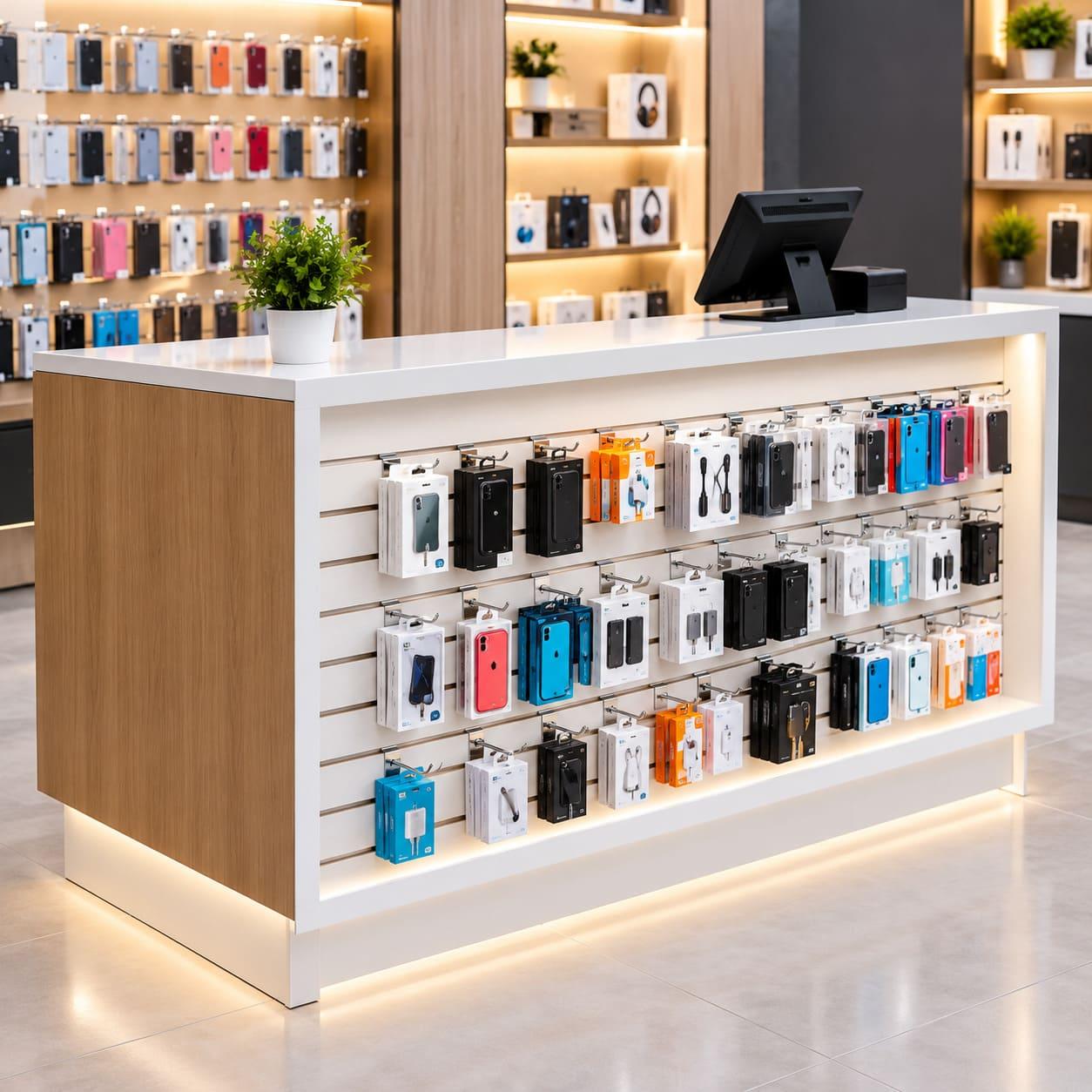
Retail display counters combine practical workspace with product presentation. They can be useful for shops selling accessories, cosmetics, gifts and other small merchandise.
Some models feature glass display sections, allowing customers to view selected products while keeping them protected. Other designs include open shelving and enclosed storage compartments.
These counters help retailers create a more structured shopping environment while making effective use of available space.
3. Wooden Shop Counters
Wooden shop counters offer a traditional appearance that works well in many retail environments. They are available in different finishes, colours and styles, making it easier to match existing shop furniture.
MDF and laminated finishes are common options for commercial retail furniture. They can provide an attractive surface while remaining relatively straightforward to maintain.
Wooden counters are suitable for independent retailers, boutiques, gift shops and other businesses looking for a welcoming interior design.
4. Modern Shop Counters
Modern retail counters feature clean lines, practical storage and contemporary finishes. They are designed to complement updated shop interiors and professional retail layouts.
Depending on the product, features may include integrated shelving, lockable storage, smooth worktops and cable management.
These designs can help businesses maintain a consistent appearance throughout their retail space.
5. Corner Shop Counters
Corner shop counters are useful for businesses where floor space is limited. Their design allows retailers to position checkout facilities within a corner or against a wall.
They can help create additional room for customer movement while maintaining a functional payment area.
Before purchasing, measure the available space carefully and check the counter's orientation to ensure it fits the intended position.
What Materials Should You Consider When Buying Shop Counters?
Material selection affects the appearance, maintenance and lifespan of retail furniture. Different materials offer different benefits, so consider your business requirements before making a purchase.
MDF and laminated finishes: These are popular choices for retail furniture because they offer a range of colours and finishes. Laminated surfaces are also relatively easy to clean.
Solid wood: Wooden counters provide a distinctive appearance and can complement traditional or premium retail interiors. Their maintenance requirements depend on the wood type and protective finish.
Metal components: Metal frames and fittings can provide additional structural support. They are useful in commercial environments where fixtures experience regular use.
Glass: Glass is commonly used in display sections, particularly where retailers want to present smaller products while keeping them protected.
The best material depends on your budget, shop design and expected daily usage.
How Can You Choose the Right Shop Counter for Your Business?
Buying retail counters without considering your shop layout can lead to unnecessary problems. A counter that's too large may restrict customer movement, while a smaller unit might not provide enough workspace.
Here are some important factors to consider before ordering.
Measure Your Available Space
Start by measuring the area where you plan to install the counter. Consider its width, height and depth, along with the space required for staff and customers.
Remember to leave enough room for doors, walkways and nearby retail shelving.
Consider Storage Requirements
Different businesses need different amounts of storage. A clothing shop may require drawers for packaging materials, while a convenience store may need cupboards for essential supplies.
Look for a counter with suitable storage compartments to keep the working area organised.
Check the Countertop Design
The countertop should provide enough space for daily operations. Consider whether you need room for a computer, payment terminal, packaging equipment or other checkout accessories.
A practical worktop can make everyday tasks more convenient.
Match Your Existing Shop Furniture
Your retail counter should complement the rest of your shop interior. Consider matching its colour, finish and overall design with existing display units, shelving and storage furniture.
A consistent appearance can help create a more professional retail environment.
Compare Quality and Price
Price is important, but it shouldn't be the only deciding factor. Check construction quality, materials, dimensions and product specifications before purchasing.
A durable counter that meets your requirements may offer better long-term value than a cheaper alternative that needs replacing sooner.
Where Can Shop Counters Be Used?
Shop counters are suitable for a wide range of commercial environments. Their design and functionality can be adapted to different retail sectors.
Common applications include:
-
Convenience stores and local shops.
-
Supermarkets and grocery stores.
-
Clothing and fashion retailers.
-
Gift and accessories shops.
-
Electronics retailers.
-
Cosmetic and beauty stores.
-
Hardware and specialist retail outlets.
-
Newsagents and independent businesses.
Each business should choose a counter based on its products, customer traffic and operational requirements.
Why Is Shop Counter Design Important for Retail Businesses?
A well-planned shop layout helps customers move around comfortably and allows employees to complete daily tasks efficiently. The counter should be positioned where customers can easily identify the checkout area without creating unnecessary congestion.
For smaller shops, compact counters with integrated storage can help maximise available floor space. Larger businesses may benefit from wider checkout units with additional work surfaces.
Retailers should also consider accessibility, staff comfort and the positioning of payment equipment when planning their counter area.
A carefully selected shop counter can support a smoother shopping experience while contributing to the overall appearance of the business.
What Should You Check Before Ordering Shop Counters Online?
Buying shop counters online gives retailers an opportunity to compare different styles, specifications and prices. However, checking the product details before placing an order is essential.
Make sure you review:
-
Exact product dimensions.
-
Available colours and finishes.
-
Construction materials.
-
Storage capacity and internal layout.
-
Assembly and installation requirements.
-
Delivery arrangements and costs.
-
Warranty and after-sales information.
If you are purchasing multiple counters for a new retail store, check whether the products can be arranged together to create a consistent checkout area.
Final Thoughts: Are You Ready to Buy Shop Counters in the UK?
Choosing the right shop counter is an important step when designing or upgrading a retail environment. From modern checkout counters and wooden retail units to glass display counters and compact corner designs, there are plenty of options to consider.
Before making your purchase, think about your available space, storage needs, preferred materials and daily business operations. Focus on durability, practical features and a design that complements your existing retail furniture.
With the right shop counter, you can create a more organised checkout area, improve staff convenience and maintain a professional appearance throughout your business. Take time to compare suitable retail counters and choose a solution that supports your shop's long-term requirements. Read more: Shop Solutions Midlands




Share this page with your family and friends.