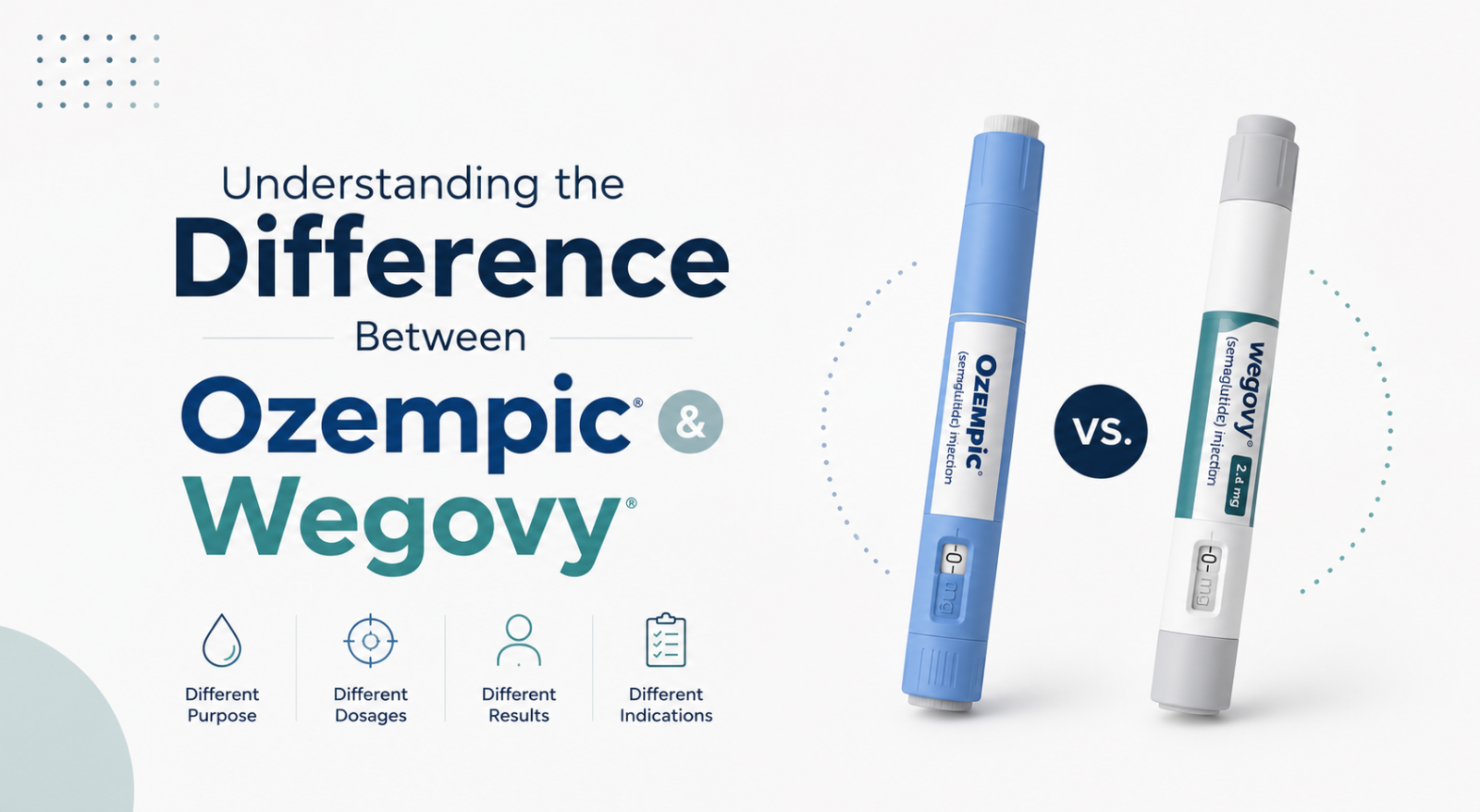
With two drug names circulating everywhere from social media to doctor's offices, it's easy to assume Ozempic and Wegovy are competing products. Searches comparing Ozempic vs Wegovy have surged as more people try to figure out which one actually applies to their situation In reality, they're built from the same compound. The confusion isn't really about the medication itself, it's about what each version was designed and approved to do. Once you understand that distinction, the rest of the comparison, dosing, cost, side effects, falls into place.
One Ingredient, Two Regulatory Paths
Both Ozempic and Wegovy are manufactured by Novo Nordisk and contain semaglutide, a GLP-1 receptor agonist that mimics a hormone your gut releases after eating. That hormone slows digestion, boosts insulin release when blood sugar is high, and signals your brain that you're full.
The FDA, however, evaluated and approved each product for a separate purpose. Ozempic received approval in 2017 to manage blood sugar in adults with type 2 diabetes, along with reducing cardiovascular risk and slowing kidney disease progression in that population. Wegovy followed in 2021 with an approval specifically for chronic weight management, later expanding to cover cardiovascular risk reduction in adults with obesity or overweight, and treatment of a liver condition called MASH.
That's the entire root of the confusion: identical drug, two separate FDA-reviewed indications, two separate brand identities.
Why the Dosing Schedules Diverge
Both medications begin patients on the same low starting dose to minimize side effects. From there, the paths split. Ozempic is titrated up to a maximum of 2 mg weekly, a level calibrated for blood sugar management. Wegovy climbs further, to a 2.4 mg weekly maintenance dose built for stronger appetite suppression, with a newer 7.2 mg high-dose version (Wegovy HD) approved in 2026 for patients who need an even more pronounced effect.
This dosing gap explains the performance gap. In practice, Ozempic tends to produce somewhere around 5-10% weight loss at its maximum dose, while Wegovy's higher ceiling generally produces closer to 15%. The molecule is identical; the dose is what changes the outcome.
How You Take Them
Both drugs are available as once-weekly subcutaneous injections. Ozempic's injector pen holds multiple doses, so you dial in your specific amount before each injection. Wegovy's pen is prefilled and single-use, with no dialing required.
Oral versions exist for both, but they're not equivalent products. Ozempic's oral counterpart is a separate branded pill, Rybelsus, dosed lower and approved only for diabetes. Wegovy introduced its own oral tablet in early 2026, the first pill-form semaglutide approved specifically for weight loss, with trial results comparable to the injectable version.
Side Effects and Safety Warnings
Because the active ingredient is identical, the side effect profile overlaps almost completely. Nausea, vomiting, diarrhea, constipation, bloating, and fatigue are the most commonly reported issues, particularly in the first few weeks or after a dose increase. Both drugs carry the same boxed warning about a potential risk of thyroid C-cell tumors, along with shared warnings around pancreatitis, gallbladder disease, and kidney complications linked to dehydration.
The one practical difference is intensity, not type. Since Wegovy is typically dosed higher, patients often report somewhat stronger gastrointestinal side effects compared to Ozempic.
Insurance and Cost Considerations
Coverage tends to hinge on diagnosis rather than the drug's effectiveness. Ozempic is often more straightforward to get approved through commercial insurance when a type 2 diabetes diagnosis is on file. Wegovy typically faces more scrutiny, with insurers frequently requiring documented BMI thresholds, an existing weight-related condition, and proof of prior lifestyle intervention attempts. This is a major reason some patients end up using Ozempic off-label for weight loss purposes, simply because it's the version their plan will actually cover.
Without insurance, both drugs have historically carried list prices well over a thousand dollars a month, though manufacturer savings programs and evolving coverage rules, including newer Medicare pathways for weight-related conditions, have shifted the out-of-pocket picture for many patients. Since these terms change frequently, it's worth confirming current pricing directly with your insurer or provider.
Which One Is Actually for You?
The right choice comes down to the reason you're taking it, not brand familiarity. If managing type 2 diabetes is the goal, Ozempic is the version studied and approved for that purpose. If weight management is the primary concern, particularly without a diabetes diagnosis, Wegovy is the version specifically built, dosed, and tested for it.
Given that both carry the same serious safety warnings and require ongoing medical supervision, this is a decision best made with a healthcare provider who can review your diagnosis, health history, and coverage options before recommending either one.




Share this page with your family and friends.