Self-employed individuals, freelancers, independent contractors, and sole proprietors need to understand how business income and expenses are reported for federal tax purposes. One of the most important tax forms for these taxpayers is Schedule C (Form 1040), Profit or Loss From Business. It is generally used to report income earned from a business or profession operated as a sole proprietorship.
Understanding Schedule C can help business owners accurately report their earnings, claim eligible business expenses, and determine the profit or loss from their business. This guide explains what Schedule C is, who needs to file it, what information it includes, and some common considerations when preparing the form.
What Is Schedule C?
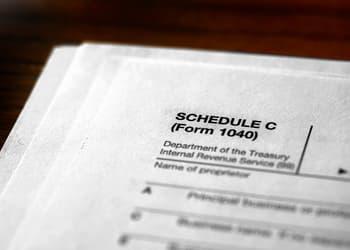
Schedule C is an IRS tax form used to report the income or loss from a business operated as a sole proprietorship. The information reported on Schedule C is generally included with the individual's Form 1040 federal income tax return.
A sole proprietorship is a business that is owned and operated by one individual. The business and owner are generally not treated as separate entities for federal income tax purposes. As a result, the business income and deductible business expenses are reported on the owner's personal tax return.
Schedule C calculates the business's net profit or loss by comparing business income with allowable business expenses.
Net Profit = Business Income − Deductible Business Expenses
A net profit generally increases taxable income, while a business loss may reduce income subject to applicable tax rules.
Who Should File Schedule C?
Schedule C is commonly used by individuals who operate a business as a sole proprietor. It may also apply to certain single-member limited liability companies (LLCs) that are treated as disregarded entities for federal income tax purposes.
Examples of individuals who may use Schedule C include:
- Freelancers
- Independent contractors
- Consultants
- Online sellers
- Writers and designers
- Photographers
- Real estate professionals
- Small business owners
- Repair and maintenance professionals
- Other self-employed individuals operating a trade or business
Whether Schedule C applies depends on how the business is structured and taxed. Businesses organized as corporations or certain partnerships generally use different tax forms.
What Information Is Reported on Schedule C?
Schedule C contains several sections designed to capture information about the taxpayer's business activity.
Business Information
The form asks for basic details about the business, including the principal business activity, business name if different from the owner's name, and applicable business classification information.
Providing accurate business information helps properly identify the nature of the taxpayer's business.
Business Income
Business owners must report the income received from their business activities. This can include payments from customers, clients, or other sources related to the business.
Taxpayers should maintain accurate records of all business income throughout the year rather than relying solely on bank statements or payment platforms when preparing the return.
Cost of Goods Sold
Businesses that sell products or manufacture goods may need to account for the cost of goods sold. This calculation can involve inventory, purchases, materials, and other costs associated with producing or acquiring goods for sale.
Not every business needs to complete this section. Service-based businesses, for example, may not have inventory or cost-of-goods-sold expenses.
Common Schedule C Business Expenses
One of the important purposes of Schedule C is to report ordinary and necessary business expenses. These expenses can reduce the amount of business profit subject to income tax when they meet applicable IRS requirements.
Common business expenses may include:
- Advertising and marketing
- Office expenses
- Business insurance
- Professional services
- Legal and accounting fees
- Business travel
- Certain vehicle expenses
- Rent or lease expenses
- Supplies
- Utilities
- Employee wages, when applicable
- Depreciation and certain asset-related expenses
The exact deduction available depends on the nature of the expense and applicable tax rules. Personal expenses generally cannot be deducted as business expenses.
For example, if an expense is partly personal and partly business-related, only the qualifying business portion may generally be considered for deduction.
Home Office Expenses
Many self-employed individuals operate their businesses from home. In certain circumstances, taxpayers may be able to claim a deduction for qualified home office expenses.
Eligibility generally depends on meeting specific requirements regarding the use of the home for business. The space may need to meet requirements such as regular and exclusive business use, subject to applicable exceptions.
Taxpayers should carefully document the business-use portion of their home and retain records supporting the calculation.
Vehicle and Transportation Expenses
Self-employed individuals who use a vehicle for business purposes may have deductible vehicle expenses if they meet applicable requirements.
Depending on the circumstances, taxpayers may use an applicable mileage-based method or calculate actual vehicle expenses. Business and personal driving should be tracked separately.
Maintaining a mileage log or other reliable records can make it easier to support the business-use portion of vehicle expenses during tax preparation.
How to Calculate Profit or Loss
After reporting business income and eligible expenses, Schedule C is used to determine the business's net profit or loss.
For example, suppose a freelance designer earns $80,000 in business income and has $25,000 in qualifying business expenses. The resulting business profit would be:
$80,000 − $25,000 = $55,000
The resulting amount is generally carried to the appropriate section of the taxpayer's Form 1040 and may also be relevant when determining self-employment tax.
Schedule C and Self-Employment Tax
Schedule C determines business profit or loss, but self-employed individuals may also need to account for self-employment tax.
Self-employment tax generally covers Social Security and Medicare taxes for individuals who work for themselves. Eligible taxpayers generally calculate self-employment tax using Schedule SE (Form 1040).
Therefore, completing Schedule C correctly can be an important part of determining the income used in the self-employment tax calculation.
Records You Should Keep
Accurate recordkeeping is essential when preparing Schedule C. Business owners should maintain documentation supporting both income and expenses.
Useful records may include:
- Sales invoices
- Receipts
- Bank statements
- Credit card statements
- Mileage records
- Contracts
- Business-related bills
- Payroll records
- Asset purchase documents
- Accounting records
Keeping business and personal finances separate can also make bookkeeping and tax preparation easier.
Common Schedule C Mistakes
Several mistakes can create problems during tax preparation. Common issues include:
- Reporting incomplete business income
- Claiming personal expenses as business deductions
- Mixing personal and business expenses
- Failing to maintain supporting documentation
- Miscalculating vehicle or home office expenses
- Reporting expenses in the wrong category
- Forgetting applicable self-employment tax requirements
Reviewing financial records throughout the year can help reduce these errors.
Final Thoughts
Schedule C is an important tax form for many self-employed individuals and sole proprietors. It provides a way to report business income and eligible expenses and determine the resulting business profit or loss.
Understanding the different sections of Schedule C, maintaining accurate records, and separating business and personal expenses can make tax preparation more organized. Because tax rules can vary depending on individual circumstances, business owners should review current IRS guidance or work with a qualified tax professional when they are unsure about a filing requirement or deduction.
For self-employed individuals, good bookkeeping throughout the year can make the Schedule C preparation process more efficient and help ensure that income and eligible business expenses are reported accurately.




Share this page with your family and friends.