Introduction
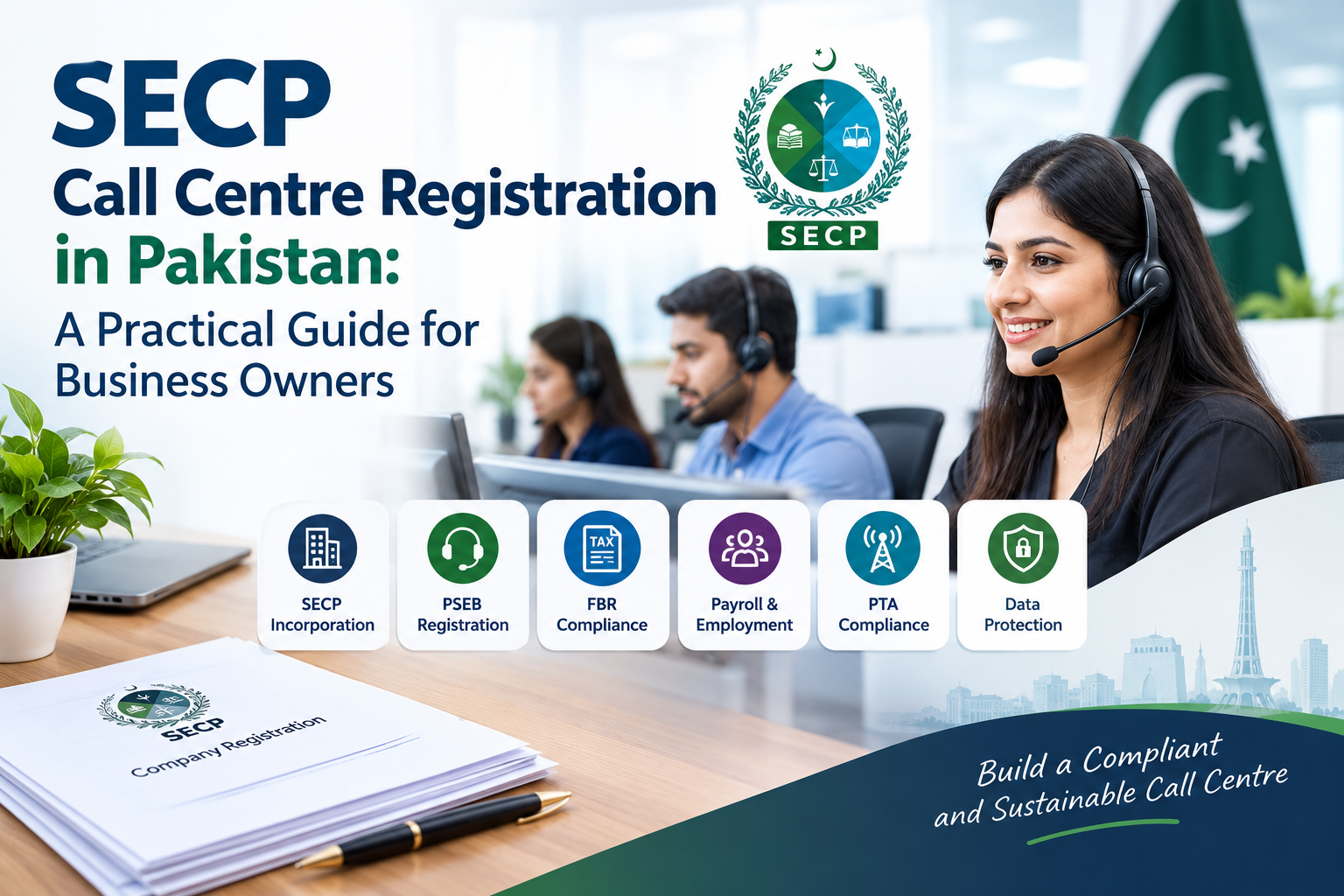
Starting a call centre involves more than hiring agents, arranging headsets, and finding clients. The legal structure behind the operation matters just as much. Clear ownership records, valid tax details, business banking, employee documentation, and timely corporate filings help a call centre build trust with customers and international partners. Understanding secp call centre registration is therefore an important step for owners planning to establish a professional operation in Pakistan.
One point needs to be clear from the beginning: SECP registers and regulates companies under Pakistan’s company law. It is not a substitute for sector-specific registration or every permission a call centre may need. A business incorporated with SECP may also need to review PSEB registration, tax obligations, telecom arrangements, labour requirements, and data protection practices according to its services and circumstances.
1. Decide Which Business Structure Fits Your Call Centre
Before applying, decide how the business will operate. Some owners begin as a sole proprietor, while others choose a partnership or incorporate a private company or single member company. Each structure has different legal, financial, and administrative implications.
A company structure may suit founders who want clearer separation between the business and its owners, formal shareholding arrangements, or a platform for future investment. It can also be useful when clients expect to contract with an incorporated entity. However, incorporation creates ongoing responsibilities, so the decision should reflect the actual scale and plans of the operation.
Review ownership, proposed activities, capital, management roles, and business risks before making the choice. Business registration in Pakistan should match how the call centre will work in practice, rather than being treated as a formality completed without planning.
2. Understand the SECP Incorporation Process
For a business choosing the company route, SECP company incorporation generally begins with selecting a suitable company name and submitting the incorporation application through the regulator’s digital process or another currently available method. Applicants provide information about the proposed company, its subscribers or members, directors, registered office, and share capital as applicable.
The application must use accurate information and the prescribed documents. Depending on the company type and circumstances, the documentation may include identity details, constitutional documents, an authorised filing arrangement, and payment of the required fee. Always use the current forms and instructions available at the time of filing.
Check the proposed name carefully and confirm that it meets the naming rules. Prepare details consistently across the application, identity documents, bank records, and tax registration. Errors in spelling, addresses, ownership information, or business particulars can create avoidable correspondence and delays.
Once the company is incorporated, save the certificate, application records, and official communication in a secure company file. These documents may later be needed for banking, tax registration, contracts, and sector-specific applications.
3. Keep PSEB Registration Separate From SECP Registration
A common mistake is assuming that company incorporation automatically completes all requirements for a call centre. It does not. PSEB call centre registration is a separate consideration for businesses operating in the IT-enabled services and business process outsourcing sector. The applicable process depends on the type of services and current registration rules.
SECP incorporation establishes the company’s legal status. PSEB registration relates to recognition and facilitation within Pakistan’s IT and IT-enabled services industry. Where the call centre serves international clients, owners should check whether PSEB registration is required or appropriate for their business model and confirm the current documentation and renewal conditions.
Prepare matching business, tax, banking, address, and service details before starting the application. Inconsistent records across regulators can complicate verification and delay operations. Do not assume that one registration automatically provides telecom permissions, tax concessions, or eligibility for every incentive. Each benefit has its own conditions.
4. Arrange Tax Registration and Accurate Financial Records
A call centre should establish its correct tax position from the outset. Depending on the legal structure and activities, the business may need an NTN, income tax registration, and relevant registrations or filings with the Federal Board of Revenue. Keep the business name, ownership details, address, and income records consistent.
FBR compliance for call centres includes timely tax returns and, where applicable, withholding deductions, deposits, statements, and reconciliations. Payments to employees, contractors, suppliers, and service providers may be governed by different rules. Do not apply a single withholding rate to every transaction. Review the current law and obtain professional advice when the treatment is uncertain.
Maintain client contracts, invoices, bank statements, payroll summaries, tax payment evidence, and foreign remittance records. A well-organised accounting system helps management understand cash flow and answer tax queries with less disruption. Businesses handling export income should preserve supporting contracts and remittance evidence, rather than assuming that every foreign payment receives identical tax treatment.
5. Maintain Corporate Filings After Incorporation
Obtaining an incorporation certificate is the start of a company’s corporate responsibilities, not the end. Depending on the entity and circumstances, SECP annual compliance can include filing annual returns, maintaining statutory records, and reporting changes in directors, chief executive, registered office, shareholding, or other prescribed particulars.
The filing requirement and deadline can differ by form and event. Some changes must be reported within a specific period, while annual obligations follow their own rules and exemptions. Keep a compliance calendar based on the company’s circumstances instead of relying on a generic online checklist.
Update corporate records whenever a relevant change occurs. Keep board or member decisions, ownership information, and supporting documents organised. If a filing is not required in a particular situation, verify the applicable exemption rather than assuming every company follows the same rule.
6. Review Employment and Payroll Requirements
Call centres commonly use rotating shifts, attendance incentives, sales commissions, night work, and performance-based payments. Written employment terms should explain pay structure, working hours, leave, confidentiality, deductions, and disciplinary processes. Apply relevant federal and provincial rules based on the workplace and employment arrangement.
Call centre payroll compliance includes maintaining accurate employee details, attendance records, salary calculations, payslips, bank transfer evidence, and final settlements. Check whether EOBI and provincial social security obligations apply to the employer and eligible staff. Contribution rules and coverage depend on the applicable legal framework, so confirm requirements rather than copying another employer’s practice.
Consistent payroll records help prevent disputes and make it easier to calculate operating costs. Review salary tax deductions and reconcile payroll figures with accounts before filing relevant statements.
7. Protect Client Information and Use Lawful Telecom Services
International clients may share customer lists, call scripts, account details, and performance data with a call centre. Set access permissions according to job responsibilities, secure company devices, train agents on confidentiality, and establish procedures for handling recordings and customer complaints. Contracts should explain who controls the data, how it may be used, and when it must be returned or deleted.
Telecom arrangements also need careful attention. Use legitimate service providers and check the approvals or technical conditions that apply to the centre’s voice services, IP configuration, and international calling model. PTA compliance for call centres depends on the services and permissions involved. Do not use informal routing or assume another business’s approval covers your own operations.
8. Build a Compliance Routine That Scales
Assign a responsible person for company filings, tax deadlines, payroll, renewals, and registration updates. Review outstanding tasks every month with finance and operations. Keep evidence of submissions and payments, and store access credentials securely.
A practical call centre compliance checklist should cover company records, PSEB status where applicable, tax returns, withholding statements, employee registrations, telecom documentation, contracts, and data security. Revisit the checklist whenever the centre opens a new branch, changes ownership, adds campaigns, hires more staff, or starts serving another market.
Frequently Asked Questions
Is SECP registration compulsory for every call centre?
Not every call centre must incorporate as a company. The appropriate structure depends on the business model and applicable legal requirements. If the owners choose to operate through a company, incorporation and ongoing SECP obligations apply.
Does SECP registration replace PSEB registration?
No. These registrations serve different purposes. Confirm the separate requirements applicable to the call centre’s services and operating model.
What happens after incorporation?
The company should organise its records, review tax registrations, open appropriate banking arrangements, assess PSEB and telecom requirements, and track corporate and employment obligations.
Conclusion
Successful secp call centre registration starts with selecting the right legal structure, preparing consistent information, and completing the applicable incorporation process. Long-term compliance then depends on timely corporate filings, accurate tax records, fair payroll practices, lawful telecom arrangements, and responsible handling of client information.
Requirements vary with the company type, location, services, and current rules. Confirm the latest position with SECP and the relevant authorities, and seek professional advice where needed. A planned compliance system helps call centre owners avoid preventable delays, strengthen client confidence, and focus on sustainable growth.




Share this page with your family and friends.