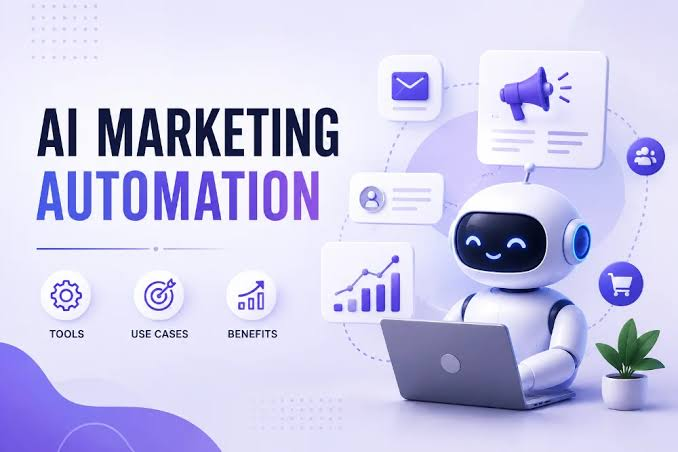
Marketing automation is changing as businesses look for more efficient ways to reach customers, manage campaigns, and improve their digital strategies. AI agents for marketing automation are becoming an important part of this change because they can analyse information, perform tasks, and support marketing decisions with less manual involvement. Unlike traditional automation tools that follow fixed instructions, AI agents can use data and defined objectives to adjust their actions according to different situations. This creates new opportunities for businesses to improve customer communication, personalise marketing activities, and manage complex workflows.
Understanding how these systems work and where they can be useful helps businesses make informed decisions about adopting AI in their marketing processes.
What Are AI Agents for Marketing Automation?
AI agents are software systems designed to perform specific tasks, analyse information, and take actions based on defined goals. They can use artificial intelligence technologies, such as machine learning and natural language processing, to understand data and respond to different inputs.
In marketing, AI agents can support activities such as customer segmentation, email campaign management, lead qualification, content planning, and performance analysis. For example, an AI agent may examine customer interactions, identify people who have shown interest in a product, and help organise relevant follow-up communication.
Traditional marketing automation usually depends on predefined workflows. A business might send an email whenever someone subscribes to a newsletter. An AI-powered agent can take a broader approach by analysing customer behaviour and helping determine which message or action may be suitable.
However, AI agents do not operate without limits. Their capabilities depend on the available data, system design, permissions, and instructions provided by the business. Human review remains important, especially when campaigns involve sensitive information or significant customer decisions.
How AI Agents Are Changing Marketing Automation
AI agents are influencing several areas of digital marketing by helping businesses manage repetitive tasks and respond to customer needs more efficiently.
1. Automating Repetitive Marketing Tasks
Marketing teams often spend considerable time on routine activities, including scheduling emails, organising customer information, preparing reports, and updating campaign records. These tasks are necessary but can reduce the time available for planning and creative work.
AI agents can assist with repetitive activities by processing information and carrying out approved actions. For instance, an agent may organise incoming customer enquiries, classify them according to their subject, and send them to the appropriate department.
This can help teams maintain consistent workflows while reducing manual effort. Employees can then focus more attention on campaign strategy, customer relationships, and creative decisions.
2. Improving Customer Segmentation
Customer segmentation involves dividing an audience into groups based on shared characteristics, interests, or behaviours. Businesses use segmentation to make their marketing communication more relevant.
AI agents can examine information such as browsing activity, previous purchases, email interactions, and customer preferences to identify useful audience patterns. These insights can help marketing teams create more focused campaigns.
For example, an online retailer may have customers who regularly purchase skincare products and others who mainly buy haircare items. An AI agent can help organise these groups so that each receives information related to their interests.
Businesses should collect and use customer data responsibly. Segmentation should follow applicable privacy requirements and avoid unfair or inappropriate assumptions about individuals.
3. Personalising Customer Communication
Customers often respond better to messages that reflect their interests and needs. Sending identical content to an entire audience may not provide the same level of relevance as personalised communication.
AI agents can help businesses tailor emails, product recommendations, and other marketing messages using available customer information. They may also assist in selecting suitable content based on previous interactions.
For example, a customer who regularly views a particular product category may receive information about related products or useful guides. Another customer may receive an update about an order or an abandoned shopping cart.
Personalisation should provide genuine value rather than overwhelming people with excessive messages. Businesses should also make sure that customer information is accurate and handled securely.
4. Supporting Lead Generation and Qualification
Lead generation is an important part of marketing because it helps businesses identify people who may be interested in their products or services. However, not every enquiry represents the same level of interest.
AI agents can help organise incoming leads by analysing information such as website activity, enquiry details, form submissions, and previous interactions. They can identify potential areas of interest and assist sales teams in prioritising follow-ups.
For instance, an agent may classify an enquiry about pricing as a potential sales opportunity and route it to the relevant team member. Another enquiry requesting general information may be directed to an educational email sequence.
These systems can support lead management, but businesses should regularly review their qualification criteria. Automated decisions should not replace human judgement when a personal conversation or additional context is needed.
5. Optimising Email Marketing Campaigns
Email marketing remains a useful way to communicate with customers, share updates, and maintain business relationships. AI agents can help improve different stages of email campaign management.
They can assist with organising subscriber groups, suggesting subject lines, analysing previous campaign performance, and identifying suitable times for sending messages. Some systems can also help manage follow-up sequences based on customer interactions.
For example, if a subscriber opens an email about a service but does not complete an enquiry form, an approved workflow may send additional information at a later stage.
Marketing teams should monitor important measurements such as open rates, click-through rates, conversions, unsubscribe rates, and email deliverability. These figures help determine whether automation is improving campaign performance.
Benefits of Using AI Agents in Marketing Automation
The use of AI agents can offer several practical advantages when businesses implement them with clear objectives and appropriate oversight.
Greater Operational Efficiency
AI agents can reduce the time required for repetitive tasks such as sorting enquiries, organising information, and preparing routine reports. This allows marketing professionals to spend more time on activities that require planning and creativity.
More Relevant Customer Experiences
By analysing customer interactions and preferences, AI agents can help businesses deliver communication that is more closely connected to individual interests. Relevant messaging can improve the overall customer experience when it is used thoughtfully.
Faster Access to Marketing Insights
Marketing teams collect information from websites, social media platforms, email campaigns, and advertising channels. AI agents can help process this information and identify patterns that may otherwise take longer to find.
These insights can support decisions about campaign adjustments, audience interests, and content performance.
Improved Campaign Coordination
Different marketing activities often depend on one another. For example, a lead generation campaign may involve a landing page, email sequence, customer database, and sales follow-up process.
AI agents can help coordinate approved tasks across connected systems, reducing the need for employees to manage every step manually.
Support for Business Growth
As a business expands, its marketing activities may become more complex. AI agents can help manage larger volumes of customer interactions and routine tasks, although their effectiveness depends on system capacity, data quality, and suitable human supervision.
Practical Uses of AI Agents Across Marketing Channels
AI agents can support marketing activities across several digital channels. Their specific functions depend on the platforms and tools connected to them.
| Marketing channel |
Possible use of AI agents |
| Email marketing |
Organising audiences and supporting follow-up campaigns |
| Social media |
Classifying messages and assisting with content scheduling |
| Search marketing |
Analysing keyword and campaign performance |
| Customer support |
Responding to common questions and routing complex enquiries |
| Lead generation |
Organising enquiries and supporting lead qualification |
| Content marketing |
Researching topics and analysing content performance |
These examples show that AI agents can contribute to different stages of marketing. However, using them effectively requires a clear understanding of the business's goals and the needs of its audience.
Challenges of Using AI Agents for Marketing Automation
Although AI agents offer useful capabilities, their implementation also involves challenges that businesses should consider.
Data Privacy and Security
Marketing systems often process personal information, including contact details, browsing behaviour, and purchase history. Businesses must ensure that data is collected and used appropriately.
They should establish access controls, review platform security, and follow relevant privacy laws. Sensitive customer information should not be shared with AI tools unless the platform and its use have been properly approved.
Accuracy and Reliability
AI agents can misunderstand information, produce inaccurate responses, or take unsuitable actions if their instructions or data are incomplete. These problems can affect customer communication and campaign performance.
Businesses should test workflows before launching them and monitor automated actions regularly. Human approval may be necessary for important messages, financial decisions, or sensitive customer interactions.
Integration With Existing Systems
Some organisations use several marketing platforms that do not easily share information. Connecting AI agents with customer relationship management systems, email platforms, analytics tools, and other software may require technical planning.
Businesses should evaluate compatibility, integration costs, and maintenance requirements before adopting a solution.
Maintaining a Human Approach
Automation can make communication faster, but it cannot replace every part of a customer relationship. Customers may need empathy, explanation, or individual attention when dealing with complicated issues.
Marketing teams should use AI agents to support communication while keeping people involved where personal judgement is important.
How Businesses Can Get Started With AI Agents
Businesses do not need to automate every marketing activity at once. A gradual approach can help them understand the technology and evaluate its value.
First, identify a specific problem that requires too much time or manual effort. This might include sorting customer enquiries, organising leads, or preparing campaign reports.
Next, review the available tools and determine whether they can connect with the business's existing systems. Consider their features, costs, data protection practices, and level of control over automated actions.
Start with a limited workflow and test it before expanding its use. Monitor relevant measurements, such as time saved, response quality, conversion rates, and customer feedback.
Finally, provide employees with appropriate training and establish clear rules for reviewing AI-generated content and actions. Regular evaluation helps businesses identify problems and make improvements as their requirements change.
The Future of AI Agents in Marketing Automation
AI agents are likely to become more integrated into marketing platforms as businesses explore new ways to manage customer communication and campaign workflows.
Future systems may provide more advanced coordination between marketing channels, improved analysis of customer interactions, and greater support for campaign planning. Businesses may also use multiple specialised agents to handle different tasks within a connected workflow.
However, wider adoption will depend on more than technical improvements. Data privacy, reliability, integration, cost, and customer trust will remain important considerations.
The most useful applications will be those that solve genuine business problems and provide measurable value. Businesses that combine automation with human oversight will be better positioned to use these systems responsibly.
Conclusion
AI agents are transforming marketing automation by helping businesses manage repetitive tasks, organise customer information, personalise communication, and analyse campaign performance. Their ability to support multiple marketing activities can improve workflow efficiency and help teams make more informed decisions.
However, successful implementation requires suitable tools, reliable data, privacy safeguards, and regular human supervision. AI agents should support marketing professionals rather than replace their understanding of customers and business goals.
By starting with specific needs and evaluating results carefully, businesses can use AI agents for marketing automation to build more organised, responsive, and effective marketing processes.



Share this page with your family and friends.