Hair loss affects many people, leading to increased interest in permanent solutions like FUE and FUT. One important consideration when deciding between these methods is the hair transplant prices in the Philippines. This article breaks down key differences to help you make an informed choice.
Understanding Hair Loss Severity and Treatment Needs
The type of hair loss you experience affects which procedure suits you best. FUE works well for small to medium balding areas and for people who want a natural look after shaving. FUT is typically better for advanced baldness requiring higher graft counts. Assessing hair density loss, scalp laxity, and donor area quality with a trichologist helps determine which method to choose.
Choosing the Right Technique Based on Scalp Characteristics
Your scalp’s physical traits influence whether FUE or FUT will work better. People with tight scalps may struggle to heal after FUT due to tension at the donor site, increasing the risk of wide scars. FUE avoids this issue but requires sufficient donor density to sustain repeated extractions. Those with naturally elastic scalps often handle FUT better, allowing for wider donor strip removal without compromising blood supply. Always ask your surgeon to test scalp mobility during the consultation.
Pre-Procedure Evaluation and Consultation
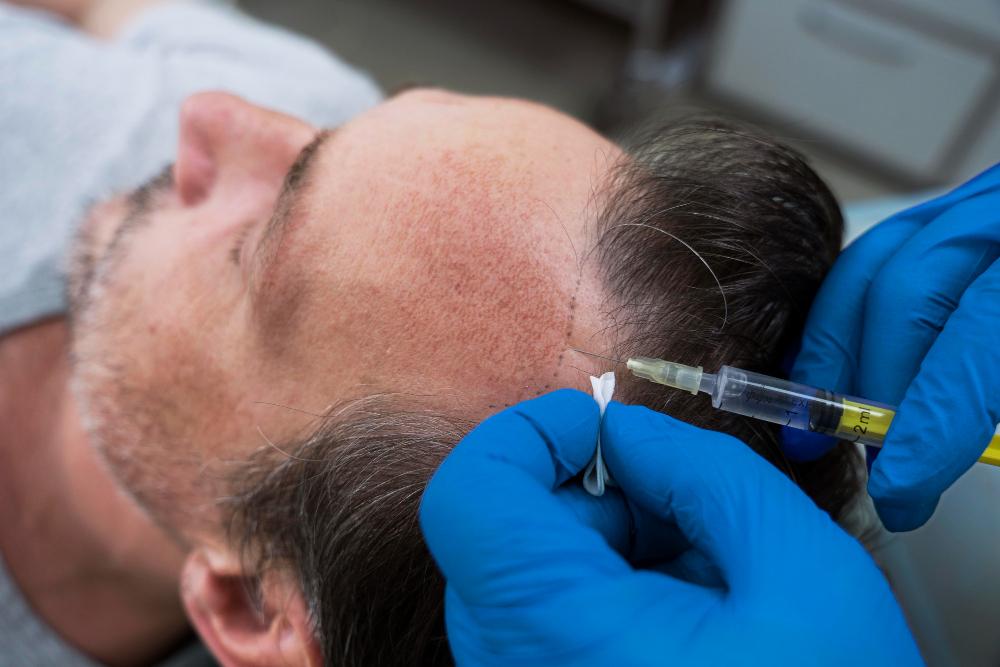
A thorough pre-op consultation is critical. Clinics often use high-resolution imaging to map donor and recipient areas. During this phase, clinicians assess hair texture, color contrast, and growth patterns. Ask about the surgeon’s approach to graft distribution and how they ensure symmetry. You should disclose medical history, including medications that might impact healing.
Step-by-Step FUE Procedure Workflow
FUE involves six key stages: donor marking, extraction, graft preservation, channel opening, implantation, and aftercare prep. Each session lasts 6–10 hours for 2,000–3,000 grafts. Doctors use 0.6–1.0mm punches to harvest follicles. Extracted grafts remain in a chilled saline solution for up to 10 hours before implantation. Recipient holes are angled to match natural growth direction.
What Happens During a FUT Surgery
FUT follows four main steps: donor strip removal, dissection, implantation, and donor wound closure. A 1–1.5cm scalp strip yields 1,500–4,000 grafts depending on density. Technicians divide the strip into follicular units using microscopes to maximize viability. The donor site is closed with sutures or staples, leaving a fine linear scar.
How Graft Requirements Determine Costs
The number of grafts needed directly impacts hair transplant price in the Philippines. A mild hair loss case might require 1,000–1,500 grafts, while extensive balding could need 3,000–4,000. Each graft costs between PHP 30–150 depending on the method. FUE prices rise faster than FUT for large sessions because of extraction complexity. Always request a detailed quote based on your personal graft count estimate.
Recovery Day-by-Day: What to Expect
Day 1 after FUE requires limiting movement to reduce swelling. FUT recipients may experience mild tightness for three days. Scabbing develops after five days in both methods, but FUT recipients must avoid stretching the donor area. Strenuous activity should be avoided for 14 days. Attend follow-up appointments to monitor graft survival and scalp healing progress.
Post-Op Care for Optimal Healing
Follow strict aftercare instructions to protect grafts. Avoid touching the recipient area for seven days post-FUE. Use prescribed anti-inflammatory shampoo gently after 48 hours. FUT recipients should apply antibiotic ointment at the donor seam. Sleep at a 45-degree angle for 10 days to reduce blood pooling. Most people return to work after one week for FUE or two weeks for FUT.
Relevant Accreditation or Service Documentation in the Philippines
Ensure the clinic complies with DOH guidelines for surgical procedures. Check for certifications from the Philippine Association of Medical Hair Transplant or the relevant licensing documentation facilities maintain surgical logs and equipment sterilization protocols. Avoid unregistered clinics offering deeply discounted rates without medical supervision.
Managing Shock Loss and Density Expectations
Shock loss occurs temporarily in 10–20% of existing hairs post-transplant. This effect is more noticeable in people with finer hair textures. Final results appear after 9–12 months as transplanted hairs grow in phases. FUT offers higher initial density in a single session. FUE allows incremental touch-ups every 8–12 months for gradual improvement.
Cost-Saving Strategies Without Compromising Quality
You can reduce costs by opting for moderate graft counts in the first session or choosing FUT for donor availability. Booking during clinic promotions or opting for junior surgeons with senior supervision may lower fees. However, prioritize technician expertise over price. Poor extraction techniques damage follicles and require costly revisions. Consider spreading treatments across two FUE sessions if density goals exceed 3,000 grafts to avoid over-harvesting a single area.
Comparing Clinic Quality Beyond Price Metrics
Look for clinics with 3D imaging systems for pre-op planning and cold-chain graft storage systems. Experienced centers maintain 95%+ graft survival rates. Testimonials with time-stamped before-and-after imagery offer better proof of consistency than before-only photos. Good clinics offer revision policies in case of uneven growth or scarring issues.
Key Takeaway
Hair transplant prices vary by technique, but choosing the right method ensures long-term satisfaction. Compare FUE’s minimal scarring and higher cost with FUT’s budget-friendly approach and linear scar. Always check clinic credentials and ask about recovery timelines before booking.



Share this page with your family and friends.