Cryptocurrency has changed significantly since the introduction of Bitcoin. What once required technical knowledge, specialized hardware, and dedicated computing equipment is increasingly becoming accessible through something most people already carry every day: a smartphone.
This shift raises an important question: What is the future of mobile cryptocurrency?
Mobile devices could play a much larger role in cryptocurrency adoption, digital wallets, blockchain applications, decentralized finance, and new participation models. However, the future is unlikely to be simply about turning every smartphone into a traditional mining machine. Instead, mobile cryptocurrency may develop around lightweight networks, identity verification, payments, wallets, and user participation.
Why Mobile Cryptocurrency Matters
Smartphones have become one of the primary ways people access the internet. They allow users to communicate, make payments, manage accounts, consume content, and use financial applications from almost anywhere.
Cryptocurrency can benefit from the same accessibility.
A mobile-first crypto ecosystem can reduce some of the barriers that prevent beginners from exploring blockchain technology. Users do not necessarily need expensive hardware or complicated computer setups to interact with a blockchain application.
This accessibility could become particularly important as cryptocurrency develops beyond its early reputation as a technology primarily used by technical enthusiasts.
The Evolution of Mobile Crypto Mining
The phrase “mobile mining” can mean different things, and understanding this distinction is important when discussing the future.
Traditional cryptocurrency mining involves computational work performed by hardware. Smartphones generally cannot compete economically with specialized mining equipment for networks that require intensive computation.
Some mobile cryptocurrency projects therefore use different participation models.
UNC, for example, explicitly states that its mobile system is not computational mining. Instead, its application uses a lightweight proof-of-liveness mechanism, where users start a daily session and receive a pending token allocation.
This approach illustrates one possible direction for the future: mobile cryptocurrency systems that focus less on raw computing power and more on verified human participation.
Smartphones Could Become Crypto Wallets
One of the clearest opportunities for mobile cryptocurrency is the wallet.
Instead of requiring users to sit at a desktop computer, smartphones can provide convenient access to digital assets. Users can potentially check balances, send transactions, interact with decentralized applications, and manage their digital identity from a mobile device.
As blockchain interfaces become easier to use, cryptocurrency could become less dependent on technical terminology and complicated software.
The challenge will be making these systems secure without making them difficult for ordinary users.
Security Will Become More Important
Greater mobile adoption also creates greater security responsibilities.
A smartphone can contain sensitive information, including passwords, authentication codes, financial applications, and cryptocurrency wallets. As more people use mobile devices for crypto-related activities, attackers may increasingly target users through phishing, fake applications, malicious links, and social engineering.
For this reason, future mobile cryptocurrency platforms will need strong security features and clear education.
UNC's own security material emphasizes that the major risks surrounding mobile mining often involve permissions, fraudulent applications, and people attempting to obtain users' credentials rather than the mining process itself.
Users should never share private keys, recovery phrases, passwords, PINs, or one-time authentication codes with someone claiming to provide crypto support.
Proof of Human Participation
Another potentially important development is the use of identity or proof-of-personhood systems.
Traditional blockchain networks often focus heavily on computational power or financial stake. Mobile-first projects can explore another question: How can a network verify that a participant is a real person?
UNC describes its network as being built around verified people rather than mining hardware and says that identity verification is used to limit bots and duplicate accounts.
This concept could become increasingly relevant as artificial intelligence and automated bots become more capable.
However, identity systems also raise legitimate privacy questions. Future projects will need to find a balance between preventing abuse and collecting only the information genuinely necessary for verification.
Mobile Crypto Payments Could Grow
Another area with significant potential is cryptocurrency payments.
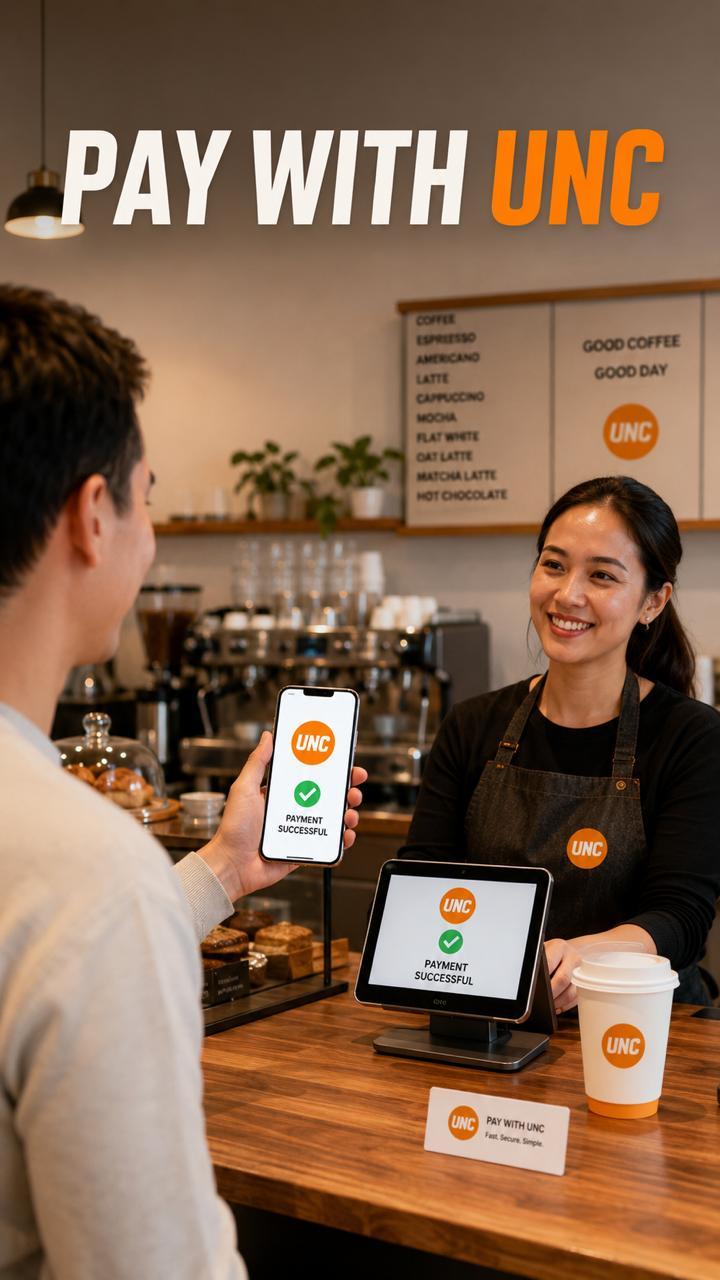
If blockchain transactions become fast, inexpensive, and easy to use, smartphones could become practical tools for digital payments.
Imagine a user scanning a QR code, selecting a cryptocurrency, confirming the transaction, and receiving confirmation within seconds.
For this to become common, several challenges still need to be addressed, including transaction fees, regulatory requirements, exchange-rate volatility, merchant adoption, and user experience.
The technology needs to become almost invisible to the user. People generally do not want to understand blockchain architecture simply to purchase a product.
The Importance of Transparency
The future of mobile cryptocurrency will depend partly on whether users can distinguish genuine technology from exaggerated marketing.
The mobile crypto sector contains many different types of applications. Some perform computational work, some distribute rewards, some provide wallets, and others use participation-based systems.
UNC's website takes a deliberately explicit position on this distinction, noting that its current balances are pre-mainnet allocations and do not currently have market value or a cash conversion mechanism.
This type of transparency is important because users should understand exactly what they are receiving.
A displayed token balance should not automatically be interpreted as income or cash.
What Could Mobile Cryptocurrency Look Like in the Future?
The mobile crypto experience could eventually combine several technologies into one application.
A future mobile platform might provide:
-
A secure cryptocurrency wallet
-
Blockchain-based payments
-
Digital identity tools
-
Decentralized applications
-
Token rewards
-
On-chain governance
-
Financial services
-
Developer tools
-
Real-time blockchain data
-
Human-verification mechanisms
Instead of opening separate applications for each activity, users could interact with an integrated mobile blockchain ecosystem.
The challenge will be making this ecosystem simple enough for people who have never used cryptocurrency before.
Regulation Will Shape the Industry
Regulation will also influence the future of mobile cryptocurrency.
Governments and financial authorities around the world are continuing to develop approaches to digital assets, consumer protection, identity verification, taxation, and financial services.
Mobile crypto companies will need to understand the rules applicable to their users and jurisdictions.
For users, this means that the availability and functionality of a cryptocurrency application may vary depending on where they live.
A responsible mobile crypto project should clearly communicate its terms, privacy practices, limitations, and regulatory requirements.
Will Mobile Cryptocurrency Replace Traditional Mining?
Probably not in the simple sense of replacing large-scale computational mining with smartphones.
Specialized hardware remains much more suitable for networks that depend on intensive proof-of-work calculations.
The more interesting possibility is that mobile cryptocurrency develops into a different category.
Instead of asking, “How can my phone perform the same calculations as a mining machine?” future developers may ask:
“What can a smartphone contribute to a decentralized network that traditional mining hardware cannot?”
That question opens the door to identity verification, mobile payments, decentralized applications, social participation, and user-owned digital ecosystems.
The Biggest Opportunity: Accessibility
Perhaps the greatest potential of mobile cryptocurrency is not mining itself.
It is accessibility.
A person with a smartphone and an internet connection can potentially explore blockchain technology without purchasing specialized equipment. This lowers the technical barrier and gives more people an opportunity to learn about digital assets.
UNC's mobile-first approach reflects this idea by designing participation around a smartphone rather than a traditional mining rig.
However, accessibility must be accompanied by education. Making cryptocurrency easier to access is useful only when users also understand the risks and limitations.
Final Thoughts
The future of mobile cryptocurrency is likely to be broader than simply mining coins from a smartphone.
Mobile devices could become gateways to cryptocurrency wallets, blockchain payments, decentralized applications, digital identity systems, and new forms of verified participation.
The technology is still developing, and not every project will succeed. Users should therefore evaluate mobile cryptocurrency platforms carefully, understand how their systems actually work, and avoid treating promotional token balances as guaranteed financial returns.
The most promising development may ultimately be the simplest one: making blockchain technology easier for ordinary people to understand and use.
As smartphones continue to become more powerful and blockchain applications become more user-friendly, the mobile device could become one of the most important interfaces between everyday users and the decentralized digital economy.




Share this page with your family and friends.