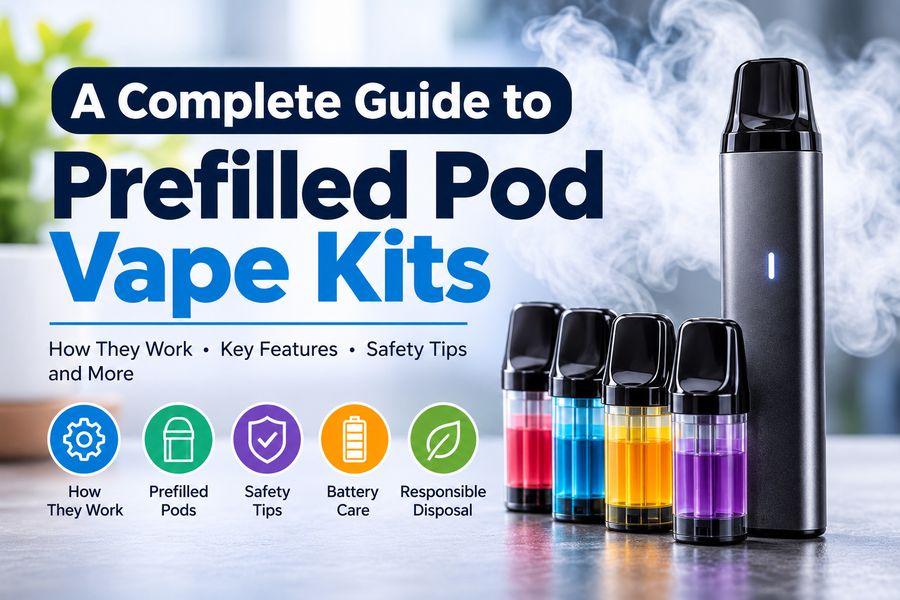
Prefilled pod vape kits are a type of electronic cigarette designed around a rechargeable device and replaceable pods containing e-liquid. Unlike traditional refillable systems, these devices use pods that are filled and sealed by the manufacturer. The pod connects to the main device and contains the components needed to heat the e-liquid and produce an aerosol.
As vaping technology has developed, manufacturers have introduced different pod designs, battery configurations and heating systems. Understanding how these devices work, what components they contain and how they differ from other electronic cigarette systems can help readers make sense of the technology.
This guide explains the basic design of prefilled pod systems, their main components, compatibility considerations, battery safety and the regulations that apply to these products.
1. What Is a Prefilled Pod Vape Kit?
A prefilled pod vape kit is an electronic cigarette system consisting of a rechargeable battery device and one or more sealed pods containing e-liquid.
The pod is designed to connect to the device without requiring the user to pour e-liquid into a refillable tank. Depending on the manufacturer's design, the connection may use magnets, physical fittings or another locking mechanism.
Most systems contain two main parts:
-
Device: Houses the battery and electronic components responsible for powering the heating system.
-
Prefilled pod: Contains e-liquid, a heating element and the internal structure required to deliver aerosol through the mouthpiece.
Some devices use replaceable pods, while others have additional features such as battery indicators, adjustable airflow or charging ports.
2. How Do Prefilled Pod Systems Work?
Prefilled pod systems operate using a small electrical heating element. When the device is activated, electrical energy from the battery powers the heating element, which heats the e-liquid held within the pod.
The basic operating process involves several components working together.
Battery power: The rechargeable battery supplies electricity to the heating element.
Activation mechanism: Depending on the design, the device may activate through an airflow sensor or a physical button.
Heating element: The coil or integrated heating component converts electrical energy into heat.
E-liquid delivery: A wick or another internal structure brings e-liquid into contact with the heating element.
Airflow: Air moves through the device and carries the resulting aerosol towards the mouthpiece.
The exact mechanism varies between manufacturers and device models. Some systems use integrated coils, meaning the heating element is replaced together with the pod rather than separately.
3. Main Components of a Prefilled Pod System
Although designs vary, most prefilled pod devices contain several common components.
Rechargeable Battery
The battery provides the electrical power required to operate the device. Battery capacity is commonly measured in milliampere-hours (mAh).
Some models include USB-C charging connections, while others use different charging arrangements. Battery indicators may also be included to display the remaining charge.
Prefilled E-Liquid Pod
The pod is a sealed container holding the e-liquid. It is generally designed to connect directly to a compatible device.
Pod construction varies, with manufacturers using different materials, capacities and connection designs.
Heating Element
The heating element is responsible for producing heat when electricity passes through it. Many modern pod systems incorporate the heating element directly into the pod.
This means the pod and heating component are replaced together.
Mouthpiece
The mouthpiece is the part through which aerosol exits the device. Its shape, size and construction depend on the particular product.
Charging Connection
Rechargeable devices require an electrical connection for charging. USB-C is commonly found on newer electronic devices, although charging specifications differ between models.
4. Prefilled vs Refillable Pod Systems
Prefilled and refillable pod systems share a similar general design, but they differ in how e-liquid is stored and supplied.
|
Feature
|
Prefilled pod system
|
Refillable pod system
|
|
E-liquid storage
|
Factory-filled pod
|
User-filled pod
|
|
Pod construction
|
Usually sealed
|
Includes a refill opening
|
|
Coil arrangement
|
Often integrated
|
Integrated or replaceable
|
|
E-liquid selection
|
Manufacturer-supplied
|
Compatible e-liquid selected separately
|
|
Maintenance
|
Depends on device design
|
Requires additional filling and cleaning
|
The main technical difference is the e-liquid container. Prefilled systems use manufacturer-filled pods, whereas refillable systems have a filling mechanism.
Neither design is completely uniform across the market. Product specifications should always be checked against the manufacturer's documentation.
5. Understanding Vape Pod Compatibility
Not every pod works with every electronic cigarette device. Compatibility depends on the manufacturer's design and the electrical and physical specifications of the product.
Some important considerations include:
Connection type: Pods may use different magnetic or mechanical connection systems.
Device model: Manufacturers frequently design pods for specific product families.
Electrical specifications: The pod's heating element must be compatible with the device's electrical configuration.
Pod dimensions: The physical shape and size determine whether a pod can connect correctly.
For these reasons, product documentation should be consulted rather than assuming that pods from different manufacturers are interchangeable.
6. Understanding E-Liquid and Nicotine Labelling
E-liquid is the liquid contained inside an electronic cigarette pod. Its formulation varies between products and may include several ingredients.
Commonly declared components include:
-
-
Vegetable glycerine (VG).
-
-
Nicotine, where applicable.
Product labelling may also provide information about nicotine concentration, liquid volume, manufacturer details and relevant warnings.
Nicotine is an addictive substance. Understanding the information printed on product packaging is important, particularly when reviewing the composition and regulatory status of an electronic cigarette product.
7. Battery Safety and Device Maintenance
Rechargeable electronic devices contain batteries that require appropriate handling. Although manufacturers use different battery designs, some general electrical safety considerations apply.
Important points include:
-
Follow the manufacturer's charging instructions.
-
Avoid using devices with visibly damaged batteries or charging connections.
-
Keep electronic devices away from excessive heat and moisture.
-
Do not attempt to dismantle sealed battery compartments.
-
Stop using a device if it becomes unusually hot or shows signs of damage.
-
Keep electronic cigarette products away from children and pets.
The manufacturer's instructions should always take priority because charging requirements and battery protection systems differ between models.
8. Environmental Considerations
Electronic cigarette products contain materials that require appropriate disposal. Rechargeable batteries, electronic circuit boards, plastic housings and used pods can contribute to electronic waste.
Prefilled pods may contain residual e-liquid, making ordinary household disposal unsuitable in some circumstances.
Consumers should check local waste-management guidance and use appropriate battery or electronic-waste collection facilities where available.
Manufacturers and retailers also have a role in providing clear information about product disposal and applicable recycling arrangements.
09. Frequently Asked Questions
What is a prefilled pod vape kit?
It is an electronic cigarette system consisting of a rechargeable battery device and a factory-filled pod containing e-liquid.
How does a prefilled pod connect to its device?
Most systems use a dedicated connection, which may involve magnets or mechanical fittings. The precise design depends on the manufacturer.
What is the difference between prefilled and refillable pods?
Prefilled pods are supplied with e-liquid already inside, whereas refillable pods contain an opening through which e-liquid is added separately.
Are all vape pods compatible with every device?
No. Pod compatibility depends on the device's connection design, dimensions and electrical specifications.
What information is included on e-liquid packaging?
Depending on the product and applicable regulations, packaging may include ingredients, nicotine concentration, liquid volume, manufacturer details and health warnings.
How should used vape pods be disposed of?
Disposal requirements depend on local regulations and the pod's construction. Electronic components and batteries should be handled through appropriate waste or recycling facilities.
Conclusion
Prefilled pod vape kits represent one of several designs used in modern electronic cigarette technology. Their construction combines a rechargeable battery, a sealed e-liquid pod and an integrated heating system.
Understanding how these components work together provides a clearer picture of the differences between prefilled and refillable systems. Battery safety, product compatibility, ingredient labelling and responsible disposal are also important considerations.
For anyone researching electronic cigarette technology, understanding these fundamentals provides a useful starting point for exploring the wider range of devices and systems available.



Share this page with your family and friends.